Tag: Estate Planning

  • What Are the Steps to Placing Your House in a Trust in Virginia?

    What Are the Steps to Placing Your House in a Trust in Virginia?

    Placing your house in a trust can be one of the most meaningful decisions you make for your family. It’s not just about asset protection or avoiding probate—it’s about peace of mind. You want to know your home will go to the right people, at the right time, without unnecessary court involvement or confusion. At PJI Law, we understand how personal this process is. Many of our clients have built their lives in the same home for decades. For them, placing a house in a trust isn’t just a financial move; it’s an act of love.

    Whether you’re planning for long-term goals, protecting a vulnerable family member, or simply preparing for the future, it helps to know what the process involves. Below, we explain the legal steps to place your house in a trust in Virginia, what decisions you’ll need to make, and how to avoid common pitfalls. 

    Before you commit to the process, it’s worth understanding what you’ll gain and what challenges may come with it.

    Benefits of Putting Your House in a Trust

    Placing your house in a trust can do more than just simplify what happens after you’re gone. It can also reduce stress for your family and give you greater peace about the future.

    Here are a few specific benefits:

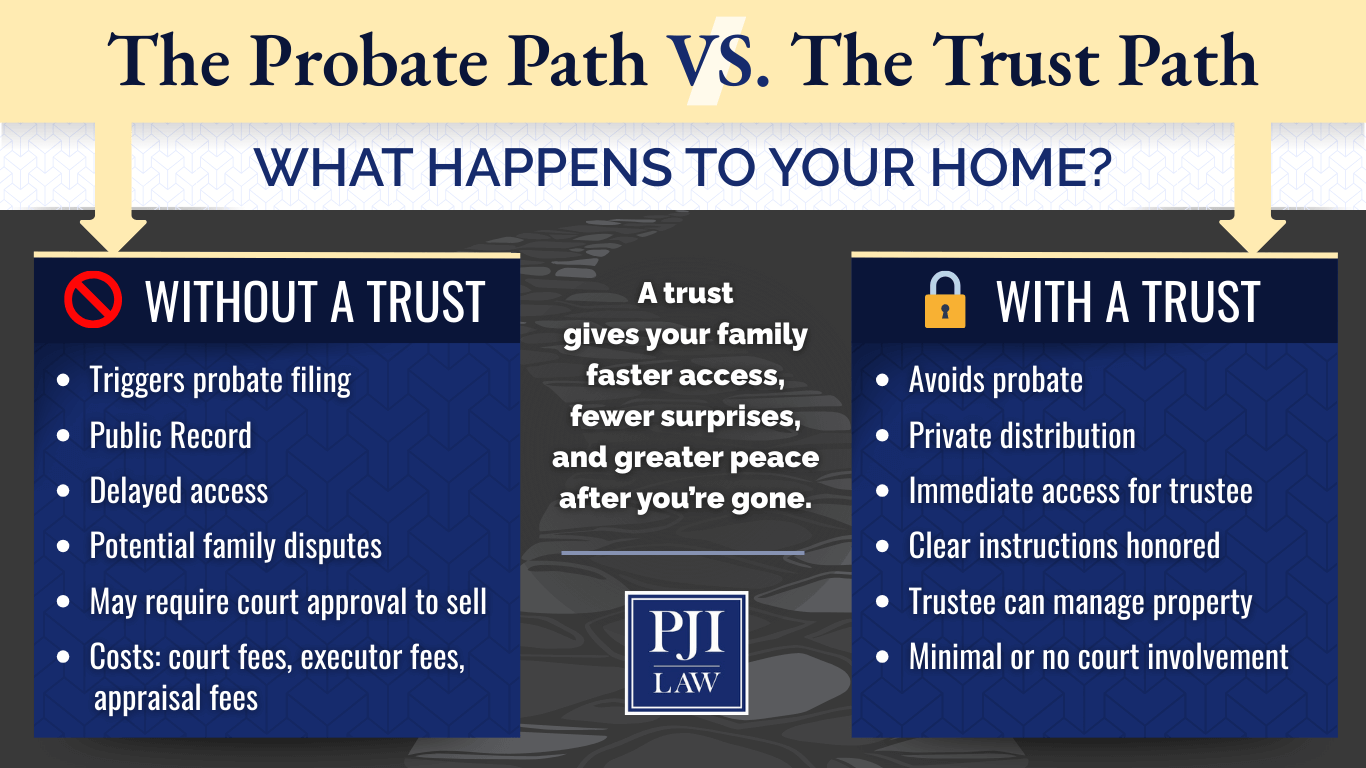
    • Fewer delays for your loved ones. A properly funded trust lets your successor trustee take control without going through the probate court, which means no waiting for a judge to authorize basic tasks like paying the mortgage or selling the home.
    • Clear direction for blended or complex families. If you’ve remarried, have stepchildren, or want to keep inherited property in the bloodline, a trust makes your wishes legally enforceable without relying on someone else’s memory or promises.
    • Private handling of family matters. Unlike a will, which becomes public once filed, a trust remains confidential. That means no one outside the family needs to know who inherits the home or under what conditions.
    • Continuity during incapacity. If you become unable to manage your affairs, your trustee can step in immediately to handle household needs, sell the property if necessary, or manage rental income without delay.
    • Flexibility in how and when assets are passed down. You can keep the house in trust for a minor child, delay distribution until a certain age, or use the home for a surviving spouse with other terms in place after they pass.

    Even with these benefits, a trust may not be the right solution for every homeowner. Here are a few trade-offs to consider before moving forward.

    Considerations and What a Trust Does Not Provide

    While a trust can offer many long-term advantages, it’s not always the right move for everyone. It’s important to consider the trade-offs to understand what you’re taking on.

    Here are some potential items to consider:

    • Upfront effort and cost. You’ll need to create a trust document, prepare a new deed, and file it with the county. This often involves attorney fees and some administrative legwork.
    • Ongoing responsibility. You will want to keep the trust updated if you refinance your move or make changes to your estate plan. If you forget to title inherited or newly purchased property into the trust, it won’t be protected.
    • Not a shield from creditors. With a revocable trust, your assets, including your home, are still considered legally yours. That means they remain vulnerable to legitimate lawsuits, liens, or collections during your lifetime.
    • Title complications if poorly drafted. Mistakes in the deed or trust language can create issues with title companies when it’s time to refinance or sell. This is why DIY documents are strongly discouraged. They often cause more problems than they solve.
    • No direct tax savings. A revocable trust doesn’t change how your property is taxed while you’re alive. It still appears under your Social Security number, and you’re responsible for any property or income taxes just as before.

    If you’ve weighed the benefits and considered the trade-offs and decided a trust makes sense for your situation, the next step is to understand how the process works in Virginia.

    Step 1: Choose the Right Type of Trust for Your Goals

    Before transferring your home into a trust, you’ll need to decide what kind of trust fits your needs. In Virginia, the most common types include:

    • Revocable living trusts. These are flexible and can be changed or revoked during your lifetime. You typically serve as your own trustee and retain full control over the property.
    • Irrevocable trusts. Once you place your house in this type of trust, you give up control over it. These trusts may offer greater protection from creditors and certain tax advantages.
    • Testamentary trusts. Created by your will and go into effect after your death. Your house remains in your name until then.
    • Special needs trusts. Used to leave property for a loved one with a disability without affecting their eligibility for benefits.
    • Charitable trusts. Allow you to leave your home or its value to a nonprofit organization.

    The type of trust you choose will affect how your property is treated for tax, control, and probate purposes. A revocable trust is often the most practical choice for Virginia homeowners who want to keep managing their home while simplifying what happens after death.

    Step 2: Select the Right Trustee

     

    The trustee is the person or entity responsible for managing the trust. If you’re creating a revocable trust, you can serve as your own trustee while naming a successor trustee to take over when you pass away or become incapacitated. This gives you full control during your lifetime.

    When choosing a trustee, think about:

    • Who is trustworthy, organized, and willing to follow your instructions?
    • Who understands your family dynamics?
    • If your trust will continue after your death (such as for minor children or loved ones with special needs), who is equipped to manage long-term property decisions?

    Your trustee should be someone you would trust to carry out your wishes with care and attention.

    Step 3: Create the Trust Document

    Once you’ve selected the trust type and trustee, your next step is drafting the actual trust document. This legal document names:

    • The trust creator (you)
    • The trustee (who is responsible for managing the trust assets)
    • The beneficiaries (who will inherit the home or live in it)
    • The terms and conditions of the trust

    Your trust document must comply with Virginia law to be valid. Inaccuracies, vague language, or missing provisions can cause confusion, delay access to trust property, or lead to disputes. This is why working with a knowledgeable Virginia trusts attorney matters. A DIY template might not cover everything, especially when you’re dealing with valuable real estate, complex family dynamics, or blended families.

    At PJI Law, we tailor each trust to reflect your values, your property, and your long-term goals.

    Step 4: Sign and Notarize the Trust

    Once your trust is drafted, you’ll sign it in front of a notary public. This step makes the trust legally valid. While notarization is not strictly required for all revocable trusts in Virginia, it is strongly recommended to help prove authenticity and avoid challenges later on.

    Step 5: Transfer or Fund the House into the Trust

    Creating the trust isn’t enough. You must formally move the house into the trust by filing a new deed. This is called funding the trust.

    Here’s how it works:

    1. Prepare a new deed transferring ownership from your name to the trust, either immediately or upon your death.
      • For example: “John A. Smith hereby conveys to John A. Smith, Trustee of the Smith Family Trust dated July 1, 2025…”
    2. Sign the deed in front of a notary.
    3. File the deed with the land records office in the circuit court of the county where the property is located. For example, if your home is in Fairfax County, you’ll file with the Fairfax Circuit Court.

    Until this step is complete, your house is not legally part of the trust. That means it would still require involvement by the probate court unless properly transferred.

    Once your home is legally transferred into the trust, there are a few important housekeeping tasks to complete so nothing falls through the cracks.

    Step 6: Update Homeowners Insurance

    Once the trust owns your home, you’ll need to notify your homeowners insurance provider to add your trust as an additional insured party.

    If your home has a mortgage, placing a home in a revocable trust will not trigger the due-on-sale clause, thanks to protections under the federal Garn-St. Germain Act (12 U.S.C. § 1701j-3(d)(8)).
    Step 7: Keep the Trust Document Safe and Up to Date

    Once your home is in the trust, keep a copy of the trust document in a secure but accessible location. Let your successor trustee know where to find it. If you move, refinance, or make major changes to your estate plan, revisit the trust to make sure it still reflects your wishes.

    Creating a trust is not a set it and forget it task. It’s part of a larger estate plan that may include your will, powers of attorney, health care directives, and other important documents. Over time, your goals, relationships, or property may change. When they do, your trust should be reviewed and updated accordingly.

    Many Virginia homeowners also ask what kind of flexibility they’ll have after the trust is created, especially when it comes to refinancing or selling.

    Can You Still Sell or Refinance a House in a Revocable Trust?

    Yes. If you’ve placed your home in a revocable living trust and named yourself as trustee, you can still sell, rent, or refinance the property. You retain full control during your lifetime.

    That said, your title company or lender may request a certification of trust or a copy of the trust showing your authority. In some cases, you may need to temporarily deed the home back into your individual name before completing a sale or refinance. 

    Your home may also play a role in broader planning goals beyond your immediate heirs.

    What About a Pet Trust or Family Business?

    If you plan to pass on a family business or leave money for the care of a pet, your home might still play a role in that plan. You could:

    • Include provisions in your trust to allow the property to be sold and the proceeds distributed to support a charitable trust or special needs trust.
    • Leave the house to a designated caretaker to continue caring for pets who remain in the home.
    • Use rental income from a second property to fund long-term goals for your children or grandchildren.

    Note: In Virginia, pet trusts end when no covered pets remain, and any leftover funds are distributed according to the trust or default rules. 

    Still have questions about how this all works in practice? Below are answers to some of the most common questions we hear from families across Northern Virginia.

    Frequently Asked Questions

    Q: Can I name different beneficiaries for my home and my other assets?

    A: Yes. Your trust can designate one beneficiary to receive your home and others to receive different property, like bank accounts or investments. Each asset can be handled individually, giving you full control over how your estate is distributed.

    Q: Does placing my home in a trust protect it from creditors?

    A: Not if it’s a revocable trust. During your lifetime, assets in a revocable trust are still considered your property and remain accessible to creditors. If protection from creditors is your goal, you would need to speak with your attorney about an irrevocable trust and how that might impact access, control, and Medicaid planning.

    Q: Can I remove my house from the trust later if I change my mind?

    A: Yes, if the trust is revocable. You can amend or revoke the trust at any time, including transferring the home back into your name. This flexibility is one of the reasons revocable living trusts are so common in Virginia estate planning.

    Q: Will my property taxes change if I transfer my house to a trust?

    A: In most cases, no. Virginia law does not impose additional property tax just because a home is placed in a revocable trust. The property remains eligible for standard tax rates and exemptions, including senior or disability-related property tax relief, as long as the trust is structured properly.

    Q: Can I name someone out of state as my trustee?

    Yes, you can. Virginia does not require your trustee to live in the Commonwealth. However, naming an out-of-state trustee can complicate real estate transactions or communications with local institutions. It’s worth considering whether a local trustee or at least a co-trustee in Virginia might make things easier for your family.

    Talk with a Trusts Attorney in Northern Virginia Who Treats Your Family Like Their Own

    At PJI Law, our team works with families throughout Fairfax County and Northern Virginia who want more than just documents. We take time to understand your needs, answer your questions, and build legally sound trusts that reflect what matters most—your family, your home, and your future.

    Your online search for “attorney for estate planning near me” or “attorney for trust” brought you here. Now it’s time to protect what matters.

    Call PJI Law at (703) 865-6100 or contact us online to schedule your confidential estate planning consultation. We’ll guide you through the process of placing your house in a trust and give you the support you need to create peace for those you love most.

    At PJI Law, you’ll receive white glove service and personal attention from a team that treats you like family.

    Copyright © 2025. PJI Law, PLC. All rights reserved.

    The information in this blog post (“post”) is provided for general informational purposes only and may not reflect the current law in your jurisdiction. No information in this post should be construed as legal advice from the individual author or the law firm, nor is it intended to be a substitute for legal counsel on any subject matter. No reader of this post should act or refrain from acting based on any information included in or accessible through this post without seeking the appropriate legal or other professional advice on the particular facts and circumstances at issue from a lawyer licensed in the recipient’s state, country, or other appropriate licensing jurisdiction.

    PJI Law, PLC
    3900 Jermantown Rd, 2nd Floor
    Fairfax, Virginia 22030
    (703) 865-6100
    https://www.pjilaw.com

  • How to Choose an Executor of Estate in Fairfax County, Virginia

    How to Choose an Executor of Estate in Fairfax County, Virginia

    Choosing an executor of estate is one of the most important decisions you’ll make when preparing your estate plan. An executor, also called a personal representative, fulfills your final wishes as outlined in your will. As an experienced estate planning attorney will advise you, the personal representative assumes responsibility for managing the estate smoothly and supporting your loved ones during an emotional time. Whether you’re engaged in estate planning and asset management or helping a loved one with their estate in Northern Virginia, it’s important to understand the legal issues involved in the role.

    At PJI Law in Fairfax, Virginia, we offer informed legal assistance in establishing the right estate planning tools and selecting the best individual to handle your estate administration in Fairfax County. This blog, from a knowledgeable estate planning attorney, explains the benefits of designating an executor and the qualities they should possess, whether a family member or a  friend.

    Responsibilities of an Executor in Fairfax County

    Being an executor is a significant responsibility. The person you choose must manage your estate from start to finish, including legal, financial, and administrative duties.

    1. Probate the Will

    First, an executor must begin probate by presenting the original will, a certified copy of the death certificate, and other required documentation to the Clerk of the Circuit Court in the appropriate jurisdiction. Once qualified, the court will grant the executor a “Certificate of Qualification,” also known as letters testamentary, authorizing them to act on behalf of the estate.

    2. Inventory and Secure Assets

    The executor must locate and identify all of the deceased’s assets, including real estate, bank accounts, investments, personal property, and any other valuable items. They must protect and manage these assets until they are distributed to the beneficiaries.

    3. Settle Debts and Taxes

    Executors must notify creditors of the deceased’s passing, pay any valid outstanding debts, and file the necessary tax returns, including federal and state taxes, and estate taxes (if applicable).

    4. Distribute Assets

    After settling debts and taxes, the executor distributes the remaining assets to the beneficiaries named in the will, a process they must complete accurately, transparently, and in compliance with Virginia law.

    5. File Required Reporting

    Virginia executors must often file specific reports with the Commissioner of Accounts, including an initial inventory of the estate and periodic accountings detailing all transactions, like payments made on behalf of the estate and asset distributions.

    These duties illustrate why you want to select someone trustworthy and capable of handling these responsibilities with diligence and care.

    Qualities to Look for in an Executor

    An executor must have the skills, temperament, and availability to perform their duties effectively in Northern Virginia.

    1. Trustworthiness

    Your executor should be someone you trust completely because they will have access to sensitive financial information and the authority to distribute your assets.

    2. Responsibility and Organization

    Estate administration involves juggling complex tasks such as managing finances, filing court documents, and meeting deadlines. Choose an organized, detail-oriented, and reliable person.

    3. Communication Skills

    Your executor will need to communicate with beneficiaries, attorneys, accountants, and sometimes even courts.

    4. Availability

    Managing an estate can take months or even years, depending on its complexity. Your executor should have the time and ability to commit to these responsibilities.

    5. Experience

    While legal or financial expertise isn’t required, it can certainly help. Alternatively, an executor can hire professionals, such as estate attorneys or accountants, to assist with complex tasks.

    6. Impartiality

    If your estate beneficiaries include multiple family members, you must select an executor who can remain neutral, especially in emotionally charged situations.

    7. Proximity to Northern Virginia

    While not always necessary, choosing someone who lives nearby can make certain aspects of estate administration easier, such as securing assets and attending court hearings.

    Legal Requirements for Executors in Virginia

    State law allows any competent adult aged 18 or older to serve as an executor. This person must be of sound mind and willing to accept the role. If the chosen executor lives out of state, they may need to appoint a resident agent in Virginia to act on their behalf for legal requirements within the state.

    Virginia courts may also require the executor to obtain a bond as a safeguard for fulfilling their duties responsibly. While this requirement can be avoided if the will explicitly states waives it, the court will only honor the waiver if the executor is a Virginia resident and personally appointed in the will.

    Contact PJI Law in Fairfax, Virginia, for Personalized Service & Attention

    Choosing the right executor supports your estate plan’s success for your family and future generations. An estate planning attorney from PJI Law simplifies the process and sets you and your executor up for success.

    And if you’re thinking beyond wills, we can establish estate planning documents to suit your needs, goals, and financial situation, including irrevocable trusts, testamentary trusts, a revocable living trust, a pet trust, and other appropriate documents.

    Have you been searching online for “an attorney for wills near me,” “estate planning attorney,” or “estate planning lawyer?” 

    Schedule a consultation in Fairfax, Virginia, at (703) 865-6100 or complete our online form.

    At PJI Law, you’ll receive personalized service and attention! 

    Copyright © 2025. PJI Law, PLC. All rights reserved.

    The information in this blog post (“post”) is provided for general informational purposes only and may not reflect the current law in your jurisdiction. No information in this post should be construed as legal advice from the individual author or the law firm, nor is it intended to be a substitute for legal counsel on any subject matter. No reader of this post should act or refrain from acting based on any information included in or accessible through this post without seeking the appropriate legal or other professional advice on the particular facts and circumstances at issue from a lawyer licensed in the recipient’s state, country, or other appropriate licensing jurisdiction.

    PJI Law, PLC
    3900 Jermantown Rd, 2nd Floor
    Fairfax, Virginia 22030
    (703) 865-6100
    https://www.pjilaw.com

  • What Are the Benefits of Estate Planning in Virginia?

    What Are the Benefits of Estate Planning in Virginia?

    If something happens to you, what will happen to your family, your home, and your hard-earned savings? That’s the question estate planning in Virginia is designed to answer. It’s not just about writing a Will. It’s about making thoughtful decisions today that can protect the people and property you care about tomorrow.

    Without a plan in place, your assets may be tied up in probate, divided in ways you never intended, or confuse the people you meant to protect. These situations can create unnecessary stress during an already difficult time. A well-structured estate plan gives you the ability to stay in control and pass down what you’ve built with confidence.

    Whether you’re planning for a growing family, aging parents, or your own long-term care, taking the time to address your legal and financial needs now can make all the difference later. Below are some of the key benefits of estate planning in Virginia and why they matter. 

    Control Over Who Inherits Your Property

    Without a Will or trust, the Virginia intestacy statutes decide who inherits your property. That might work in simple situations, but it often leads to unintended outcomes. Your spouse may not inherit everything. Stepchildren may be left out entirely. Family members you don’t speak to could receive a share simply because the law says so.

    By creating an estate plan, you retain control over who receives what. You can:

    • Choose your beneficiaries and how much each person receives
    • Leave money to non-relatives, charities, or friends
    • Decide how your real estate, business interests, and other assets are distributed
    • Control how property is passed down to your children or grandchildren

    Having this control matters. Your estate plan reflects your relationships and values, not the default rules in the Virginia Code.

    What Are the Benefits of Estate Planning in Virginia?

    Privacy and Efficiency by Avoiding Probate

    Probate is a public court process used to administer someone’s estate after death. While it’s sometimes necessary, it can also be expensive, time-consuming, and emotionally draining. Estate planning offers a way to avoid probate altogether by:

    • Placing your assets into a revocable living trust
    • Using payable-on-death or transfer-on-death designations
    • Titling property jointly with rights of survivorship
    • Naming beneficiaries on accounts and retirement plans

    When structured correctly, these tools allow your estate to pass directly to your heirs without court involvement.

    Protection for Children, Dependents, and Pets

    What Are the Benefits of Estate Planning in Virginia?

    If you have minor children, an estate plan allows you to name a guardian who can care for them if something happens to you. That decision can’t be made after the fact. If you don’t name someone, the court will, and the person appointed may not be who you would have chosen.

    Beyond naming guardians, you can also use your estate plan to manage how money is set aside and used for your children’s care. Testamentary trusts or revocable living trusts allow you to control when and how your children or grandchildren receive financial support, rather than having funds handed to them outright at a young age.

    Your planning can also extend to other dependents. If you have a loved one with special needs, you can structure your estate to provide long-term financial security without affecting their eligibility for public benefits. And if you have pets, you can name a caretaker and establish a pet trust to cover ongoing care after your death.

    Creating clear instructions and selecting the right people for these responsibilities helps prevent confusion, conflict, and uncertainty during an already difficult time.

    What Are the Benefits of Estate Planning in Virginia?

    Fewer Disputes Among Family Members

    Even the closest families can fall apart after the loss of a loved one, especially when the estate is large or the instructions are vague. Common causes of conflict include unequal distributions, unclear language, second marriages, and disputes over personal property.

    An effective estate plan minimizes this risk by:

    • Naming a trusted personal representative or trustee
    • Leaving detailed instructions about how to divide or sell property
    • Preventing direct distributions to unstable or estranged relatives
    • Reducing the legal grounds someone could use to contest your Will

    This is particularly important in families with divorce, remarriage, or adult children from multiple relationships. Planning ahead preserves not only your estate, but also family relationships.

    Clear Medical and Financial Direction if You’re Incapacitated

    What Are the Benefits of Estate Planning in Virginia?

    Estate planning isn’t just about what happens after death. It also protects you during life if an illness, injury, or cognitive decline leaves you unable to manage your own affairs.

    Through your estate plan, you can put legal documents in place that authorize someone you trust to step in if needed. An advance medical directive allows you to outline your health care preferences and name a person to communicate with doctors on your behalf.

    A durable financial power of attorney gives that individual the authority to handle your finances, pay bills, and manage property if you become incapacitated. A HIPAA authorization grants access to your medical records so your representative can stay informed and act quickly.

    Having these documents in place gives you peace of mind and spares your family from the legal delays involved in seeking court-ordered guardianship.

    Reduced Estate Tax Burden for Larger Estates

    Virginia currently does not impose its own estate tax, but large estates may still be subject to federal taxes. As of 2025, the federal estate tax exemption is $13.99 million per individual. Estates above that amount may be taxed up to 40%.

    Estate planning allows you to reduce this burden by:

    • Creating irrevocable trusts that remove assets from your taxable estate
    • Making lifetime gifts under the annual exclusion amount
    • Structuring life insurance and business succession properly

    If your estate includes valuable real estate, stock portfolios, or business interests, tax planning can preserve more of your wealth for your heirs.

    Solutions for Complex Families and Property Holdings

    Some families and assets require more than just a basic Will. This is common when:

    • You have children from a previous marriage
    • You are remarried and want to protect both your spouse and children
    • You own out-of-state or international property
    • You hold interests in a closely held business
    • You’re concerned about heirs facing divorce, bankruptcy, or disability

    A skilled estate planning attorney can design trust structures that address these issues and keep your plan enforceable across jurisdictions.

    Less Stress for Loved Ones After You Pass

    When someone dies without a plan, their loved ones are often left scrambling to locate important documents, access financial accounts, and figure out what steps to take. That process can stretch on for months, or even years, and add unnecessary stress to an already difficult time.

    Taking the time to organize your affairs now can prevent that. Your estate plan can include a master list of your financial accounts, passwords, insurance policies, and other essential information your family will need. You can also designate someone to handle your trust administration so there’s no confusion about who’s in charge of distributing assets or settling accounts.

    Preparing your loved ones in advance with clear information and instructions means they won’t be left overwhelmed or directionless. That kind of organization is one of the most practical and meaningful gifts you can leave behind.

    Trusted People in Charge of Carrying Out Your Wishes

    Estate planning in Virginia lets you name specific individuals to manage your affairs. These roles include:

    • Executor: Oversees your Will and probate estate
    • Trustee: Manages assets held in a trust
    • Guardian: Cares for your minor children
    • Agent under power of attorney: Makes financial or medical decisions if you’re incapacitated

    Choosing people you trust for these roles is just as important as having the documents in place. If you don’t make these decisions, the court will.

    What Are the Benefits of Estate Planning in Virginia?

    Support for Your Business, Legacy, and Charitable Goals

    Estate planning in Virginia isn’t just about passing down money. It also gives you the opportunity to support long-term goals that reflect your values and priorities, whether that means preserving a family business, contributing to a cause you care about, or helping future generations get a strong start in life.

    If you own a business, your plan can include instructions for transferring ownership to a co-owner or successor. You can also structure your estate to provide income to a surviving spouse while protecting the underlying assets. For those with philanthropic goals, charitable trusts offer a way to make meaningful donations while still providing tax advantages and control.

    Many people also use their estate plans to support education, home ownership, or other important milestones for their grandchildren or loved ones. These tools give you the flexibility to leave a legacy that lasts, not just financially, but personally.

    What Are the Benefits of Estate Planning in Virginia?

    Ready to Create a Thoughtful Estate Plan? PJI Law Can Help

    At PJI Law, we don’t offer generic templates or one-size-fits-all strategies. We work with clients across Northern Virginia to design thoughtful, legally sound estate plans that reflect each person’s values, property, and family relationships.

    Whether you want to avoid probate, protect minor children, address complex estates, or make decisions about powers of attorney, our legal team can walk you through the process and offer guidance tailored to your financial situation. Your online search for “estate planning lawyers near me” or “estate planning lawyer” brought you here. Now it’s time to take the next step.

    Call PJI Law at (703) 865-6100 or contact us online to schedule your confidential, complimentary estate planning consultation. We’ll provide the documents, strategy, and support you need to protect your family, manage your assets, and carry out your wishes.

    At PJI Law, you’ll receive white glove service and personalized attention!

    Copyright © 2025. PJI Law, PLC. All rights reserved.

    The information in this blog post (“post”) is provided for general informational purposes only and may not reflect the current law in your jurisdiction. No information in this post should be construed as legal advice from the individual author or the law firm, nor is it intended to be a substitute for legal counsel on any subject matter. No reader of this post should act or refrain from acting based on any information included in or accessible through this post without seeking the appropriate legal or other professional advice on the particular facts and circumstances at issue from a lawyer licensed in the recipient’s state, country, or other appropriate licensing jurisdiction.

    PJI Law, PLC
    3900 Jermantown Rd, 2nd Floor
    Fairfax, Virginia 22030
    (703) 865-6100
    https://pjibe.webteam.ai/

  • What Is a Pour-Over Will in Richmond, Virginia?

    What Is a Pour-Over Will in Richmond, Virginia?

    When James and Christina Peterson decided to begin estate planning, they hoped to secure their family’s future while avoiding unnecessary stress and legal hurdles. Living in Richmond, Virginia, with two young children and a growing list of assets, they knew it was time to act. With the help of an estate planning attorney, they created a revocable living trust to distribute their investments, home, and savings as they intended after their deaths.

    But as life often goes, things didn’t stay static. Over the next decade, the Petersons’ careers flourished, as did their list of possessions. James purchased a small cabin as a getaway; Christina opened a side business that grew out of her passion for floral arrangements. Caught up in the inevitable changes affecting their businesses, family, and community, they forgot to transfer these new pieces of their financial puzzle into their trust.

    When James passed unexpectedly after a car accident, Christina faced the daunting task of managing his estate while grieving her loss. Without a legal mechanism to funnel those additional assets into the trust, the distribution of James’s untransferred property could have been complicated by probate court and potentially even contested by extended family members.

    Fortunately, their estate planning attorneys in Richmond, had recommended including a pour-over will in their estate plan. Although the new assets, which had not been funded into the initial trust, had to go through probate, the pour-over will facilitated their transfer into the trust and distribution according to James’s wishes.

    The Petersons’ story demonstrates the safeguard a pour-over will can provide, especially in an estate plan paired with a trust. It assures the management of all assets, relieving loved ones of unnecessary confusion during an already difficult time.

    Are you asking, “What is a pour-over will?” This blog, from an estate planning attorney in Richmond, describes a pour-over will and why it’s so important among estate planning documents.

    This unique legal instrument works in conjunction with a trust to include every asset in your estate plan. At PJI Law, we’re here to make the estate planning process clear, manageable, and tailored to your specific goals. Continue reading to learn more, then contact us at (804) 653-3450 for personalized service and attention.


    What is a pourover will

    What Is a Pour-Over Will?

    A pour-over will is a particular type of will designed to work alongside a revocable living trust. Its primary function is to transfer any remaining assets that were not automatically transferred into a trust during your lifetime into that trust upon your death, managing them according to the terms of your trust.

    A pour-over will serves a useful purpose because, despite your best efforts, it’s easy to overlook certain assets when initially funding a trust. You might acquire new property or financial accounts after creating your trust and forget to move them into it. A pour-over will catches those items to avoid their distribution outside your intended purpose.

    How Does a Pour-Over Will Work?

    When you pass away, the pour-over will directs any unallocated assets into your trust, which streamlines the process by consolidating asset management under the governance of the trust. After the assets are redirected, the trustee — rather than probate or state intestacy laws — will manage and distribute them according to the trust’s terms.

    While estate administration requires the assets governed by the pour-over will to go through the probate process, this type of will aligns the assets with your broader estate plan, upholding your intentions.

    Benefits of a Pour-Over Will in Richmond, Virginia

    Benefits of a Pour-Over Will in Richmond Virginia
    As an estate planning attorney knows, a pour-over will offers several distinct advantages within the framework of a comprehensive estate plan:

    1. Provides a Safety Net for Your Estate Plan

    Life happens — you might forget to transfer certain assets into your revocable trust. A pour-over will serves as a backup, making sure nothing is left unmanaged or distributed contrary to your wishes.

    2. Simplifies Probate

    Even though assets covered by a pour-over will may go through probate, funneling everything into your trust simplifies the process. Once inside the trust, asset management and distribution follow pre-established instructions, avoiding additional confusion or delays.

    3. Maintains Privacy

    Trusts protect privacy, keeping your estate administration details private. Transferring unallocated assets into your trust via the pour-over will allows you to preserve the privacy that would otherwise be lost if those items were distributed through standard public probate.

    4. Keeps Consistency

    A pour-over will maintains consistency in your estate plan. All your assets, regardless of when or how they were acquired, will be handled as part of your trust instead of being subject to different rules or distributions.

    5. Reduces Stress for Loved Ones

    By consolidating your total assets into your trust, a pour-over will reduces potential confusion, disputes, and estate administration burdens for your loved ones, allowing them to focus on honoring your memory rather than untangling complicated legal matters.

    Does a Pour Over Will Avoid Probate in Virginia?

    A pour-over will does not avoid probate. While it directs any remaining assets into a trust upon your death, those assets must go through the probate process first. A pour-over will’s primary benefit is that it procures the management of all assets according to the terms of your trust, providing consistency and simplifying the overall estate management. However, the assets that are not already in the trust must undergo the initial probate step.

    Do You Need a Pour-Over Will?

    If you already have or plan to establish a revocable trust, combining it with a pour-over will in your estate planning will help you achieve a secure, complete estate plan aligned with your wishes. As a complement to your trust, a pour-over will gives you peace of mind that no asset will fall through the cracks, even if you accidentally overlook something.

    Searching for local trust attorneys in Richmond

    Frequently Asked Questions About Pour-Over Wills in Richmond, Virginia

    1. What is a pour-over will, and how does it work?

    A pour-over will is a legal document that transfers any assets not included in your living trust during your lifetime to that trust after your death. It “pours over” those assets into the trust, making it easier to manage your estate. This estate planning tool maintains control and streamlines trust administration after you pass away.

    1. Do I still need a living trust if I have a pour-over will?

    Yes, a pour-over will and a living trust are designed to complement each other. Your living trust holds most of your assets during your lifetime, while the pour-over will acts as a safety net for anything left out. Together, they give you control over the distribution of all your assets and streamline trust administration, reducing complications for the trustee, the person responsible for administering your trust, and your executor or personal representative, the person responsible for upholding the instructions in your will through probate.

    1. Should I use a pour-over will instead of a traditional will?

    Pour-over wills work in tandem with living trusts. Because trusts avoid the probate process, they simplify the transfer of assets and provide greater privacy for your family members enabling beneficiaries to access their money and inheritances more efficiently through trust administration. Therefore, if you have a trust, you also need a pour-over will. In contrast, if you do not have a trust, Richmond Estate Planning lawyers recommend a traditional will as part of a comprehensive estate plan.

    1. Who manages my estate under a pour-over will?

    The executor named in your pour-over will manages your estate. Your executor oversees the transfer of any remaining assets into your trust so that your beneficiaries receive their inheritances. An estate planning lawyer can help you carefully choose the executor who can provide these fiduciary services with integrity and efficiency so those you leave behind can avoid disputes that can lead to fiduciary litigation.

    1. What are the benefits of a pour-over will for my family members?

    A pour-over will eliminates confusion and reduces conflict among family members. By consolidating all assets into your trust, you can secure a seamless transition, minimize probate delays, and provide clarity about your wishes for the distribution of money, property, and other belongings, reducing stress during a challenging time.

    1. Can a pour-over will help me to avoid probate?

    Assets in your revocable living trust avoid probate. So while the pour-over will itself does not avoid probate, it simplifies the process by transferring any overlooked assets to your trust upon your death. Once in the trust, those assets are managed according to its terms, which avoids additional probate proceedings for your beneficiaries. Estate planning lawyers can help you structure your legal documents to minimize probate and maximize efficiency.

    1. Is a pour-over will right for me and my estate plan?

    A pour-over will is ideal if you have a trust and want a comprehensive estate plan with added control over the handling and distribution of your assets. Consulting our Richmond estate planning lawyers will help you tailor all your legal documents, including your pour-over will, to protect your family members, beneficiaries, and assets effectively.


    Have you been typing will attorney near me into your search bar

    Call the Estate Planning Lawyers at PJI Law in Richmond, Virginia to Discover How We Can Help

    At PJI Law in Richmond, we understand the complexities of estate planning, including pour-over wills and trusts. Our Richmond estate planning attorneys provide personalized service and attention, customizing your estate plan to fulfill your specific needs and goals. We’ll help you create a legally sound, comprehensive plan that protects your loved ones, simplifies the probate process, and secures your legacy.

    Whether you’re just starting your estate planning journey or need to update your current plan, leveraging our firm’s resources, our professional staff will create an estate plan that addresses your specific situation. Contact us at (804) 653-3450 or complete our online form to schedule a consultation today.

    PJI Law ~ Protecting Virginia individuals, families, and businesses with personalized, attentive, and dedicated service.

    Copyright © 2025. PJI Law, PLC. All rights reserved.

    The information in this blog post (“post”) is provided for general informational purposes only and may not reflect the current law in your jurisdiction. No information in this post should be construed as legal advice from the individual author or the law firm, nor is it intended to be a substitute for legal counsel on any subject matter. No reader of this post should act or refrain from acting based on any information included in or accessible through this post without seeking the appropriate legal or other professional advice on the particular facts and circumstances at issue from a lawyer licensed in the recipient’s state, country, or other appropriate licensing jurisdiction.

    PJI Law, PLC
    4108 E Parham Rd,
    Richmond, VA 23228
    (804) 653-3450
    https://pjibe.webteam.ai/

  • An Estate Planning Checklist for the New Year from Richmond Estate Planning Lawyers

    An Estate Planning Checklist for the New Year from Richmond Estate Planning Lawyers

    As we welcome the New Year, it’s a time for fresh beginnings and important resolutions. One resolution that should top your list is starting your Virginia estate planning, or updating your existing estate plan.

    Why is estate planning critical in Richmond, VA?

    As our estate planning lawyers know, it gives you control of your affairs while you’re alive and after you pass away. While no one likes to think about the possibility of becoming incapacitated or the inevitability of death, with a comprehensive estate plan, you can rest assured knowing your family members or other trusted individuals will uphold your choices for medical care and the management of your estate.

    Additionally, establishing an estate plan enables you to minimize estate and gift taxes, avoid inheritance disputes, and prevent loved ones from having to undergo the public probate process.

    Regardless of the size of your estate, at PJI Law in Richmond, VA, we create estate plans customized to the needs and desires of each client. Our estate planning attorneys recognize that securing the future of your family and protecting your legacy are paramount. We understand the nuances of Richmond estate planning and remain committed to helping you achieve peace of mind.

    Read our estate planning checklist below, then contact us at (804) 653-3450 for personalized service and attention.

    Is-your-estate-planning-checklist-complete_

    State-Planning-Check-List

    List Your Assets and Liabilities

    Whether you have an existing estate plan or are embarking on the process for the first time, begin by taking an inventory of your assets — physical, financial, or digital — and your liabilities to gain a full understanding of everything that comprises your estate. Assets may include:

    • Real property
    • Cars
    • Jewelry
    • Collectables
    • Personal items
    • Savings accounts
    • Life insurance
    • Retirement accounts
    • Businesses
    • Bonds
    • Stocks

    Liabilities may include:

    • Credit cards
    • Mortgages
    • Lines of credit
    • Auto loans
    • Other outstanding debts

    Assess Your Current Estate Plan

    If you already have an estate plan, now is the perfect time to review and update it. Changes in life circumstances such as second marriages, divorces, births, or asset acquisitions may necessitate revisions. Our estate planning attorneys in Richmond can help you align your plan with your current wishes and goals.

    Whether revising your estate planning documents or beginning the process, estate plans can include various documents, depending on the needs and circumstances of individuals and families. Consider incorporating the following elements for an effective estate plan.

    Establish a Will

    Drafting a will is a foundational step in estate planning. Wills, which take effect upon death, enable individuals to specify beneficiaries for their property and appoint guardians for minor children.

    To be legally valid, wills in Virginia must meet the following requirements:

    1. Age and Capacity: The person making the will (the testator) must be at least 18 years old and of sound mind, meaning they understand the nature of making a will and the effects of their decisions.
    2. Written Document: Wills must be in writing. Oral wills are not recognized in Virginia.
    3. Signature: The will must be signed by the testator. If the testator is unable to sign, another person can sign on their behalf, but this must be done in the testator’s presence and at their direction.
    4. Personal Representative: In your will, you can designate a personal representative to handle your estate administration after you pass away. Probate lawyers recommend choosing a trustworthy individual to fulfill this critical duty.
    5. Witnesses: The will must be signed in the presence of at least two competent witnesses. These witnesses must also sign the will in the presence of the testator and each other.
    6. Intent: The testator must have the intent for the document to serve as their last will and testament.
    7. Voluntariness: The will must be made voluntarily, without any undue influence, coercion, or duress.

    As with all estate planning documents, review and update your will periodically. An estate planning lawyer in Richmond can keep your will compliant with Virginia laws and reflective of your current wishes.

    Keep in mind that a will must go through probate, a public process that can be lengthy and costly, and require the assistance of a probate attorney. If you wish to avoid probate, consider including trusts in your estate planning.

    Seeking-an-estate-planning-law-firm-in-Richmond-Virginia_

    Set Up a Trust

    Richmond, VA trusts bypass the probate process and facilitate a smoother transition of assets to your loved ones. Because you can tailor Virginia trusts to your specific needs, they offer flexibility and security.

    The elements of a trust include:

    1. Grantor: The person who creates the trust
    2. Trustee: The individual or entity responsible for managing the trust assets and trust administration
    3. Beneficiary/Beneficiaries: The person or persons who will receive the trust assets and benefits
    4. Funding: Transferring assets into the trust to be managed by the trustee
    5. Terms and Conditions: Instructions for how and when trust assets are distributed to beneficiaries

    What is a Living Trust vs. a Testamentary Trust?

    A living trust, also known as an inter-vivos trust, goes into effect during the grantor’s lifetime. You can make changes to or revoke a living trust at any time. A testamentary trust is created within a will and goes into effect upon death. It cannot be modified or revoked after the testator passes away.

    What is the Difference Between a Revocable Living Trust and an Irrevocable Trust?

    The grantor can change or terminate a revocable trust at any time, while they cannot modify an irrevocable trust. While irrevocable trusts offer greater asset protection and some tax benefits, they require careful consideration and planning. Working with a knowledgeable attorney in the Richmond area can help you determine the best type of trust for you, based on your unique circumstances and goals.

    Create Advance Medical Directives

    Advance medical directives express your healthcare wishes in case you become incapacitated and unable to communicate them yourself. In Virginia, advance medical directives may include:

    • Durable Powers of Attorney/Medical Powers of Attorney: These documents allow individuals to appoint someone to make medical decisions on their behalf if they are unable to do so.
    • Living Wills: Living wills state an individual’s preferences for end-of-life care. A living will specifies the types of life-sustaining treatments you do or do not want.
    • Do Not Resuscitate Order (DNR): DNRs instruct medical professionals not to attempt life-saving measures, such as CPR, defibrillation, medication, or artificial breathing, if your heart or breathing stops.

    These documents uphold your preferences for medical care, empowering someone you trust to make decisions on your behalf if necessary. Consulting a Virginia attorney to properly prepare and execute these documents according to state law is a wise choice.

    Appoint Powers of Attorney

    With powers of attorney you can designate someone you trust, known as an agent, to manage your financial or legal affairs should you become incapacitated. This person can make decisions regarding your finances, property, and investments, handling your matters according to your wishes.

    Our attorneys can help you implement the right powers of attorney for your needs. Your options include:

    • Durable power of attorney
    • General power of attorney
    • Limited power of attorney
    • Springing power of attorney

    Your designated agent must abide by a set of guidelines when deciding on your behalf. This individual must perform their duties competently and diligently, with your best interests in mind.

    Furthermore, your agent must avoid conflicts of interest, keep records and provide them when requested. Lastly, they must preserve the estate plan as long as it is in your best interests. Our attorneys in Richmond can discuss these responsibilities and guidelines with you in greater detail during a consultation.

    Designate Beneficiaries

    Another essential element of estate planning is designating beneficiaries for your assets. Beneficiaries are the individuals or entities that will receive your assets after you pass away.

    As part of your estate plan, you can designate beneficiaries for various accounts and policies, such as:

    1. Life insurance
    2. Retirement accounts (401(k), IRA, TSP)
    3. Bank accounts
    4. Investment accounts
    5. Real estate
    6. Business interests

    Choosing specific beneficiaries allows your assets to pass to the intended recipients without going through probate or being subject to creditor claims or tax implications. Regularly review and update your beneficiary designations to reflect any changes in your circumstances or wishes.

    Looking-for-an-estate-planning-attorney-in-Richmond-Virginia_

    Review Transfer-on-Death Designations

    In addition to beneficiary designations, you have the option to designate transfer-on-death (TOD) beneficiaries for real estate. Similar to beneficiary designations, with a Virginia TOD you can transfer ownership of your real estate property to a designated beneficiary upon your death.

    The deed is recorded with the county clerk’s office and becomes effective only after your passing. Until then, you retain full control and ownership of the property, and you can revoke or modify the deed at any time. Our attorneys advise our clients to regularly review and update TOD designations because they are legally binding and cannot be changed after your passing.

    Create Clear Instructions for Your Personal Representative

    As we noted above, your personal representative handles your estate administration. As part of your estate planning efforts, we recommend creating a document informing them about where to locate your assets and all necessary documents, including logins and passwords of your digital assets.

    Business Planning

    If you own a business, a succession plan is vital for its continuity. Business succession planning ensures that your business can thrive even after you step down, whether due to retirement, incapacity, or passing. It involves designating successors and outlining the transition process clearly.

    An attorney from our law firm can help you:

    • Choose an exit strategy
    • Create a plan to ensure a seamless transition
    • Select a successor
    • Connect with the right financial and insurance advisors
    • Limit taxes

    Start the New Year with Confidence in Richmond, VA with PJI Law

    Embarking on the New Year by estate planning can give you and your loved ones peace of mind. At PJI Law, our trust and estate counsel offer clients personalized service and attention. Our practice areas include wills, trusts, advance medical directives, powers of attorney, business succession planning, deed preparation, transfer-on-death deeds, probate law, trust administration, and estate plan maintenance.

    Don’t wait until it’s too late contact our Richmond office today at (804) 653-3450 or complete our online form to schedule a consultation. Find out how we may be able to help you create a comprehensive estate plan that secures your legacy and protects your family members and all loved ones.

    Copyright © 2024. PJI Law, PLC. All rights reserved.

    The information in this blog post (“post”) is provided for general informational purposes only and may not reflect the current law in your jurisdiction. No information in this post should be construed as legal advice from the individual author or the law firm, nor is it intended to be a substitute for legal counsel on any subject matter. No reader of this post should act or refrain from acting based on any information included in or accessible through this post without seeking the appropriate legal or other professional advice on the particular facts and circumstances at issue from a lawyer licensed in the recipient’s state, country, or other appropriate licensing jurisdiction.

    PJI Law, PLC
    4108 E Parham Rd,
    Richmond, VA 23228
    (804) 653-3450
    https://pjibe.webteam.ai/

  • Richmond Estate Planning Attorneys Explain the Types of Trusts in Virginia

    Richmond Estate Planning Attorneys Explain the Types of Trusts in Virginia

    Richmond natives John and Mary Thompson spent their lives working hard, with dreams of leaving a lasting legacy for their children and grandchildren. They took pride in their small business, modest home, a vacation property in Virginia Beach, a few cherished family heirlooms, and a nest egg that they hoped would support their family for generations. Confident that their assets would naturally transfer to their loved ones, the Thompsons never imagined that after their death, their children would have to deal with the complexities of the probate process and estate taxes in the absence of a proper estate plan.

    Unknown to John and Mary, Virginia offers many types of trusts that could have safeguarded their intentions. Among their three children, their youngest son, David, who has Down syndrome, would have greatly benefited from a special needs trust, which would have secured his lifelong care and financial security without jeopardizing his eligibility for government assistance.

    As John and Mary faced the inevitable challenges of aging, they began to realize that their well-intentioned legacy might not unfold as planned. Hoping it wasn’t too late, they started the estate planning process with a focus on trusts and how they might serve their unique circumstances.

    As the local trust attorneys at PJI Law in Richmond know, trusts are a vital aspect of estate planning. Contrary to a popular myth, anyone who wishes to secure their legacy and provide for their loved ones can benefit from a trust, regardless of the amount of money they have in the bank or their annual salary.

    When established with the help of an experienced estate attorney, trusts can help you manage and protect assets, avoid probate, and minimize taxes. This blog explores the various trust options in Virginia and how certain types can work for you, depending on your specific concerns.

    Have you been searching online for a “trust attorney near me?”

    Contact us at (804) 653-3450 to schedule a consultation. With personalized service and attention, we will listen to your goals, gather the details, and recommend the right trusts for you as part of a comprehensive estate plan.

    Understanding Trusts in Virginia

    A trust is a legal arrangement established by an individual known as the grantor (settlor), that designates an individual, known as the trustee, to hold and manage money and property for any person or persons — the beneficiary or beneficiaries named by the grantor. Once the grantor transfers ownership of an asset into the trust, it belongs to the trust itself, not to the trustee. The grantor can tailor the trust to address their specific goals.

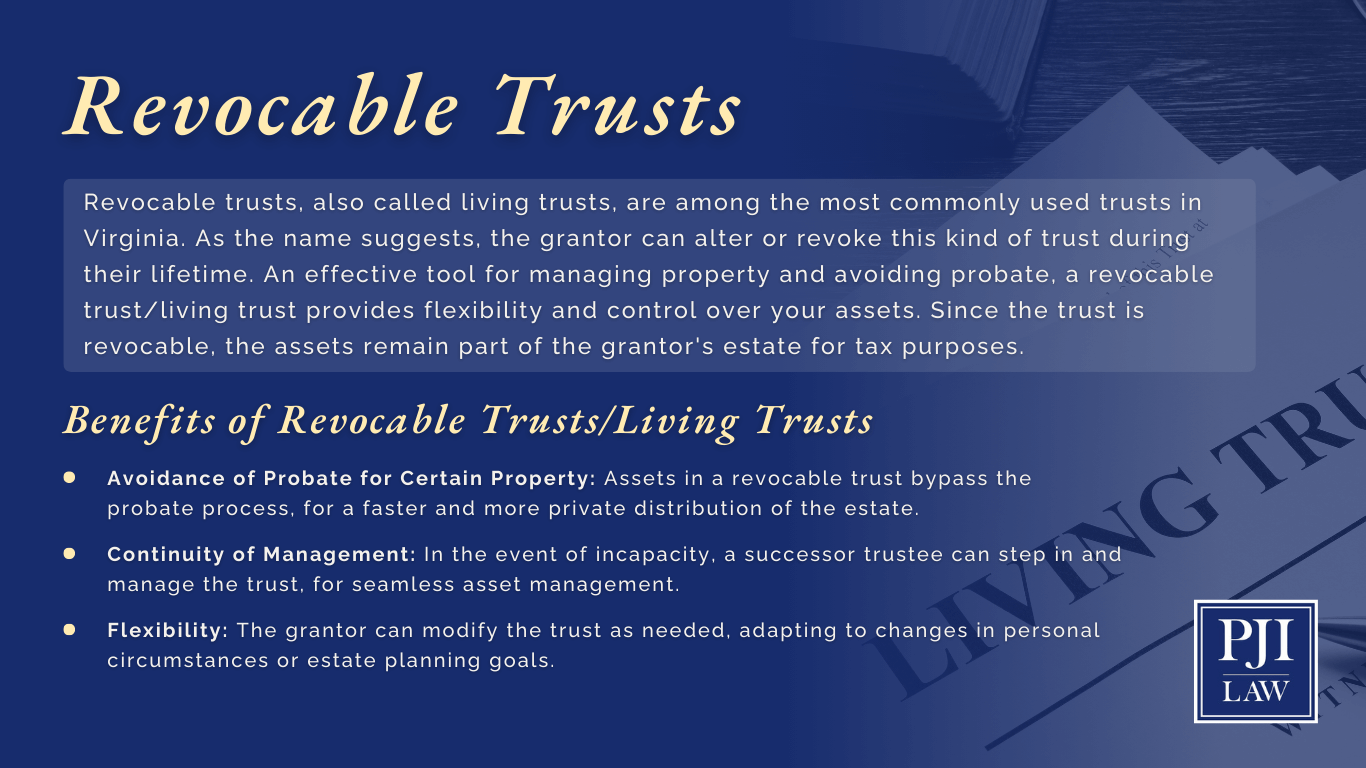
    Revocable Trusts

    Revocable trusts, also called living trusts, are among the most commonly used trusts in Virginia. As the name suggests, the grantor can alter or revoke this kind of trust during their lifetime. An effective tool for managing property and avoiding probate, a revocable trust/living trust provides flexibility and control over your assets. Since the trust is revocable, the assets remain part of the grantor’s estate for tax purposes.

    Benefits of Revocable Trusts/Living Trusts

    • Avoidance of Probate for Certain Property: Assets in a revocable trust bypass the probate process, for a faster and more private distribution of the estate.
    • Continuity of Management: In the event of incapacity, a successor trustee can step in and manage the trust, for seamless asset management.
    • Flexibility: The grantor can modify the trust as needed, adapting to changes in personal circumstances or estate planning goals.

    Richmond, Virginia estate planning attorneys explain the types of trusts available. Call (804) 653-3450 to schedule a consultation.

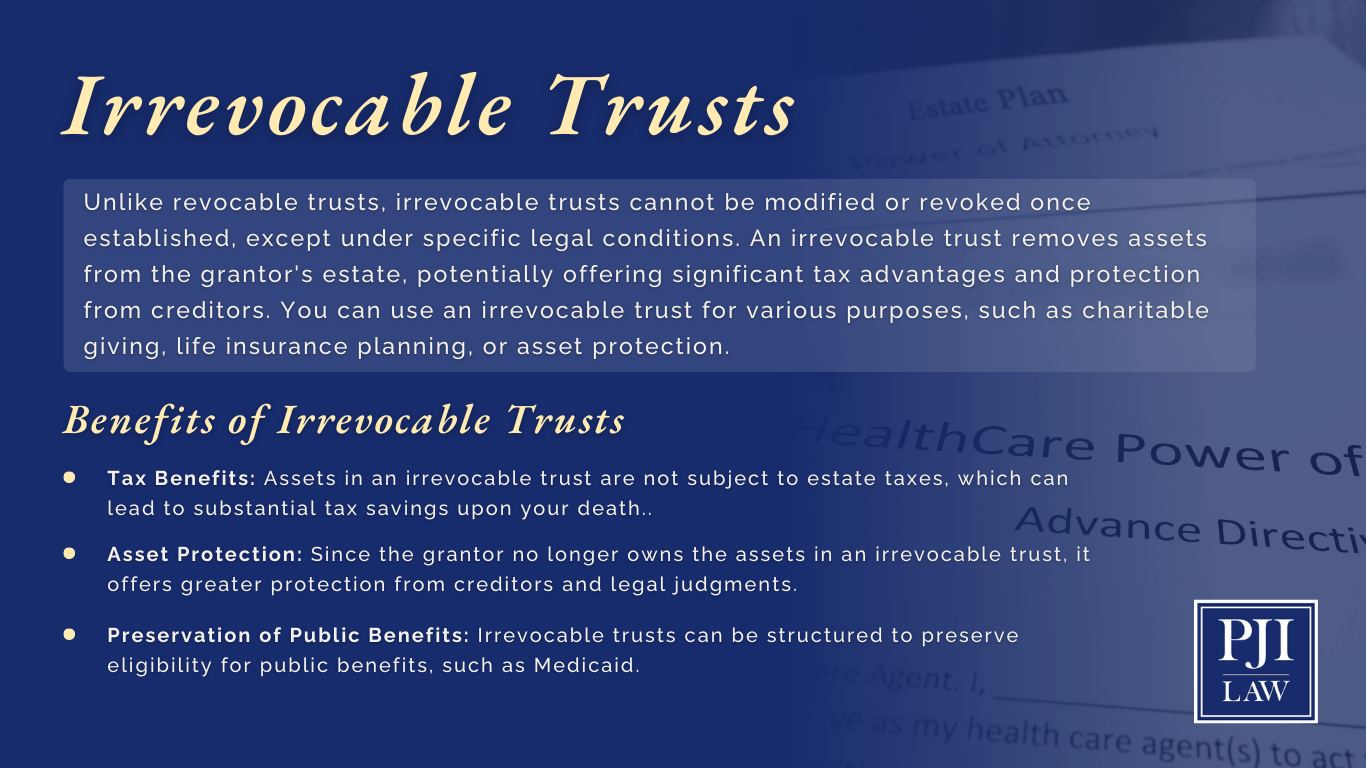
    Irrevocable Trusts

    Unlike revocable trusts, irrevocable trusts cannot be modified or revoked once established, except under specific legal conditions. An irrevocable trust removes assets from the grantor’s estate, potentially offering significant tax advantages and protection from creditors. You can use an irrevocable trust for various purposes, such as charitable giving, life insurance planning, or asset protection.

    For example, many Virginians choose irrevocable life insurance trusts (ILIT) to set aside funds for estate taxes. An ILIT removes the life insurance policy from the insured person’s estate, reducing potential taxes. The policy’s death benefit is not considered part of the estate and is not subject to estate tax, potentially saving thousands of dollars.

    Benefits of Irrevocable Trusts

    • Tax Benefits: Assets in an irrevocable trust are not subject to estate taxes, which can lead to substantial tax savings upon your death.
    • Asset Protection: Since the grantor no longer owns the assets in an irrevocable trust, it offers greater protection from creditors and legal judgments.
    • Preservation of Public Benefits: Irrevocable trusts can be structured to preserve eligibility for public benefits, such as Medicaid.

    Richmond, Virginia estate planning attorneys explain the types of trusts available. Call (804) 653-3450 to schedule a consultation.

    Testamentary Trusts

    Created through wills, testamentary trusts take effect after the grantor’s death. This trust helps individuals who wish to provide for a minor child or children or allow beneficiaries to receive assets under certain conditions, such as reaching a specific age.

    Benefits of Testamentary Trusts

    • Control Over Inheritance: The grantor can dictate how and when beneficiaries receive their inheritance.
    • Protection for Minors: Assets can be managed by a trustee until the beneficiary reaches maturity.

    Drawbacks of Testamentary Trusts

    • Do Not Avoid Probate: These types of trusts are overseen by the probate court and local commissioner of accounts. The trustee of a testamentary trust is required to file an Inventory and annual Accountings until the trust is fully distributed.
    • Privacy Concerns: As part of probate, both the contents of the testamentary trust and the decedent’s assets become a matter of public record.

    Special Needs Trusts

    A special needs trust provides for individuals with disabilities without jeopardizing their eligibility for government benefits. When you designate a special needs child or individual as the beneficiary, this trust enables them to maintain their quality of life while still qualifying for public assistance.

    Benefits of Special Needs Trusts

    • Preservation of Benefits: Trust assets do not count towards eligibility for Supplemental Security Income (SSI) or Medicaid.
    • Quality of Life Enhancements: Funds can be used for medical care, education, and other personal needs not covered by public benefits.

    Charitable Trusts

    Charitable trusts allow individuals to support charitable organizations while enjoying tax benefits. There are two primary types of charitable trusts: charitable remainder trusts and charitable lead trusts.

    Charitable Remainder Trust

    A charitable remainder trust (CRT) lets you achieve your personal and philanthropic goals. You simply transfer assets into the trust, providing a steady income to yourself or other beneficiaries for a designated period – or even for their entire lifetime. Once that period ends, the trust distributes the remaining assets to your chosen charitable organization.

    Charitable Lead Trust

    A charitable lead trust (CLT) first gives a portion of the trust income to a charity for a specified amount of time. After that period ends, the trust pays the remaining funds to you or your heirs.

    Benefits of Charitable Trusts

    • Tax Deductions: Donors may receive income tax deductions for contributions to the trust.
    • Support for Causes: These trusts enable donors to support causes they care about while potentially reducing estate taxes.

    Richmond, Virginia estate planning attorneys explain the types of trusts available. Call (804) 653-3450 to schedule a consultation.

    Spendthrift Trusts

    Spendthrift trusts protect beneficiaries from creditors and their own potentially imprudent spending habits. The trustee controls the distribution of trust funds so that the assets serve the beneficiary’s best interest.

    Benefits of Spendthrift Trusts

    • Creditor Protection: Beneficiaries cannot sell or pledge their interest in the trust to creditors.
    • Financial Management: Trustees can manage funds prudently, preventing misuse by the beneficiary.

    Qualified Personal Residence Trusts (QPRTs)

    QPRTs are specialized irrevocable trusts that allow individuals to transfer their residences to beneficiaries at a reduced gift tax value. The grantor retains the right to live in the home for a specified period, after which the property passes to the beneficiaries.

    Benefits of QPRTs

    • Gift Tax Reduction: The value of the gift is reduced, potentially minimizing gift taxes.
    • Estate Tax Savings: By removing the home from the estate, QPRTs can lead to estate tax savings.

    Qualified Terminable Interest Property Trusts (QTIP)

    These trusts provide income for a surviving spouse and ensure that the remaining assets go to each beneficiary designated by the grantor after the spouse passes away.

    Benefits of QTIPs

    • Surviving Spouse Protection: The surviving spouse receives income from the trust for life, giving them financial security.
    • Control over Asset Distribution: The grantor can specify how and when assets will pass to other beneficiaries after the surviving spouse’s death.

    Pet Trusts

    With a pet trust, you can care for your cherished pets after you pass away by designating a trustworthy individual or individuals to take responsibility for them.

    Benefits of Pet Trusts

    • Peace of Mind: Knowing that your pets will be cared for after your passing can bring peace of mind.
    • Pet’s Best Interest: You can specify how you want your pet to be taken care of and prioritize their best interests.
    • Avoid Family Disputes: Pet trusts can prevent potential disagreements among family members about who should take responsibility for the pet.

    Richmond, Virginia estate planning attorneys explain the types of trusts available. Call (804) 653-3450 to schedule a consultation.

    Generation-Skipping Trusts

    A generation-skipping trust (GST) is a strategic estate planning tool designed to minimize estate taxes across multiple generations. These trusts transfer assets to the grantor’s grandchildren and bypass their children to reduce any inheritance complications and preserve long-term wealth. The primary benefit of a GST is the ability to leverage its federal tax exemption. Each individual can allocate a certain amount, indexed for inflation, to a GST without incurring the federal generation-skipping transfer tax. This exemption allows substantial amounts of wealth to be passed down without being eroded by taxes at each generational transfer.

    Benefits of Generation-Skipping Trusts

    • Wealth Preservation: By skipping a generation, these trusts protect assets from estate taxes twice.
    • Avoidance of Probate: Trust assets pass directly to the grandchildren, avoiding the costly and time-consuming probate process.

    Which Type of Trust is Best for Me – Living Trusts or Irrevocable Trusts?

    Experienced Richmond estate planning lawyers know that choosing the right type of trust depends on your individual goals and circumstances. When you consult a knowledgeable lawyer, they will guide you through the process and help you make informed decisions. At PJI Law, we have extensive experience in creating customized trusts that meet our clients’ unique needs.

    Contact PJI Law, Your Estate Planning Lawyers in Richmond, for Help Creating a Trust

    Whether you’re considering a living trust or an irrevocable trust, work with an experienced estate planning attorney. Because trusts are complex legal documents, consulting a Richmond attorney with profound knowledge of state and federal laws will help you structure your trust properly so that it serves its intended purpose. An attorney can also help you navigate any potential tax implications.

    PJI Law understands that every client’s situation is unique. Our team of experienced estate planning lawyers is dedicated to creating trusts and other legal tools tailored for you. Whether you want to protect your money, property, and other assets, provide for loved ones, or support charitable causes, we will take the time to listen and design a trust that meets your specific needs and goals.

    Schedule a consultation today at (804) 653-3450 or complete our online form. With personalized service and attention, we will help you preserve your future and legacy.

    Copyright © 2024. PJI Law, PLC. All rights reserved.

    The information in this blog post (“post”) is provided for general informational purposes only and may not reflect the current law in your jurisdiction. No information in this post should be construed as legal advice from the individual author or the law firm, nor is it intended to be a substitute for legal counsel on any subject matter. No reader of this post should act or refrain from acting based on any information included in or accessible through this post without seeking the appropriate legal or other professional advice on the particular facts and circumstances at issue from a lawyer licensed in the recipient’s state, country, or other appropriate licensing jurisdiction.

    PJI Law, PLC
    4108 E Parham Rd,
    Richmond, VA 23228
    (804) 653-3450
    https://pjibe.webteam.ai/

  • An Experienced Richmond Estate Planning Attorney Answers Frequently Asked Questions

    An Experienced Richmond Estate Planning Attorney Answers Frequently Asked Questions

    According to Caring.com, for the first time since 2020, the number of Americans with a will has declined, with only 32 percent reporting that they have an estate plan in 2024. The 40 percent of Americans who don’t have a will cite a lack of assets as the primary reason, with lower-income Americans twice as likely to cite this reason as the highest-income group.

    However, as experienced Richmond estate planning lawyers know, estate planning is vital for everyone, regardless of wealth or income. At PJI Law, PLC, our estate planning attorneys have helped many individuals and families in and around Richmond create estate plans tailored to their unique needs and circumstances. This blog shares the most frequently asked questions we receive about Richmond estate planning. Continue reading for an overview, then contact us at (804) 653-3450 for personalized service and attention.

    What Is Estate Planning?

    Briefly, estate planning involves making decisions about the management of your assets if you become incapacitated or pass away. Should you become incapacitated, another person would have to manage your bank accounts, pay your bills, authorize medical treatment, and oversee your assets. Married couples might assume the other spouse would fulfill these responsibilities—but what happens if your spouse is also incapacitated? In your estate plan, you can designate a personal representative and backup representatives, conferring legal authority to them to carry out your wishes.

    While facing the prospect of our own mortality is difficult, since you cannot take your bank accounts and possessions with you, creating an estate plan enables you to decide in advance who will receive your assets—whether family members, friends, charities, or places of worship. With the guidance of experienced estate planning attorneys in Richmond, you can establish an estate plan that fulfills your wishes and complies with Virginia laws.

    If My Estate Is Small, Do I Still Need a Virginia Estate Plan?

    As we mentioned, surveys demonstrate that a common misperception persists that estate plans are only for the wealthy. However, regardless of your estate’s perceived simplicity, everyone needs an estate plan that legally outlines their wishes for medical care if they become incapacitated, designates personal representatives to act on their behalf, and identifies their beneficiaries. Under Virginia intestacy laws, if you die without a will, your assets will go to your closest relatives—which may or may not align with your desires. If you experience a devastating accident without leaving written instructions, a Virginia judge will control your person and your estate.

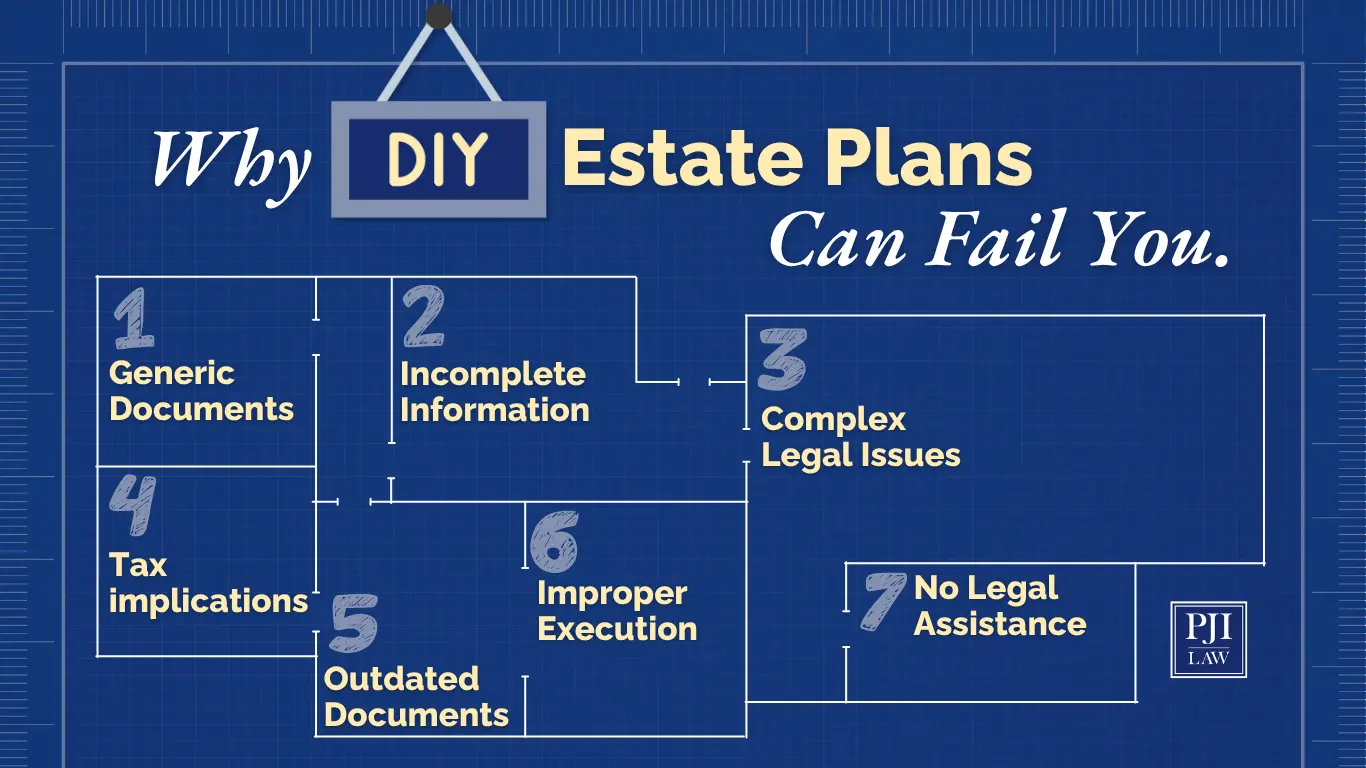
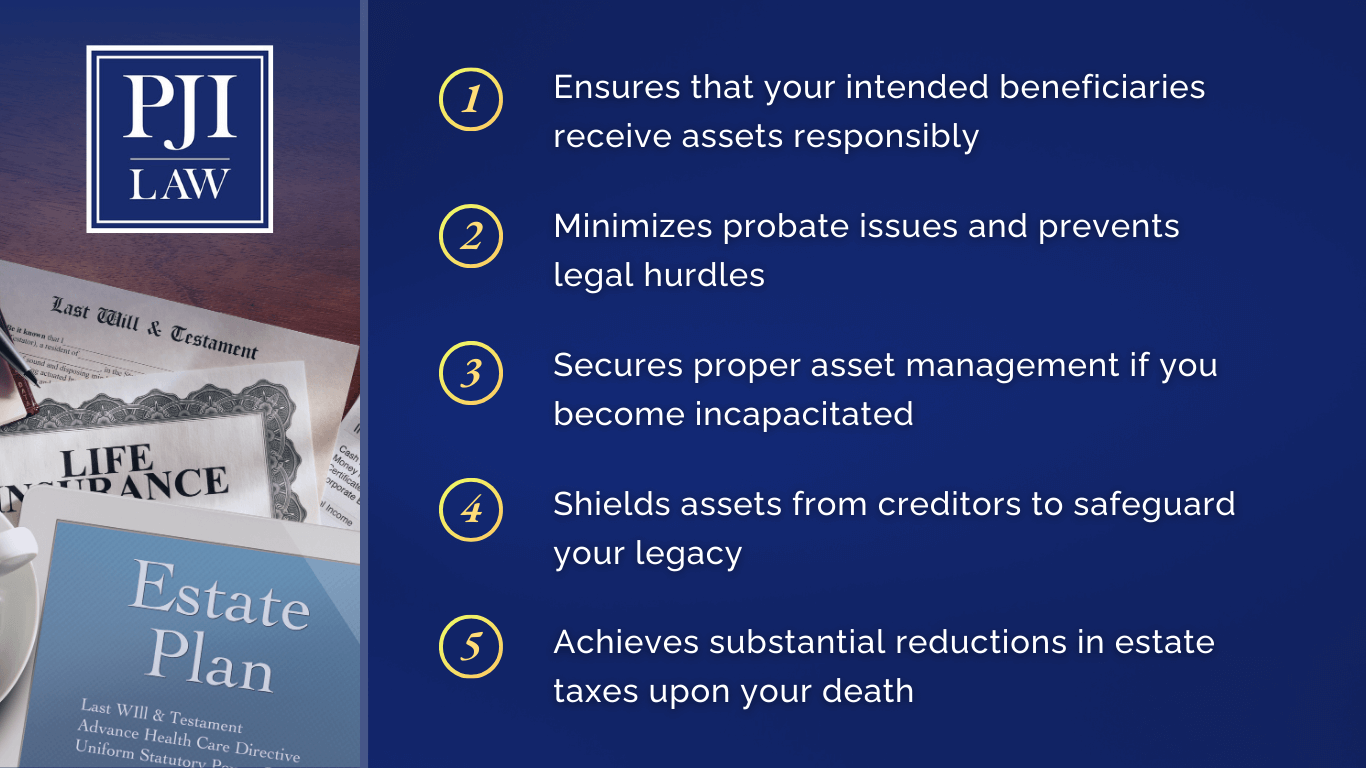
    Why Does Everyone Need an Estate Plan?

    As experienced Richmond estate planning attorneys can attest, a well-executed estate plan:

    richmond estate planning attorney

    Can I Create My Own Virginia Estate Plan?

    In today’s digital landscape, countless websites explain how individuals can make their own estate plans. However, these websites often lack data about Virginia or federal statutes and contain outdated information pertaining to estate planning laws.

    Furthermore, estate planning is a highly individualized process that considers the unique circumstances and goals of each person. At PJI Law, PLC, our estate planning lawyers provide knowledgeable advice tailored to you and your situation. Working with us, you can rest assured that we are up to date on estate law as regulated by the Commonwealth of Virginia, the federal government, and the Internal Revenue Service.

    richmond estate planning attorney

    What are the Four Foundational Estate Planning Documents?

    richmond estate planning attorney

    There are four foundational estate planning documents everyone in and around Richmond, Virginia should have, regardless of their financial circumstances.

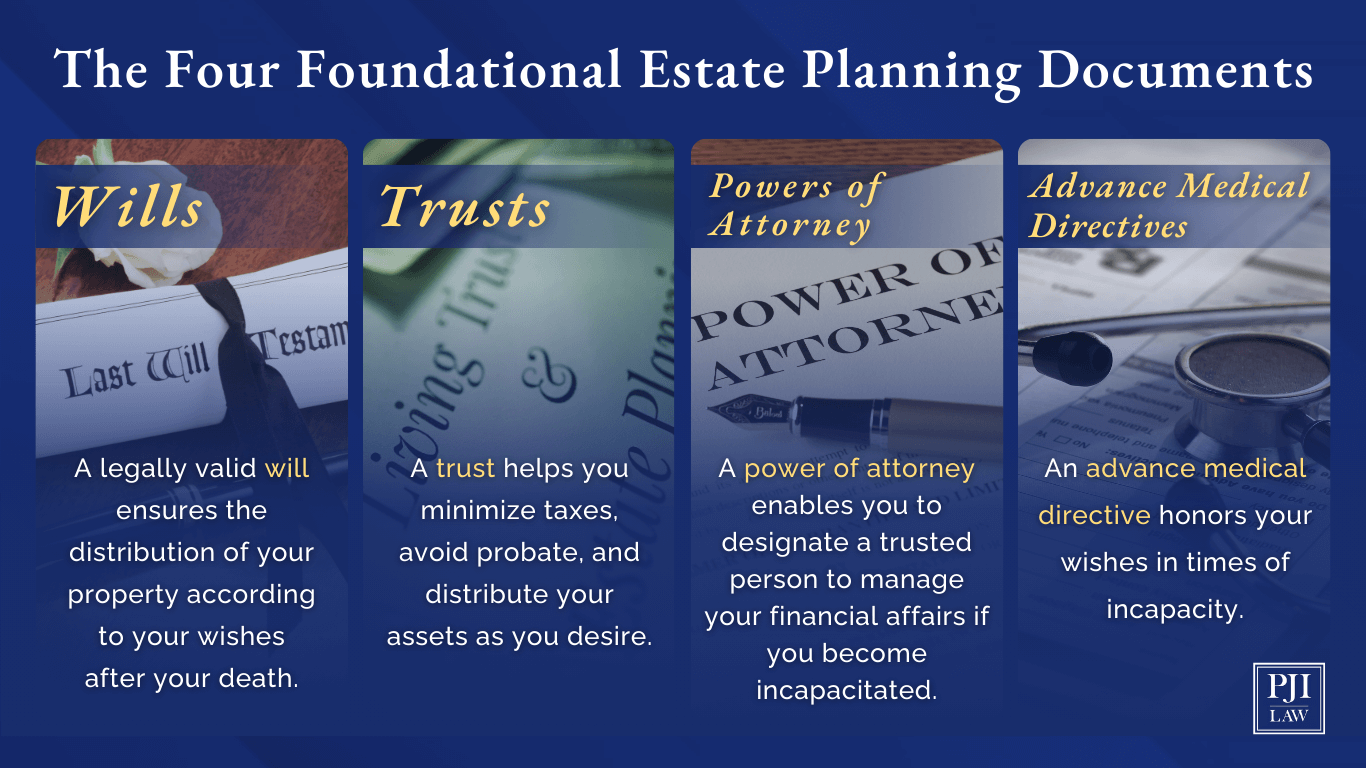
    Wills

    Wills are an essential component of an estate plan. A legally valid will ensures the distribution of your property according to your wishes after you pass away. Wills enable couples and individuals with minor children to designate a guardian to secure their future should both parents tragically die before their children turn 18. Wills are also excellent vehicles for giving back to society through a contribution to your choice of charity.

    Unlike a trust or a power of attorney—legal instruments that address incapacitation—a will only becomes effective upon death.

    Virginia Requirements for Legally Valid Wills

    Virginia state law has specific mandates for wills, including:

    • Age: the testator (the person creating the will) must be 18
    • Written: wills must be documented in writing; Virginia does not recognize oral wills
    • Competence and Voluntary Creation: Wills must be made freely by testators with sound minds, without the undue influence of others
    • Witnesses: Wills must be witnessed by two individuals

    Trusts

    Although many Americans mistakenly believe trusts are for the wealthy, all income levels can benefit from this excellent estate planning tool. Once established, a trust helps you:

    • Minimize taxes
    • Avoid probate
    • Distribute assets as you desire

    With a trust, you can also provide for the continued care of disabled loved ones and beloved pets when your life ends.

    The Three Trust Components

    Grantor/Settlor – the grantor, also referred to as the settlor, is the person who creates the trust

    Trustee – the trustee is the person with conservatorship of the trust property and has a fiduciary responsibility to abide by the terms of the trust. Trustees know and uphold the wishes of grantors.

    Beneficiary – the person or persons designated by the grantor to receive the contents of the trust. Beneficiaries can include spouses, family members, minor children, other loved ones or organizations, to include charities of the grantor’s choosing.

    Various trust options are available in Richmond, Virginia

    Revocable Living Trusts

    One of the most significant benefits of a revocable living trust is that it helps avoid probate court, with smooth asset distribution to your beneficiaries. This flexible option allows you to maintain control over the contents of the trust while offering the ability to make changes as needed.

    Irrevocable Trusts

    As the name suggests, you cannot change an irrevocable trust once you establish it. In exchange for these stringent rules, you receive distinct advantages, including asset protection from creditors and a reduction of your tax burden. When you transfer assets into an irrevocable trust, they no longer count toward your estate’s value, potentially diminishing your estate tax liability. People often leverage irrevocable trusts for specific estate planning purposes, such as life insurance policies or charitable giving.

    Special Needs Trusts

    These trusts seek to provide for individuals with disabilities while still enabling them to qualify for government assistance.

    Qualified Terminable Interest Property Trusts (QTIP)

    These trusts care for a surviving spouse by providing income during their lifetime, with the remaining assets going to the settlor’s beneficiaries upon the surviving spouse’s death.

    Testamentary Trusts

    These trusts are established by wills and take effect after the settlor’s death. These legal instruments oversee asset distribution for beneficiaries. Because testamentary trusts are born out of wills, they do not avoid probate but instead are administered through the probate process.

    Charitable Trusts

    The settlor can enjoy tax benefits and benefit a specific charity or cause with charitable trusts.

    Pet Trusts

    With a pet trust, you can ensure that someone will care for your pets after you pass away.

    Spendthrift Trusts

    A spendthrift trust protects your beneficiaries from their own bad financial decisions by limiting their access to trust funds.

    Generation-Skipping Trusts

    A generation-skipping trust ensures asset transfer to the settlor’s grandchildren, bypassing their children to minimize inheritance complications and preserve long-term wealth.

    richmond estate planning attorney

    Powers of Attorney (POAs) in Richmond, VA

    Have you thought about who would manage your affairs if you became incapacitated? Powers of attorney enable individuals to designate someone they trust to assume these responsibilities, without petitioning the court. Powers of attorney offer security and spare your loved ones the ordeal of a drawn-out legal process.

    Furthermore, powers of attorney spare your loved ones the need to seek a conservatorship or a guardianship through the courts—which can create a hardship for family members and postpone much-needed assistance. A power of attorney secures your well-being and fulfills your intentions, even in unanticipated circumstances.

    Four Types of Powers of Attorney

    There are four types of powers of attorney in Virginia:

    Durable Power of Attorney

    Durable powers of attorney help you secure your future in the face of unexpected events such as sudden mental incapacitation or permanent disability by delegating authority to a trusted agent to manage your affairs and making decisions that reflect your wishes and interests.

    General Power of Attorney

    With a general power of attorney, you can appoint your agent to oversee various tasks, from matters of personal finance to more complicated decisions to run your affairs smoothly during your absence.

    Limited Power of Attorney

    As the name implies, a limited power of attorney confers specific authority to your agent for a defined purpose or period. For example, if you cannot attend a real estate closing, your agent can complete the transaction on your behalf.

    Springing Power of Attorney

    Prepare for the unexpected with a springing power of attorney, which only takes effect in specific situations like mental incapacitation or permanent disability. By establishing this legal document ahead of time, you can ensure that your personal and financial affairs will be managed efficiently when needed, providing you with peace of mind during challenging times.

    Advance Medical Directives  

    Ensure your wishes are honored in times of incapacity. While a power of attorney handles finances, an advance medical directive appoints someone to make medical decisions for you. Gain peace of mind knowing your choices will be respected, even when you can’t express them. Working with experienced Richmond estate planning lawyers, you can create a clear directive that cannot be misinterpreted. 

    Three Things You Can Achieve with Advance Medical Directives

    1. Designate a Trusted Healthcare Agent – choose someone who will uphold your wishes if you cannot express them yourself. Our Richmond, Virginia attorneys will guide you through the process of appointing an agent who will have the legal authority to make medical decisions for you.
    2. Outline Your Healthcare Instructions – control your medical care by explicitly stating your preferences. Our estate planning lawyers will help you create clear, legally binding instructions.
    3. Donate Your Organs or Tissues – save lives by donating your organs or tissues to those in need or to research institutions. 

    Do Advance Medical Directives Give Healthcare Agents Unlimited Authority?

    No. Your healthcare agent can only make decisions for you when needed, following your guidance on life support and other crucial matters. If there are no instructions for a specific circumstance, your agent will decide based on your values and preferences.

    How Do I Choose the Right Agent for My Advance Directive?

    richmond estate planning attorney

    Estate planning attorneys serving Richmond and the surrounding areas can provide knowledgeable and compassionate legal assistance as you navigate the process of selecting a trustworthy healthcare agent.

    richmond estate planning attorney

    Can Estate Planning Help Me Avoid the Probate Process in Virginia? 

    Many people seek to avoid probate, the legal process through which estate administration takes place for a deceased individual, according to the terms outlined in their will. Although probate offers critical oversight, the public probate process can demand a significant amount of time and money. Due to the complexities of probate law, the personal representative would benefit from hiring a probate attorney to provide legal assistance throughout the process. For grieving families, probate can create additional stress and hardship. 

    The good news? Experienced and knowledgeable estate planning lawyers in Richmond can help you minimize or even avoid probate, utilizing several strategies.

    Revocable Living Trusts

    Establishing a revocable living trust allows you to transfer ownership of your assets to the trust during your lifetime. Upon your death, the assets held in the trust pass directly to the named beneficiaries, bypassing probate. Additionally, a living trust can provide for the management of your assets if you become incapacitated.

    Joint Ownership with Right of Survivorship 

    Secure your assets by holding them jointly with a spouse or child in Virginia. Ensure seamless transfer of ownership to the surviving joint owner upon your passing. Common forms of joint ownership include joint tenancy with right of survivorship and tenancy by the entirety.

    Payable-on-Death (POD) and Transfer-on-Death (TOD) Designations

    Specific assets like bank accounts, retirement accounts, and securities, can include POD or TOD designations. Designating beneficiaries allows these assets to pass directly to them upon your death, avoiding probate.

    Beneficiary Designations 

    Update your beneficiary designations now to ensure asset distribution to the right people without the involvement of probate. Make sure your life insurance policies, pension plans, and annuities reflect your current wishes.

    Small Estate Affidavit

    In Virginia, you can facilitate easy asset distribution to beneficiaries with a small estate affidavit if your probate estate is valued below $50,000. Avoiding the formal probate process saves time and money.

    If I Own a Business in the Richmond Area, Do I Need to Engage in Business Planning?

    For business owners, business succession planning is a critical component of estate planning. You have worked hard for your success and business succession planning with the help of estate planning attorneys can ensure that your business continues to run smoothly after your death, safeguarding its legacy and protecting your employees and stakeholders. Your lawyer can guide you through this process, taking your unique situation, needs, and goals into account.

    Do I Need to Regularly Review My Estate Plan with a Lawyer?

    richmond estate planning attorney

    In our many years of practicing law, we understand the wisdom of engaging in a regular review of your estate plan, to ensure it’s current with your wishes and life circumstances. Change is the one thing we can count on in life, and events like divorces, second marriages, the birth of children or grandchildren, and other events demand estate planning revisions and updates. Our law firm, serving Richmond and its surrounding areas, stands ready to assist you throughout life’s inevitable changes. 

    PJI Law, PLC: An Experienced Estate Planning Law Firm Serving Richmond and Surrounding Areas with Personalized Attention

    Established in 2010, our firm, PJI Law, PLC provides personalized, high-quality legal assistance to clients seeking to engage in estate planning. Our attorneys care about you and your family and want to help you prepare for the future with a comprehensive plan that addresses your wishes, complies with Virginia law and federal law, and provides peace of mind. Our Richmond, VA law firm offers our clients individualized attention and premium service. To learn more about estate planning and how we can tailor a plan that provides for your family and other loved ones, minimizes taxes, and upholds your wishes, contact us at (804) 653-3450 or complete our online form to schedule a consultation in Richmond, VA.

    Copyright © 2024. PJI Law, PLC. All rights reserved.

    The information in this blog post (“post”) is provided for general informational purposes only and may not reflect the current law in your jurisdiction. No information in this post should be construed as legal advice from the individual author or the law firm, nor is it intended to be a substitute for legal counsel on any subject matter. No reader of this post should act or refrain from acting based on any information included in or accessible through this post without seeking the appropriate legal or other professional advice on the particular facts and circumstances at issue from a lawyer licensed in the recipient’s state, country, or other appropriate licensing jurisdiction.

    PJI Law, PLC
    4108 E Parham Rd, 
    Richmond, VA 23228
    (804) 653-3450
    https://pjibe.webteam.ai/

  • The Importance of Estate Planning in Virginia

    The Importance of Estate Planning in Virginia

    Imagine this scenario: Mariah, a hard-working single mother living paycheck to paycheck, suddenly passes away without an estate plan. Her children, already grieving her loss, now face the daunting task of navigating the complexities of her estate. Compounding their emotional turmoil is the stress of financial uncertainty as they try to determine how to manage her assets and fulfill her wishes.

    Like Mariah, many people have the misconception that estate planning is solely a concern for the wealthy. However, everyone, regardless of their financial status, can benefit from a well-crafted estate plan. In Virginia, estate planning encompasses a wide range of components that go beyond distributing assets to include Advance Medical Directives, Power of Attorney, Business Succession Planning (for business owners), Guardianship appointments for minor children, and more, based on each individual’s unique needs and preferences.

    This blog, from a knowledgeable and experienced Northern Virginia estate planning attorney, explains the importance of estate planning and why a well-crafted, legally sound estate plan is a must. Continue reading to learn more about the estate planning process and its various legal instruments, then contact us at (703) 865-6100 for personalized service and attention.

    5 Reasons Why Everyone Needs An Estate Plan

    As experienced estate planning attorneys know, a well-devised estate plan can:

    1. Guarantee your intended beneficiaries receive assets responsibly
    2. Minimize probate complexities and avoid additional legal hurdles
    3. Ensure asset management in the event of incapacity
    4. Shield assets from creditors to safeguard your legacy
    5. Result in substantial reductions in estate taxes upon your passing

    Four Essential Estate Planning Documents

    Will 

    A will is the foundation of your estate plan. This document ensures that your property is distributed according to your wishes after you pass away. Wills allow individuals with minor children to appoint a guardian to secure their future should they tragically die before their children turn 18.

    Moreover, your will can be a vehicle for giving back to society, as you can use it to leave a legacy by contributing to a charity of your choice.

    Unlike a trust or a power of attorney, which addresses incapacitation, a will only takes effect after your death. Do not delay the process of crafting your will; acting now will provide you and your loved ones with the peace of mind that comes from having a well-planned estate.

    Key Requirements for a Legally Valid Will

    A will must meet several requirements to be legally binding, including:

    Age: The testator (person creating the will) must be 18 years old or above.

    Written: The will must be documented in writing; oral wills hold no legal weight.

    Testator signature: The document must bear the signature of the testator.

    Competence and voluntary creation: The testator must be of sound mind and create the will freely, without the undue influence of another.

    Witnesses: Two individuals must witness the will to validate its authenticity.

    Trust

    Contrary to a popular misconception, trusts are an excellent estate planning tool for all income levels. With a trust, you can:

    • Minimize your tax obligations
    • Bypass probate
    • Ensure the distribution of your assets as you desire

    Additionally, trusts can provide for the continued care of disabled children and cherished pets long after you’re gone.

    There are various options for creating trusts in Northern Virginia, including:

    • Revocable living trusts
    • Irrevocable trusts
    • Special needs trusts
    • Qualified terminable interest property trusts
    • Testamentary trusts
    • Charitable trusts
    • Pet trusts
    • Spendthrift trusts
    • Generation-skipping trusts

    Power of Attorney (POA)

    What would happen if you became incapacitated? Who would manage your affairs? With a power of attorney, you can designate a trusted person to step in and handle your responsibilities, without the need for a court petition. A POA provides a sense of security and saves your loved ones the emotional turmoil of a lengthy legal process.

    The alternative—seeking a Conservatorship or Guardianship through the courts—can be an overwhelming ordeal for families and delay much-needed assistance.

    A power of attorney safeguards your well-being and upholds your intentions, even in unforeseen circumstances.

    Types of Powers of Attorney

    • Durable power of attorney
    • General power of attorney
    • Limited power of attorney
    • Springing power of attorney

    Advance Medical Directive

    While a POA manages financial affairs should you become incapacitated, an Advance Medical Directive allows you to designate a trusted person to make medical decisions on your behalf. Medical directives give individuals the peace of mind of knowing that their wishes will be honored even if they cannot communicate them. With the help of a knowledgeable and experienced Northern Virginia estate planning attorney, you can create a directive that leaves no room for misinterpretation.

    What Can You Achieve with Advance Medical Directives?

    1. Designate a Trusted Healthcare Agent

    Choose someone who will advocate for your wishes if you cannot speak for yourself. Our attorneys will assist you in appointing an agent who will have the legal authority to make medical decisions for you.

    1. Specify Your Healthcare Instructions

    Take control of your medical care by outlining your preferences and wishes explicitly. Our attorneys will ensure your instructions are clear and legally binding.

    1. Donate Organs or Tissues

    Make a life-saving impact by expressing your desire to donate organs or tissues to others in need or to research institutions.

    What Powers Does a Healthcare Agent Have?

    Your appointed Healthcare Agent will only act if medical professionals determine that you are unable to make decisions for yourself, honoring your specific instructions regarding issues such as life support, whenever possible. If no instructions address a particular situation, the agent will make decisions based on your values and preferences.

    Choose the Right Agent for your Advance Directive

    A knowledgeable and compassionate estate planning attorney can help you navigate the process of selecting a trustworthy Healthcare Agent. Designating the right person, with whom you feel comfortable making critical decisions on your behalf, will give you peace of mind.

    More Complex Situations Require Additional Estate Planning Documents

    For business owners, business succession planning is a vital part of estate planning. It ensures that the business can continue to operate smoothly after the owner’s passing, preserving its legacy and protecting the interests of employees and stakeholders.

    Guardianship is another critical aspect of estate planning, especially for parents with minor children. By designating a guardian, parents can have peace of mind knowing that their children will be cared for by someone they trust if anything were to happen to them.

    PJI Law, PLC: Your Estate Attorneys in Fairfax, Virginia

    Have you been searching online for “estate planning attorneys” or “estate lawyers near me” in Virginia? Established in Northern Virginia in 2010 to provide personalized, high-quality legal services to every client, our law firm has been guiding clients through the estate planning process for over a decade. At PJI Law, our estate attorneys care about your legal needs and want you to be comfortable telling us how we can implement a comprehensive estate plan that secures your long-term care, provides for your loved ones after your death, and addresses more complex situations that may require additional documents. As your trust and estate counsel, we will discuss your unique circumstances and work with you to create a comprehensive and legally valid estate plan.

    We’re committed to providing personal attention and premium service to our valued clients. To discuss the estate planning process and how we can tailor your plan to fulfill your intended purpose, please contact us at (703) 865-6100 or complete our online form to schedule a consultation in Fairfax, Virginia.

    Copyright © 2024. PJI Law, PLC. All rights reserved.

    The information in this blog post (“post”) is provided for general informational purposes only and may not reflect the current law in your jurisdiction. No information in this post should be construed as legal advice from the individual author or the law firm, nor is it intended to be a substitute for legal counsel on any subject matter. No reader of this post should act or refrain from acting based on any information included in or accessible through this post without seeking the appropriate legal or other professional advice on the particular facts and circumstances at issue from a lawyer licensed in the recipient’s state, country, or other appropriate licensing jurisdiction.

    PJI Law, PLC
    3900 Jermantown Rd, 2nd Floor
    Fairfax, Virginia 22030
    (703) 865-6100
    https://pjibe.webteam.ai/

  • An Experienced Virginia Estate Planning Attorney Debunks 5 Estate Planning Myths

    An Experienced Virginia Estate Planning Attorney Debunks 5 Estate Planning Myths

    Emily, a young and vibrant 30-year-old with a thriving career and an active social life, never gave much thought to estate planning. That is, until her best friend Juliet’s brother unexpectedly passed away without a will or an estate plan, leaving his family at the mercy of Virginia estate law. State law dictated how his assets would be divided among his beneficiaries, which may or may not have aligned with his wishes. Watching her friend’s family argue over money and other personal matters while grieving their loss caused Emily to reconsider the idea of estate planning.

    Unfortunately, dying without a will is common in the United States. According to a CNBC survey, 67% of Americans have no estate plan. Although the COVID-19 pandemic alerted people to the importance of having a will, only about 33% of Americans have an estate plan. The article reveals that the most significant reason for this is that they just haven’t taken the time to do it, as reported by 40% of respondents. However, the reasons given by the remaining 60% demonstrate the prevalence of many misconceptions Americans have about estate planning.

    This blog, from a knowledgeable and experienced estate planning attorney, debunks the five most common estate planning myths.  Continue reading to discover more, then contact our seasoned team of lawyers for estates and wills at (703) 865-6100 for personalized service and attention. During the interview process, we’ll get to know you so we can collaborate and prepare a comprehensive plan that addresses your concerns and protects you and your loved ones.

    Myth #1: Estate Planning is Only for the Wealthy/I Don’t Have Enough Assets

    Contrary to this myth, everyone, regardless of income or net worth, can benefit from estate planning. Working with the right estate planning attorney, you can ensure the proper distribution of your belongings—regardless of their value—by designating beneficiaries. An estate plan also ensures that your financial and healthcare wishes will be respected if you become unable to make decisions. Legally valid estate planning documents allow your preferred guardian to take responsibility for your minor children, rather than someone appointed by the court, in the unfortunate event of your passing.

    Myth #2: Young People Don’t Need Estate Planning

    Like Emily, many young people believe that estate planning is only for middle-aged or older people, but nothing could be further from the truth. As her friend Juliet’s story illustrates, unexpected events can happen at all ages. A legally sound estate plan carries out your intentions if tragedy strikes and you pass away at an early age.

    Myth #3: A Will Takes Care of All Assets

    While vitally important, a will alone does not constitute a comprehensive estate plan because it doesn’t cover all of your assets. Specific assets, such as life insurance or retirement accounts, bypass the will and pass directly to named beneficiaries.

    Myth #4: Estate Planning Focuses Solely on What Happens After Your Death

    Estate planning goes beyond what happens after your death to address situations where you cannot make decisions for yourself due to incapacitation. With components like a Power of Attorney (POA) and an Advance Medical Directive, you can designate a trusted individual to act on your behalf for financial and medical matters.

    Myth #5: Estate Planning is a One-Time Process

    Updating your estate plan is crucial to it reflecting your current circumstances. Changes in your life, like marriage, divorce, or the arrival of a new baby, may necessitate revisions. Regularly review your plan so it aligns with your specific needs and circumstances.

    What are the Components of a Robust Virginia Estate Plan?

    Now that we’ve debunked the most common myths about estate planning, let’s delve into an estate plan’s crucial components. As experienced estate planning attorneys can attest, the estate planning process involves much more than managing your finances, and each individual must tailor their estate plan to their unique preferences.

    Will

    A will is a foundational document in the estate planning process. It empowers you to determine the distribution of your property, appoint a guardian for your children, and support a charitable cause after your passing.

    Unlike a living will, which takes effect if you become unable to make decisions, your last will and testament only becomes valid after your death.

    For a will to meet legal standards, it must adhere to the following:

    • The individual creating the will (known as the testator) must be at least 18 years old.
    • The will must be in written form; oral wills are not recognized by the law.
    • The testator must sign the document.
    • The testator must be mentally capable and must create the will willingly and without coercion.
    • Two witnesses must also sign the document, attesting to its authenticity.

    The well-being of your minor children is paramount. You can retain control of their future by designating a guardian for them in your will. In the unfortunate event of both parents passing away while your child is under 18, the court will examine your will for guidance, rather than making an independent choice on guardianship.

    To further safeguard your children’s future, select one or two additional backup guardians. These individuals should have the ability to care for them until they reach adulthood.  Consider guardians who will raise your children according to your values.

    Trust

    Contrary to a persistent misconception, you do not have to be wealthy to benefit from a trust. Trusts can minimize your tax obligations, sidestep probate complexities, and allocate property according to your directives. Furthermore, trusts can provide ongoing care for disabled loved ones and cherished pets long after you’re gone.

    Trust Options Include:

    • Revocable living trusts: Maintain control over your assets while alive, with the flexibility to make changes as needed.
    • Irrevocable trusts: Securely protect your assets and minimize tax obligations with this permanent trust option.
    • Special needs trusts: Safeguard the financial future of loved ones with special needs, ensuring their care and well-being.
    • Qualified terminable interest property trusts: Ensure the efficient transfer of assets to your spouse while maintaining control over their ultimate distribution.
    • Testamentary trusts: Preserve and direct the distribution of assets according to your wishes after your passing.
    • Charitable trusts: Leave a lasting impact by supporting causes close to your heart while potentially enjoying tax benefits.
    • Pet trusts: Provide for the continued care and well-being of your beloved pets even after you’re gone.
    • Spendthrift trusts: Safeguard assets from extravagance or poor money management, ensuring a controlled distribution over time.
    • Generation-skipping trusts: Efficiently pass assets to future generations while minimizing taxes, potentially creating a lasting legacy.

    Power of Attorney

    As many estate planning lawyers know from their meetings with clients, power of attorney is an often overlooked aspect of the estate planning process. With a power of attorney, you can safeguard yourself in the event of incapacitation. In such a scenario, the agent you select will seamlessly step in and manage your affairs, eliminating the need for court intervention. This saves families from the emotional burdens of seeking conservatorship or guardianship through the court and procures timely assistance.

    Power of Attorney Options Include:

    • Durable power of attorney
    • General power of attorney
    • Limited power of attorney
    • Springing power of attorney

    Advance Medical Directive

    Take control of your future with an Advance Medical Directive, a simple legal tool that allows you to designate someone you trust to make medical decisions for you. With a clear and concise directive, there will be no room for misinterpretation.

    An Advance Medical Directive allows you to:

    • Name a healthcare agent
    • Designate decision-making powers to that agent
    • Provide healthcare instructions
    • Donate organs or tissues to other people or research institutions

    Should I Hire a Virginia Estate Planning Attorney?

    While you might be tempted not to hire an estate planning attorney and DIY your estate planning documents with the help of the internet, it’s a risky proposition. Many internet forms are insufficient, may not account for complex situations, and do not comply with Virginia laws. When considering the well-being of your family and other loved ones, the attorney’s fees for estate counsel are a worthy investment. Whether you have an existing plan or seek to create a new one, a knowledgeable and experienced estate attorney in Virginia can listen to your specific needs and preferences and guide you through the legal process.

    PJI Law, PLC: Your Trusted Estate Planning Attorneys in Fairfax, Virginia

    Have you been typing “lawyers for estate planning” or “estate planning lawyers near me” into your search bar? We understand your desire to find an estate planning attorney you can trust with your legal needs and documents to ensure a stable future for you and your loved ones.

    At PJI Law, we’re committed to providing personal attention and premium service to our valued clients. To discuss the estate planning process and how we can tailor your plan to fulfill your intended purpose, we invite you to contact us at (703) 865-6100 or complete our online form to schedule a consultation in Fairfax, Virginia.

    Copyright © 2023. PJI Law, PLC. All rights reserved.

    The information in this blog post (“post”) is provided for general informational purposes only and may not reflect the current law in your jurisdiction. No information in this post should be construed as legal advice from the individual author or the law firm, nor is it intended to be a substitute for legal counsel on any subject matter. No reader of this post should act or refrain from acting based on any information included in or accessible through this post without seeking the appropriate legal or other professional advice on the particular facts and circumstances at issue from a lawyer licensed in the recipient’s state, country, or other appropriate licensing jurisdiction.

    PJI Law, PLC
    3900 Jermantown Rd, 2nd Floor
    Fairfax, Virginia 22030
    (703) 865-6100
    https://pjibe.webteam.ai/

  • Trusted Estate Planning Attorneys in Virginia Explain the Risks of Gifting Your Home to Your Children

    Trusted Estate Planning Attorneys in Virginia Explain the Risks of Gifting Your Home to Your Children

    John and Lori had always dreamed of leaving their family a legacy. As they aged, they decided that gifting their home to their children would be the perfect way to achieve this goal. They were excited about the prospect of giving their children the gift of homeownership and avoiding probate.

    However, they had no idea of the risks that came with gifting their home. When considering estate planning, many parents explore the option of gifting their homes to their children. While this may seem like a simple and effective solution to transfer assets and avoid probate, there are several risks and drawbacks.

    At PJI Law, PLC, our trusted estate planning attorneys in Virginia, are here to answer any questions you may have about the estate planning process. Continue reading as we share the risks of gifting your home to your children and why it may not be the best option for your estate plan.

    Contact us at (703) 865-6100 for personalized service and attention.

    What is Gifting a Home?

    In Virginia, gifting a home involves transferring ownership of the property from the current owner (the parent) to their child or children as a gift. This transfer can be made during the parent’s lifetime or after their death. 

    Gifting a home can be done through a quitclaim deed or other legal instrument. It can have potential benefits such as avoiding probate, reducing estate taxes, or protecting the property from creditors.

    Understanding the Risks of Gifting Your Home to Your Children

    While gifting a home may seem like a simple solution, it can have significant risks and drawbacks. Some of the risks to consider before making this decision are below:

    Loss of Control

    Once you gift your home to your children, you relinquish control over the property. This means your children can make decisions about the property without your input or permission. If you need to sell the property or access its equity in the future, you will need your children’s cooperation.

    Example: After gifting their home to their children, an elderly couple needed to access the equity in their home to pay for medical expenses. However, their children refused to sell the property, leaving the couple without the needed resources.

    Tax Implications

    Gifting your home can have significant tax implications, including gift and capital gains taxes. If you gift your home to your children while still alive, you may be subject to gift taxes if the home’s value exceeds the annual gift tax exclusion. 

    Additionally, if your children sell the property in the future, they may be subject to capital gains taxes on the appreciated value of the property.

    Example: A woman gifted her home to her children while still alive, not realizing that the home’s value exceeded the annual gift tax exclusion. As a result, she was subject to gift taxes on the excess value, reducing the overall value of the gift.

    Medicaid Eligibility

    Gifting your home can also impact your eligibility for Medicaid. If you or your spouse require long-term care and seek Medicaid assistance, transferring your home may disqualify you from receiving benefits. 

    This is because Medicaid has a five-year “look-back” period, which means that any assets transferred within five years of applying for benefits are subject to a penalty.

    Example: An elderly man gifted his home to his daughter, not realizing that the home’s value would impact his eligibility for Medicaid. When he needed to enter a nursing home, he was denied benefits because the value of the gifted home was considered a countable asset.

    Creditors and Lawsuits

    Once you gift your home to your children, it becomes an asset subject to their creditors and potential lawsuits. The gifted home may be at risk if your children experience financial difficulties, divorce, or legal issues.

    Example: A couple gifted their home to their children, but one of their children experienced financial difficulties and was sued by creditors. As a result, the gifted home was at risk of being seized to satisfy the outstanding debts.

    Family Conflicts

    Even if you have a trusting relationship with your adult child, life is unpredictable, and gifting your home to them can lead to unforeseen consequences. If you continue to live in the family home after transferring the title, you legally become your child’s tenant, which can lead to disagreements over property maintenance or a future sale. 

    Additionally, changes in family dynamics may cause you to regret your decision to transfer the property to your child’s name. 

    Example: A couple gifted their son their home but continued living there. Disagreements over property maintenance arose, causing tension. When their health declined, they realized they were vulnerable and regretted not fully considering the potential consequences. 

    Alternative Estate Planning Strategies

    There are several alternatives to gifting a home that can achieve similar goals without the associated risks. Some options to consider include:

    Trusts

    A trust is a legal arrangement where you transfer ownership of your assets to a trustee who manages them for the benefit of the beneficiaries. By creating a trust, you can transfer ownership of your home to the trust and name your children as beneficiaries. 

    This allows you to maintain control over your home while providing for your children’s future. Your local trust attorneys can advise you on which type of trust is best for you.

    Life Estate

    A life estate is a form of joint ownership that allows you to continue living in the home until your death, at which point it is transferred to the other owner. Life estates can be used to avoid probate and give a home to children without relinquishing the right to occupy it. 

    In addition, they can play a significant role in Medicaid planning. However, this can create complications if you want to sell or lease the home at some point in the future.

    Transfer-on-Death Deed

    A transfer-on-death deed is a legal document that transfers ownership of the home to your children upon your death. This allows you to maintain control over the home during your lifetime while still ensuring that your children receive it after your death.

    Sell the Home

    Finally, selling your home and using the proceeds to fund your retirement or estate plan can be an effective way to transfer assets and minimize potential risks and tax implications.

    How a Virginia Estate Planning Attorney Can Assist You in Avoiding Probate Without Retitling Your Home 

    Putting your family home and other assets in a trust is the simplest way to keep them out of probate. You can keep full control of your assets and use or sell them as you normally would by establishing a revocable living trust. After your death, a successor trustee will manage the trust and distribute assets to beneficiaries. 

    Another option is to place your home in an irrevocable trust to protect it from creditors and Medicaid claims. An irrevocable trust, on the other hand, is a less flexible solution that restricts your use of the property. You can read more about trusts in a blog we wrote here.

    Your local trust attorneys in Virginia can provide dependable legal counsel and establish a trust to meet your estate planning needs.

    Frequently Asked Questions

    Q: Are there any specific tax implications if the parents gift their home to multiple children?

    A: Yes, there can be. Each child may be subject to gift tax on their portion of the home’s value. Additionally, if the home is sold, each child may be responsible for paying capital gains taxes on their portion of the increase in value since the transfer.

    Q: How does gifting a home to children affect the parents’ mortgage or other liens on the property?

    A: Gifting a home does not automatically remove any liens on the property, and it may even trigger the need to pay the entire mortgage balance. The parents will still be responsible for paying any outstanding debts or liens on the property after the transfer.

    Q: Are there any specific legal requirements that need to be met when gifting a home to children?

    A: Yes, there are. The transfer of ownership must be properly executed, recorded, and comply with state and federal law to be valid.

    Q: Can parents revoke the transfer of their home to their children if circumstances change?

    A: It depends on the specific circumstances and the terms of the transfer. In some cases, it may be possible to revoke the transfer, but in other cases, it may not be possible.

    Q: What happens to the gifted home if the child passes away before the parents?

    A: The property will become part of the child’s estate. The distribution of the property will then depend on whether the child had a valid will at the time of their death. If there were no will, the property would be distributed according to Virginia’s intestacy laws.

    Q: Can gifting a home to children affect their own estate planning goals and strategies?

    A: Yes, it can. Receiving a gifted home can affect the children’s overall estate plan and may require adjustments to their own goals and strategies. 

    Secure Your Family’s Future by Consulting with Trusted Estate Planning Attorneys Before Gifting Your Home to Your Children

    If you’re considering gifting your home to your children, you need to carefully consider all potential risks and consequences before making any decisions. Consulting with trusted estate planning attorneys from PJI Law, PLC, can help you determine the best strategy for your individual circumstances to ensure your wishes are carried out in the most effective and efficient manner possible. 

    Don’t let the fear of probate or estate taxes drive you to make hasty decisions that could cause family conflicts or financial instability. Take control of your estate planning today and secure your family’s future for years to come.

    If you need assistance getting started or have questions about any part of the process, please don’t hesitate to call us to speak with a member of our Virginia estate planning attorney team. At PJI Law, PLC, each client receives our complete dedication, personal attention, and courteous, white-glove service. 

    Call our office at (703) 865-6100, or complete our online form to schedule your consultation with our Fairfax, Virginia, estate planning legal team. We provide a full range of estate planning services to protect your family and your legacy by ensuring the seamless transfer of your assets. 

    Copyright © 2023. PJI Law, PLC. All rights reserved.

    The information in this blog post (“post”) is provided for general informational purposes only and may not reflect the current law in your jurisdiction. No information in this post should be construed as legal advice from the individual author or the law firm, nor is it intended to be a substitute for legal counsel on any subject matter. No reader of this post should act or refrain from acting based on any information included in or accessible through this post without seeking the appropriate legal or other professional advice on the particular facts and circumstances at issue from a lawyer licensed in the recipient’s state, country, or other appropriate licensing jurisdiction.

    PJI Law, PLC
    3900 Jermantown Rd, 2nd Floor
    Fairfax, Virginia 22030
    (703) 865-6100
    https://pjibe.webteam.ai/