Category: Blog

  • Understanding Common Area Maintenance Charges in Your Commercial Lease in VA

    Understanding Common Area Maintenance Charges in Your Commercial Lease in VA

    As a business owner, signing a commercial lease is a critical step in establishing and growing your operations. While the base rent is often the primary focus, it’s important to thoroughly understand all the additional expenses that may be included in your monthly payments. One such common charge is the common area maintenance (CAM) fee.

    CAM fees are a crucial component of many commercial leases, covering the costs of maintaining and operating the shared spaces within a property. Understanding how CAM charges work and what they cover is essential for budgeting accurately and avoiding unexpected costs down the line.

    In this article, we’ll dive into the details of common area maintenance charges in commercial leases in Virginia. We’ll explain what CAM fees are, how they’re calculated, and what you can expect to be included. By the end, you’ll have a clearer picture of this common lease term and be better equipped to negotiate favorable CAM provisions for your business.

    What Exactly Are Common Area Maintenance Charges?

    To understand common area maintenance (CAM) charges, we first need to look at how a commercial lease defines a “common area.”

    How Is Common Area Defined in a Commercial Lease?

    In commercial real estate, there are two major types of “areas” within the square footage of a commercial property.
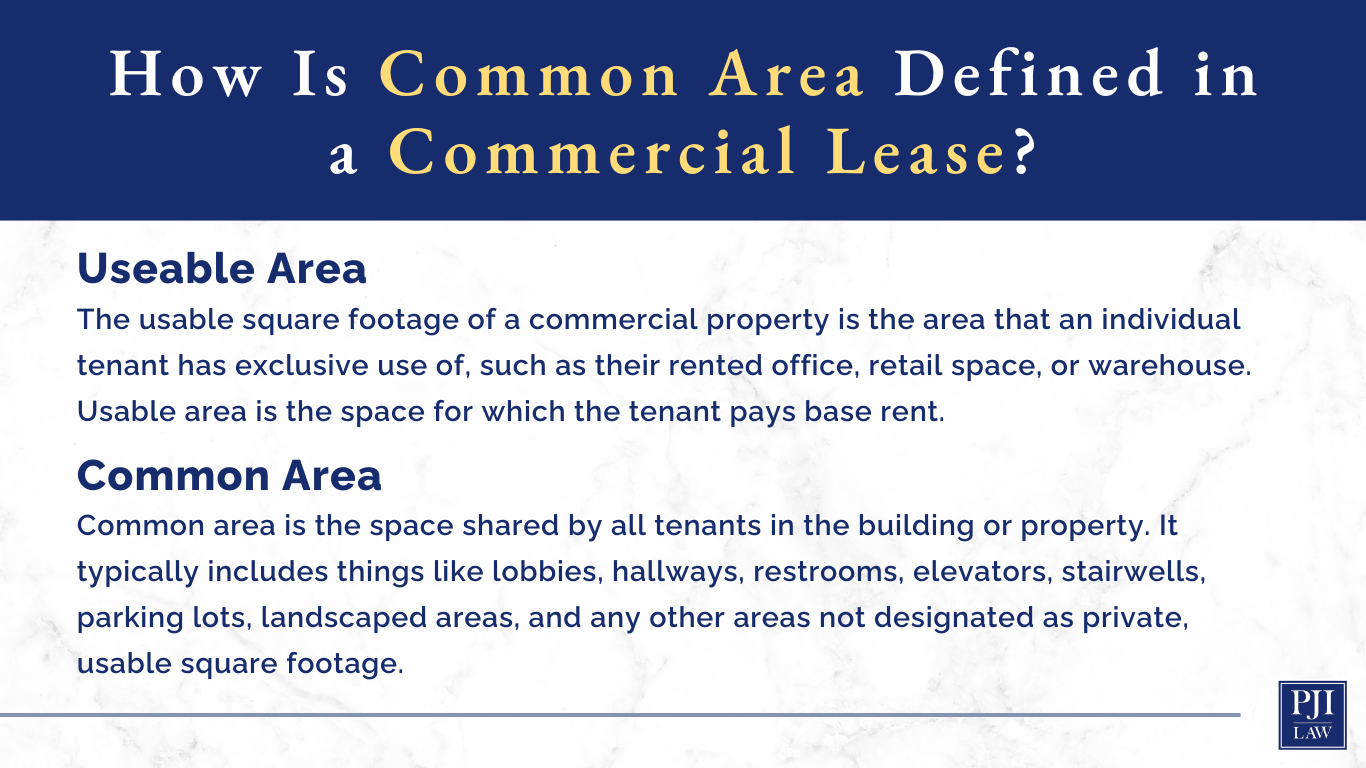
     square footage of a commercial property.

    Unfortunately, it is not uncommon for the square footage of common areas to be misrepresented or misunderstood. This can lead to discrepancies and potentially affect the actual usable area and allocation of space for tenants.

    If you’re thinking of signing a commercial lease, carefully review lease agreements and seek clarity on the delineation of common areas. Protect your best interests by working with an experienced commercial lease attorney.

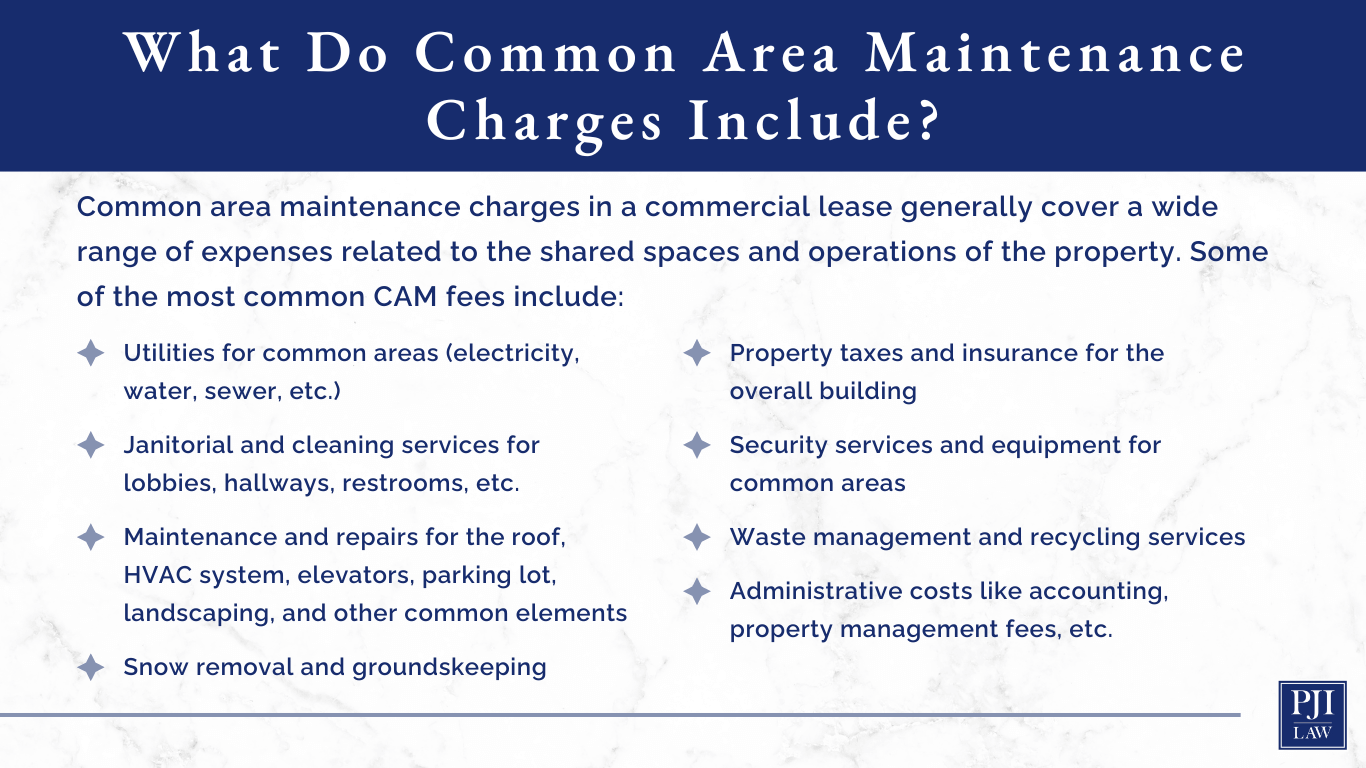
    commercial lease attorney

     commercial lease attorney.

    The specific inclusions can vary by property and can be negotiated as part of the commercial lease agreement. Some landlords may also include a small percentage markup on top of the actual costs to cover their overhead. A thorough review of the lease terms with an experienced commercial lease lawyer will give you a thorough understanding of what your CAM charges will cover.

    Who Pays CAM Charges?

    In a commercial lease, the common area maintenance charges are paid by the tenants. The landlord is responsible for managing and maintaining the common areas, but the costs are passed on to the tenants on a pro-rata basis.

    How Are Common Area Charges Calculated?

    The specific calculation for common area maintenance charges can vary but is usually based on the percentage of the total rentable square footage that a tenant’s leased space occupies. This is known as the tenant’s pro-rata share.

    For example, let’s say a commercial building has 100,000-square-feet of rentable space, and an individual tenant is leasing 5,000-square-feet of that space. The tenant’s pro-rata share would be 5% (5,000 / 100,000). If the total annual CAM expenses for the building were $200,000, the tenant would be responsible for paying 5% of that, which comes out to $10,000 per year.

    The pro-rata share calculation is often detailed in the original lease agreement, but a commercial lease lawyer can help review the specifics and ensure the charges are calculated correctly. They can also negotiate favorable terms around the CAM fee structure during the leasing process.

    Is CAM Considered a Part of Rent?

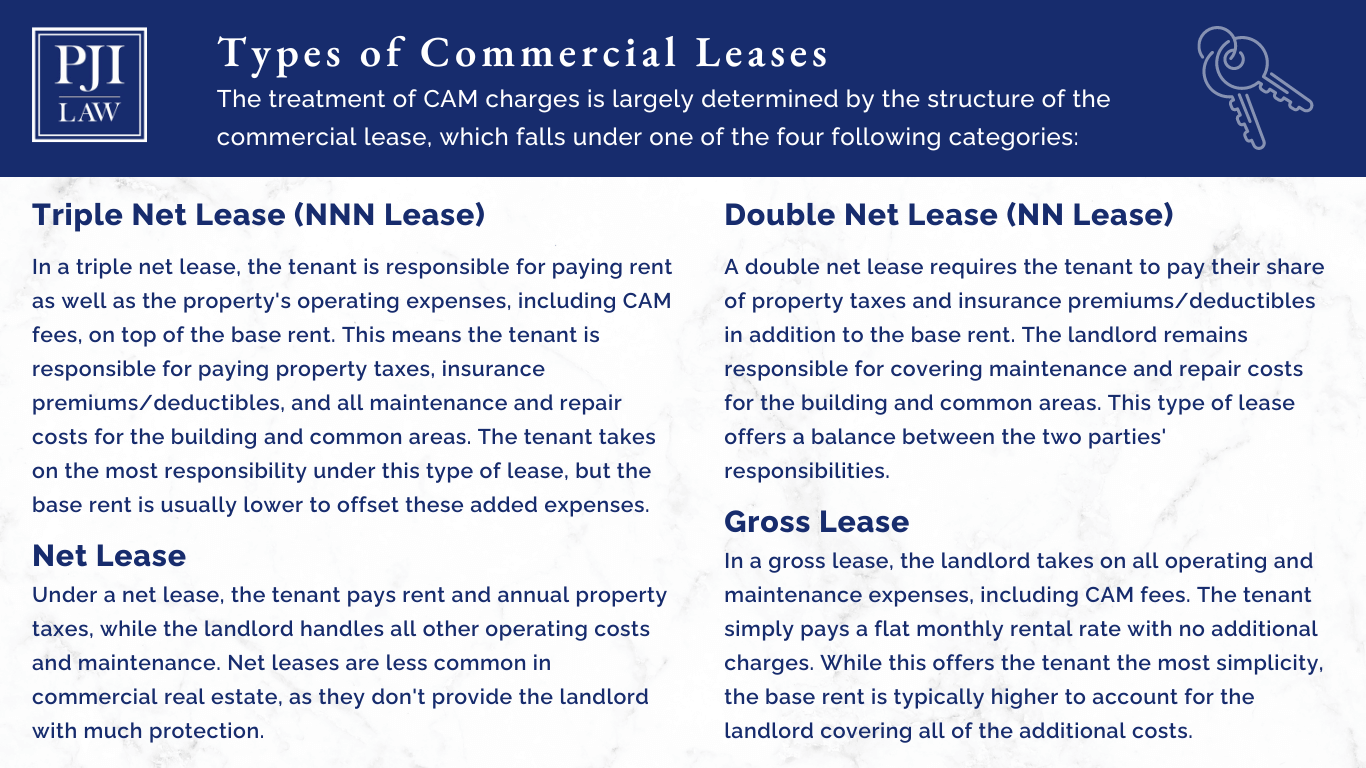
    The answer to whether common area maintenance (CAM) charges are considered part of the rent depends on the type of commercial lease agreement. In some cases, CAM fees are bundled into the total monthly rent payment, while in other types of lease agreements, they are billed separately.
    commercial lease attorney

    In summary, whether CAM charges are considered part of the rent or billed separately depends entirely on the type of commercial lease agreement. In net, double net, and triple net leases, the CAM fees are additional costs on top of the base rent. But in gross leases, the CAM expenses are already factored into the total monthly rent payment. A careful review of the lease documents with an experienced commercial lease attorney is essential to fully understand how these fees will be handled.

    What Is CAM Reconciliation?

    commercial lease attorney

    In addition to understanding how common area maintenance (CAM) charges are structured within a commercial lease, it’s important for tenants to be aware of the CAM reconciliation process. CAM reconciliation refers to the annual accounting and review of the actual CAM expenses incurred by the landlord versus the CAM fees the tenant has paid over the course of the same year.

    At the end of the calendar or fiscal year, the landlord will provide the tenant with a detailed statement outlining the total CAM costs for the entire property. This includes things like utilities, janitorial services, landscaping, repairs and maintenance, insurance, taxes, and any administrative fees. The landlord will then calculate each tenant’s pro-rata share of those expenses based on the square footage of their leased space.

    The landlord will compare the total CAM fees the tenant has paid throughout the year to their actual pro-rata share of the expenses. If the tenant has paid more than their share, they will receive a credit or refund. Conversely, if the tenant has underpaid, they will owe the landlord the difference.

    For example, let’s say a tenant is leasing 5,000-square-feet in a 100,000-square-foot building. Their pro-rata share of the total $200,000 in annual CAM costs would be 5%, or $10,000. If the tenant had paid $11,000 in CAM fees over the course of the year, they would receive a $1,000 credit or refund from the landlord after reconciliation.

    On the other hand, if the tenant had only paid $9,000 in CAM fees, they would owe the landlord an additional $1,000 to cover their full share of the expenses.

    The CAM reconciliation process is an important protection for tenants, ensuring they are only responsible for paying their fair share of the property’s operating costs. However, it’s critical to review the reconciliation statements carefully with the help of a commercial lease lawyer. This will help identify any potential errors or overcharges.

    commercial lease lawyer

    How to Negotiate CAM Charges

    When negotiating the terms of a commercial lease, the common area maintenance charges should be a key point of focus for tenants. CAM fees can significantly impact the overall occupancy costs, so it’s important to work with a commercial real estate attorney to ensure they are fair and reasonable.

    Here are some tips for negotiating CAM charges in a commercial lease:

    Understand the Landlord’s Costs
    Review the landlord’s itemized list of CAM expenses and ask for supporting documentation. This will give you a clear picture of where the money is being spent and whether any of the costs seem inflated or unnecessary. A commercial real estate attorney can help analyze these expenses.

    Cap CAM Increases
    Negotiate a cap on how much the CAM fees can increase year-over-year, such as a 3-5% limit. This protects you from facing unexpected cost increases down the line.

    Exclude Certain Expenses
    Try to negotiate the exclusion of certain CAM expenses that may not directly benefit your business, such as costs for amenities you don’t use or security for other tenants’ spaces.

    Establish a Baseline
    Work with the landlord to establish a baseline for CAM charges based on historical data. This can help prevent the landlord from inflating the initial costs.

    Review Reconciliation
    Ensure the lease allows you to review the landlord’s annual CAM reconciliation statements and audit the expenses if needed. This holds the landlord accountable.

    Negotiate Pro-Rata Share
    If your leased space is significantly different in size or use from other tenants, negotiate a custom pro-rata share calculation that better reflects your impact on common area costs.

    The key is to approach CAM charges as an area of the lease that is open to negotiation. With the help of a knowledgeable commercial real estate attorney, you can work to structure CAM fees in a way that is fair and fits your business budget.

    The Experienced Commercial Lease Attorneys at PJI Law Are Ready to Help

    Understanding and negotiating common area maintenance (CAM) charges in a commercial lease can be a complex and daunting task, but you don’t have to face it alone. At PJI Law, our team of seasoned commercial real estate attorneys is here to provide the essential support and guidance you need. Our team is well-versed in the nuances of commercial lease agreements and CAM fee structures. We can help you carefully review your lease documents, analyze the landlord’s CAM expense reports, and negotiate favorable terms to ensure you are only paying your fair share.

    Whether you’re a new business owner signing your first commercial lease or an established tenant renegotiating an existing agreement, PJI Law can protect your interests and help you manage CAM costs effectively. We’ll work closely with you to develop a personalized strategy tailored to your unique situation and goals.

    Don’t let unexpected or unreasonable CAM charges derail your business operations. Call PJI Law at (703) 865-6100 or complete our online form to schedule a consultation.

    Copyright © 2024. PJI Law, PLC. All rights reserved.

    The information in this blog post (“post”) is provided for general informational purposes only and may not reflect the current law in your jurisdiction. No information in this post should be construed as legal advice from the individual author or the law firm, nor is it intended to be a substitute for legal counsel on any subject matter. No reader of this post should act or refrain from acting based on any information included in or accessible through this post without seeking the appropriate legal or other professional advice on the particular facts and circumstances at issue from a lawyer licensed in the recipient’s state, country, or other appropriate licensing jurisdiction.

    PJI Law, PLC
    3900 Jermantown Rd, 2nd Floor
    Fairfax, Virginia 22030
    (703) 865-6100
    https://pjibe.webteam.ai/

  • Understanding the Virginia Transfer on Death Deed

    Understanding the Virginia Transfer on Death Deed

    Have you ever wondered what happens to your real estate property after you pass away? Do you want to ensure that your loved ones inherit your property without going through the lengthy and expensive probate process? If you live in Virginia, you have a powerful tool at your disposal: the Virginia transfer on death deed (TOD deed). Throughout this blog post, the terms “transfer on death deed” and “TOD” will be used interchangeably.

    A TOD deed, also known as a “beneficiary deed,” allows you to designate a beneficiary who will inherit your real estate property upon your death. This simple and straightforward document can save your family time, money, and stress during an already difficult time. Continue reading as a lawyer for deed transfers from PJI Law, shares what you need to know about the Virginia transfer on death deed, its benefits, requirements, and how to create one.

    What is a Virginia Transfer on Death Deed?

    A Virginia transfer on death deed is a legal document that allows you to transfer ownership of your real estate property to a designated beneficiary upon your death. The deed is recorded with the county clerk’s office and becomes effective only after your passing. Until then, you retain full control and ownership of the property, and you can revoke or modify the deed at any time.

    One of the primary advantages of a TOD deed is that it allows your property to pass directly to your beneficiary without going through probate. Probate is the legal process of distributing a deceased person’s assets, and it can be time-consuming, expensive, and stressful for your loved ones. By using a TOD deed, you can ensure a smooth and efficient transfer of your property.

    Benefits of a Virginia Transfer on Death Deed

    There are several key benefits to using a Virginia transfer on death deed:

    • Avoids Probate: As mentioned earlier, a TOD deed allows your property to pass directly to your beneficiary without going through probate. This can save your family significant time and money. 
    • Retains Control: With a TOD deed, you retain full control and ownership of your property during your lifetime. You can sell, mortgage, or otherwise encumber the property as you see fit.
    • Revocable: You can revoke or modify your TOD deed at any time during your lifetime. This flexibility allows you to adapt to changing circumstances or preferences. 
    • Simplicity: Creating a TOD deed is a simple and straightforward process. You don’t need to create a trust or navigate complex legal structures.

    Requirements for a Virginia Transfer on Death Deed

    To create a valid transfer on death deed in Virginia, you must meet the following requirements:

    • Legal Capacity: You must be at least 18 years old and of sound mind. 
    • Property Ownership: You must be the sole owner of the property or a joint owner with the right of survivorship. 
    • Beneficiary Designation: You must designate a beneficiary who will inherit the property upon your death. You can also designate multiple beneficiaries and specify the percentage of ownership each will receive. 
    • Signature and Notarization: The deed must be signed by you and notarized. 
    • Recording: The deed must be recorded with the clerk’s office in the county where the property is located.

    Creating a Virginia Transfer on Death Deed

    While it is possible to create a Virginia transfer on death deed on your own, it is highly recommended to seek the assistance of a qualified lawyer for deed transfer. An experienced attorney can ensure that your TOD deed is properly drafted, executed, and recorded, minimizing the risk of errors or legal challenges.

    When you work with an attorney to create your TOD deed, you can benefit from their experience and guidance throughout the process. Your attorney will:

    • Review Your Estate Plan: Your attorney will review your overall estate plan to ensure that a TOD deed is the best option for your specific situation and goals. 
    • Draft the TOD deed: Your attorney will carefully draft your TOD deed, ensuring that it meets all legal requirements and accurately reflects your wishes. 
    • Ensure Proper Execution: Your attorney will oversee the signing and notarization of your TOD deed, ensuring that all necessary formalities are met. 
    • Record the Deed: Your attorney will handle the recording of your TOD deed with the appropriate county clerk’s office, saving you time and hassle.

    In addition to these services, your attorney can also provide valuable advice and answers to any questions you may have about the TOD deed process or your estate plan in general. They can help you navigate complex family dynamics, tax considerations, and other factors that may impact your decisions.

    By working with an experienced lawyer for deed transfer, you can have peace of mind knowing that your Virginia transfer on death deed is properly created and executed, protecting your wishes and your loved ones’ future.

    Revoking or Modifying a Virginia Transfer on Death Deed

    If you change your mind about your beneficiary designation, you can revoke or modify your TOD deed at any time. To do so, you have two options:

    • Create a New TOD deed: You can create a new TOD deed that supersedes the previous one. The new TOD deed must be properly signed, notarized, and recorded. 
    • Create a Revocation: You can create a revocation document that nullifies the previous TOD deed. The revocation must also be signed, notarized, and recorded.

    It’s important to note that a TOD deed is automatically revoked if you sell or transfer the property during your lifetime.

    The Virginia transfer on death deed is a powerful estate planning tool that can help you ensure a smooth and efficient transfer of your real estate property to your loved ones. By understanding the benefits, requirements, and process of creating a TOD deed, you can make informed decisions about your estate planning and provide peace of mind for yourself and your family.

    Simplify Your Estate Planning with a Virginia Transfer on Death Deed

    If you’re a Virginia property owner looking to ensure a smooth and efficient transfer of your real estate to your loved ones, a transfer on death deed (TOD deed) may be the perfect solution for you. By creating a TOD deed with the help of a knowledgeable lawyer for deed transfer, you can avoid the lengthy and costly probate process and provide peace of mind for yourself and your family. If you’ve been searching online for a “deed transfer lawyer near me,” contact our team instead.

    At PJI Law, our dedicated team of Fairfax, VA estate planning attorneys is here to guide you through the process of creating a transfer on death deed that meets your unique needs and goals. We understand that estate planning can be overwhelming, which is why we take a personalized approach to every client’s situation. Our attorneys will take the time to understand your wishes, explain your options, and craft a legally sound TOD deed that protects your interests and ensures your property passes to your chosen beneficiaries.

    Don’t leave the future of your estate to chance. Take control of your legacy and provide a lasting gift to your loved ones by creating a Virginia transfer on death deed with PJI Law. To learn more about how a TOD deed can benefit you and your family, call PJI Law today at (703) 865-6100 to schedule a consultation with one of our compassionate and knowledgeable estate planning attorneys. If you prefer, you can also request your consultation through our secure online form.

    Copyright © 2024. PJI Law, PLC. All rights reserved.

    The information in this blog post (“post”) is provided for general informational purposes only and may not reflect the current law in your jurisdiction. No information in this post should be construed as legal advice from the individual author or the law firm, nor is it intended to be a substitute for legal counsel on any subject matter. No reader of this post should act or refrain from acting based on any information included in or accessible through this post without seeking the appropriate legal or other professional advice on the particular facts and circumstances at issue from a lawyer licensed in the recipient’s state, country, or other appropriate licensing jurisdiction.

    PJI Law, PLC
    3900 Jermantown Rd, 2nd Floor
    Fairfax, Virginia 22030
    (703) 865-6100
    https://pjibe.webteam.ai/
  • What Type of Virginia POA Do I Need?

    What Type of Virginia POA Do I Need?

    Consider these two different scenarios: a Richmond business owner is attending an important conference in another state when he receives a call from his assistant about an urgent matter that requires his attention back home. Meanwhile, in a Richmond hospital, a grieving family faces the prospect of making critical medical decisions for their beloved grandfather, but because he cannot communicate with them and leaves no instructions behind, they don’t know what to do. They would honor his preferences if only they knew what they were.

    Whether in business matters or matters of life and death, knowing a trusted representative could legally act on your behalf can help you avoid these difficult situations and provide peace of mind for you, your business associates, and your loved ones. That’s where a Virginia  POA — power of attorney — steps in.

    Virginia offers several types of power of attorney, each with its rules and requirements. This blog explains the different types of power of attorney in Virginia, how to obtain a POA, and what’s involved in the process.

    How does a POA fit into a comprehensive estate plan? Contact PJI Law, PLC at (804) 653-3450 to schedule a consultation. Our knowledgeable and experienced power of attorney lawyers will assist you with personalized service and attention.

    What is a Power of Attorney in Virginia? 

    A power of attorney is a legal instrument that confers authority to an individual, known as the “agent” or “attorney-in-fact”, to act on another person’s behalf, known as  the “principal.” Depending on the specific type of power of attorney, this granted authority can be broad or limited.

    Powers of attorney typically come into play when the principal is unavailable to tend to financial matters or other affairs like real estate transactions, or cannot verbalize their health care choices due to incapacity.

    As attorneys experienced in estate planning know, a power of attorney is a crucial component of a comprehensive estate plan. It gives the principal the ability to handle their affairs through an authorized individual they trust in accordance with their preferences and best interests.

    virginia power of attorney

    What are the Different Types of Power of Attorney in Virginia?

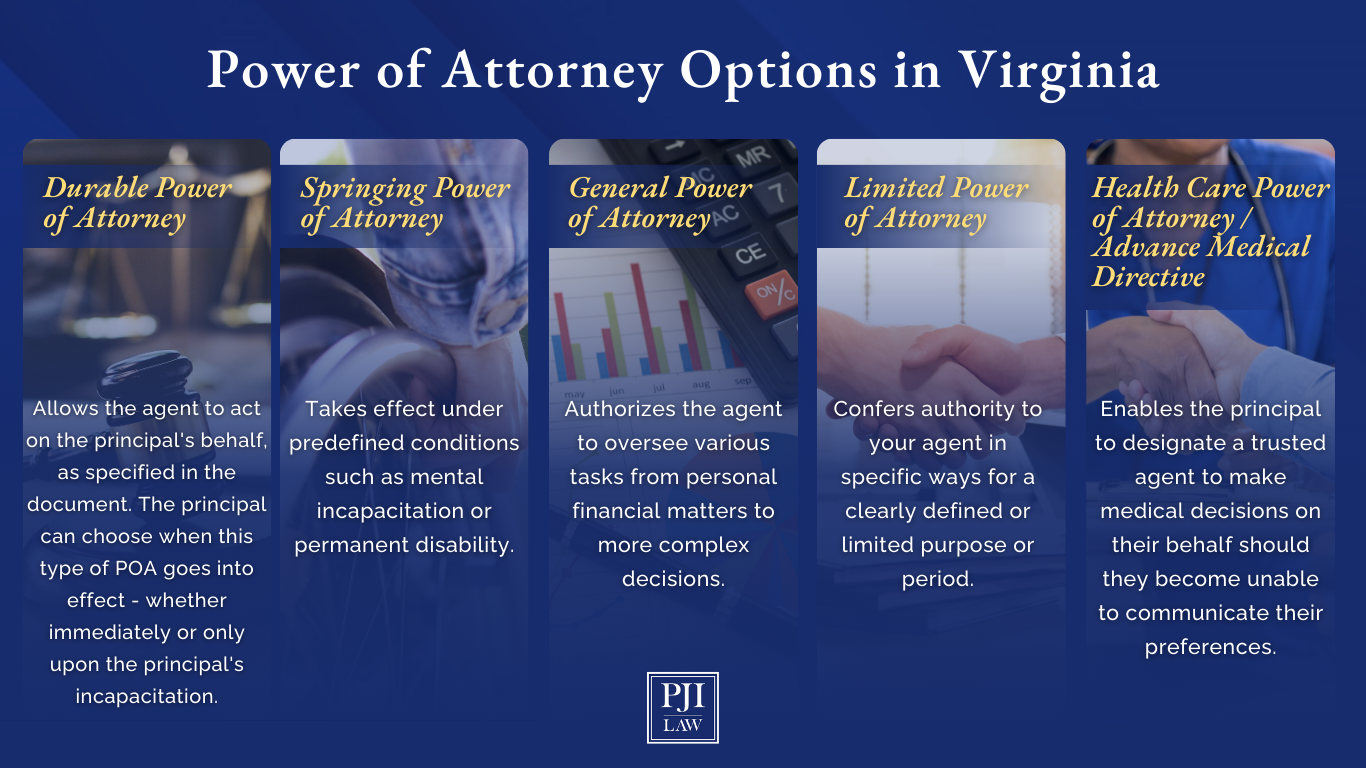
    Virginia offers several options for power of attorney.

    virginia power of attorney

    Durable Power of Attorney

    A durable power of attorney offers the principal the peace of mind of knowing that even if they become unable to manage their affairs due to incapacitation or permanent disability, their attorney-in-fact will act on their behalf as specified in the document.

    Most of us manage our personal finances but consider situations where you might also manage properties or business matters. With a durable power of attorney, your trusted agent can oversee the management of these affairs, making decisions that align with your desires and interests as outlined in the document.

    Springing Power of Attorney

    As the name suggests, a springing power of attorney takes effect under predefined conditions such as mental incapacitation or permanent disability.

    For example, if you have been diagnosed with a health condition, you could establish a springing power of attorney that activates when your condition reaches a certain level, as documented by a healthcare professional.

    The powers stated in this document ensure the prompt handling of your personal and financial matters by your attorney-in-fact during health adversities.

    General Power of Attorney

    With a general power of attorney, your appointed agent can oversee various tasks, from personal financial matters to more complex decisions, so that your affairs run smoothly in your absence.

    The authority granted in a general power of attorney could span from managing everyday banking transactions to endorsing significant contracts on your behalf.

    Limited Power of Attorney

    In contrast, a limited power of attorney confers authority to your agent in specific ways for a clearly defined or limited purpose or period. For example, with a limited power of attorney, your agent could complete a real estate transaction on your behalf if you cannot be physically present.

    A limited power of attorney assures the principal that the agent or attorney-in-fact will accomplish specific tasks according to their instructions, regardless of their availability.

    Thus far, these powers of attorney have primarily pertained to financial and specific transactions. However, as an experienced attorney can attest, when creating an estate plan there is another critical subject to consider – your health care decisions. To address these vital considerations, Virginia law offers a health care power of attorney – more commonly known as an advance medical directive.

    Health Care Power of Attorney / Advance Medical Directive

    As you and your attorney plan for your future, a health care power of attorney or advance medical directive should become part of your estate plan. This legal document enables you to designate a trusted individual to make medical decisions on your behalf if you become unable to communicate your preferences.

    Often referred to as your health care agent or proxy, you could choose to entrust this person with decisions ranging from minor medical procedures to life-saving measures, depending on the scope of authority you stipulate in the health care power of attorney or advance medical directive.

    Your health care agent or proxy coordinates with your medical team to respect and implement your treatment preferences. A skilled attorney can guide you through this process and create a legally sound document that complies with the law and accurately states your desires.

    Would you like to learn more about a health care power of attorney/advance medical directive? We invite you to read our blog, “The Importance of Having a Virginia Advance Medical Directive in Place.”

    virginia power of attorney

    Obtaining a Power of Attorney

    When going through the process of creating a power of attorney, you first want to carefully consider the individual who will serve as your agent. This person should be a competent adult who has earned your trust because a power of attorney will give them the authority to act on your behalf as your agent.

    Next, determine the type and extent of the authority you want to confer to your agent. As we noted above, this authority can be limited, e.g. handling real estate property transactions, or much broader in scope to include your financial matters and health care decisions.

    Working with a knowledgeable and experienced attorney, you can discuss your unique circumstances and establish a legal document or multiple legal documents that meet your needs. Your attorney will make sure the document stipulates your authorized agent and the scope of their authority because financial institutions and other institutions will also review it. 

    Notarizing Your Power of Attorney

    Once completed, the principal’s signature on a power of attorney must be notarized, per Virginia law, to be considered genuine. A notary public will confirm your identity and the fact that you consent to sign the power of attorney willingly and not under duress.

    If you have notarized a durable power of attorney that could potentially be used for real estate property transactions, it should be recorded in the circuit court of the county in which the property is located.

     virginia poa

    Another scenario in which a power of attorney could terminate is if a court appoints a guardian or conservator for you unless the court order specifies otherwise.

    How Powerful Is a Power of Attorney in Time of Need?

    A power of attorney carries significant implications in business matters and medical emergencies where an individual cannot verbalize their wishes, giving others the benefit of knowing exactly what the principal desires even if they are unavailable or incapacitated.

    Business-Related Scenario

    Imagine a scenario where a business owner becomes incapacitated due to illness or injury. With a valid power of attorney, the appointed agent or attorney-in-fact can step in to manage the day-to-day operations of the business, make critical decisions, sign contracts, access financial accounts, and represent the owner in legal matters. With the agent fulfilling these duties, it ensures continuity in business operations and prevents disruptions that could adversely affect the company’s performance, employees, and reputation.

    Medical Emergency Scenario

    Consider a situation where an individual experiences a serious accident, leaving them unable to communicate their medical preferences or decisions. If this person has designated a health care power of attorney, the appointed agent can make medical decisions on their behalf based on the written authority and instructions outlined in the power of attorney document. These instructions include choices about medical treatments, surgeries, medications, and end-of-life care.

    With a health care power of attorney, the appointed agent can ensure that all involved parties respect the individual’s wishes, alleviating the burden on family members who may otherwise struggle to make difficult decisions during such critical times.

    A Virginia power of attorney empowers individuals to plan for unforeseen circumstances and provides clarity and assurance to business and health care decision-making processes, ultimately reducing stress and uncertainty in stressful situations.

    Successor Agents and Powers of Attorney

     virginia poa

    When drafting powers of attorney with the assistance of an experienced attorney, you can secure greater peace of mind for your family and business associates by appointing a successor agent. The individual designated as the successor agent assumes authority when the original agent cannot fulfill their duties due to illness, incapacity, or other reasons. Designating a successor trustee provides greater security because if your initially appointed agent cannot act on your behalf, someone you trust can still manage your affairs and assets.

    As your attorney will counsel, when granting another person the authority to act on your behalf, making an informed decision is in your best interest. Whether authorized with a broad range of acts or given specific authority confined to a single transaction, your designated agent should have earned your trust, have your best interests in mind, and be willing to act according to your wishes.

    Frequently Asked Questions about Power of Attorney in Virginia

    What is a power of attorney (POA) in Virginia?

    A power of attorney is a legal document granting written authority to an agent or attorney-in-fact to make decisions on behalf of the principal (the person creating the power of attorney) in financial matters, business matters, or health care matters when the principal cannot act.

    How can I create a power of attorney in Virginia?

    The best way to create a power of attorney is by consulting a Virginia estate planning lawyer who can help you determine your choice of agent and draft a document that complies with state laws and requirements.

    What types of decisions can an agent make under a power of attorney in Virginia?

    An appointed agent can make decisions related to financial matters, health care choices, real estate property transactions, taxes and tax matters, and legal affairs as specified in the power of attorney document.

    Is it necessary to notarize a power of attorney in Virginia?

    Yes, to comply with Virginia law, you must sign the power of attorney document in the presence of a notary public to validate the authenticity of the signature and the fact that you are establishing the document freely and not under duress.

    Should I include a power of attorney in my Virginia estate plan?

    Depending on the circumstances of each person, a power of attorney can be a crucial component of estate planning, allowing designated individuals to manage assets, make financial decisions, and handle legal matters on behalf of the principal. Because we don’t know what the future will bring, a health care power of attorney, also known as an advance directive, is something everyone should include in their estate plan for their benefit and the benefit of their loved ones. It makes dealing with a medical emergency easier when you can provide prior written instructions for your agent, family, and medical team.  

    How long does a power of attorney remain valid in Virginia?

    In Virginia, a power of attorney remains in effect until the principal dies, revokes the document, until the specific purpose outlined in the power of attorney is fulfilled, or if the agent resigns without a named successor.

    What is the Uniform Power of Attorney Act in Virginia?

    The Uniform Power of Attorney Act in Virginia is a legislative framework that establishes guidelines for the creation, execution, and enforcement of power of attorney documents within the state. This act seeks to promote consistency and clarity in the language used in the power of attorney documents, delineating the powers granted to agents and specifying obligations and responsibilities.

    Under this act, key provisions may include definitions of terms related to powers of attorney, rules governing the execution and signing of power of attorney documents, guidelines for the agent’s conduct, protection for third parties who act in good faith based on the power of attorney, and mechanisms for addressing disputes or abuse of power.

    By adopting the Uniform Power of Attorney Act, Virginia aligns its practices with standardized principles and regulations, enhancing transparency, safeguarding against exploitation, and facilitating smoother transactions involving power of attorney arrangements.

    How can a Virginia power of attorney prevent financial exploitation of the principal?

    A Virginia power of attorney can serve as a crucial tool in protecting the principal by establishing clear guidelines, oversight mechanisms, and legal protections. By granting written authority to a trusted agent, the power of attorney document outlines the specific powers and limitations of the agent, reducing the risk of unauthorized actions or abuse.

    Furthermore, the Virginia Uniform Power of Attorney Act and relevant statutes, such as 18.2-178.2, provide legal frameworks to deter and penalize agents who engage in this type of exploitation of vulnerable adults. Agents under a power of attorney are subject to scrutiny by organizations like Virginia Adult Protective Services (APS), which receive and investigate reports of suspected elder abuse, neglect, or exploitation. Reporting suspected abuse can help prevent further financial harm.

    Consult attorneys who focus on estate law for more information.

    Does a Virginia power of attorney allow the agent to view the principal’s tax information?

    A Virginia power of attorney can authorize an agent to discuss designated tax issues with the Virginia Department of Taxation. This authorization is typically granted through a Power of Attorney and Declaration of Representative (Form PAR 101) form. The agent may be empowered to access tax information, represent the grantor in tax-related interactions, and handle specific tax issues on behalf of the grantor.

    How can power of attorney lawyers in Virginia help me?

    Experienced attorneys can guide you through the process of creating a power of attorney as a vital part of your overall estate plan, discussing important issues like financial planning, medical directives, and your choice of agent.

    Do I need power of attorney lawyers to create a power of attorney in Virginia?

    While it is not mandatory to have a lawyer, consulting knowledgeable and experienced power of attorney lawyers can provide valuable insights, ensure legal compliance, and tailor the power of attorney to meet your specific needs and circumstances.

    Let the Power of Attorney Lawyers at PJI Law, PLC Assist You with Personalized Service and Attention 

    With the right power of attorney, you can secure your future, knowing your affairs are in trusted and capable hands. Have you been typing “power of attorney lawyer near me,” into your search bar? 

    Whether preparing for a future outcome or dealing with an urgent situation, the power of attorney lawyers at PJI Law can help you determine the type of power of attorney that best serves you and your individual situation.

    At PJI Law, our valued clients receive our complete dedication, personal attention, and courteous, white-glove service. Contact us at (804) 653-3450 or complete our online form to schedule a consultation. Let us establish a Virginia POA that aligns with your personal goals and meets your family’s needs.

    Copyright © 2024. PJI Law, PLC. All rights reserved.

    The information in this blog post (“post”) is provided for general informational purposes only and may not reflect the current law in your jurisdiction. No information in this post should be construed as legal advice from the individual author or the law firm, nor is it intended to be a substitute for legal counsel on any subject matter. No reader of this post should act or refrain from acting based on any information included in or accessible through this post without seeking the appropriate legal or other professional advice on the particular facts and circumstances at issue from a lawyer licensed in the recipient’s state, country, or other appropriate licensing jurisdiction.

    PJI Law, PLC
    4108 E Parham Rd, 
    Richmond, VA 23228
    (804) 653-3450
    https://pjibe.webteam.ai/

  • An Experienced Richmond Estate Planning Attorney Answers Frequently Asked Questions

    An Experienced Richmond Estate Planning Attorney Answers Frequently Asked Questions

    According to Caring.com, for the first time since 2020, the number of Americans with a will has declined, with only 32 percent reporting that they have an estate plan in 2024. The 40 percent of Americans who don’t have a will cite a lack of assets as the primary reason, with lower-income Americans twice as likely to cite this reason as the highest-income group.

    However, as experienced Richmond estate planning lawyers know, estate planning is vital for everyone, regardless of wealth or income. At PJI Law, PLC, our estate planning attorneys have helped many individuals and families in and around Richmond create estate plans tailored to their unique needs and circumstances. This blog shares the most frequently asked questions we receive about Richmond estate planning. Continue reading for an overview, then contact us at (804) 653-3450 for personalized service and attention.

    What Is Estate Planning?

    Briefly, estate planning involves making decisions about the management of your assets if you become incapacitated or pass away. Should you become incapacitated, another person would have to manage your bank accounts, pay your bills, authorize medical treatment, and oversee your assets. Married couples might assume the other spouse would fulfill these responsibilities—but what happens if your spouse is also incapacitated? In your estate plan, you can designate a personal representative and backup representatives, conferring legal authority to them to carry out your wishes.

    While facing the prospect of our own mortality is difficult, since you cannot take your bank accounts and possessions with you, creating an estate plan enables you to decide in advance who will receive your assets—whether family members, friends, charities, or places of worship. With the guidance of experienced estate planning attorneys in Richmond, you can establish an estate plan that fulfills your wishes and complies with Virginia laws.

    If My Estate Is Small, Do I Still Need a Virginia Estate Plan?

    As we mentioned, surveys demonstrate that a common misperception persists that estate plans are only for the wealthy. However, regardless of your estate’s perceived simplicity, everyone needs an estate plan that legally outlines their wishes for medical care if they become incapacitated, designates personal representatives to act on their behalf, and identifies their beneficiaries. Under Virginia intestacy laws, if you die without a will, your assets will go to your closest relatives—which may or may not align with your desires. If you experience a devastating accident without leaving written instructions, a Virginia judge will control your person and your estate.

    Why Does Everyone Need an Estate Plan?

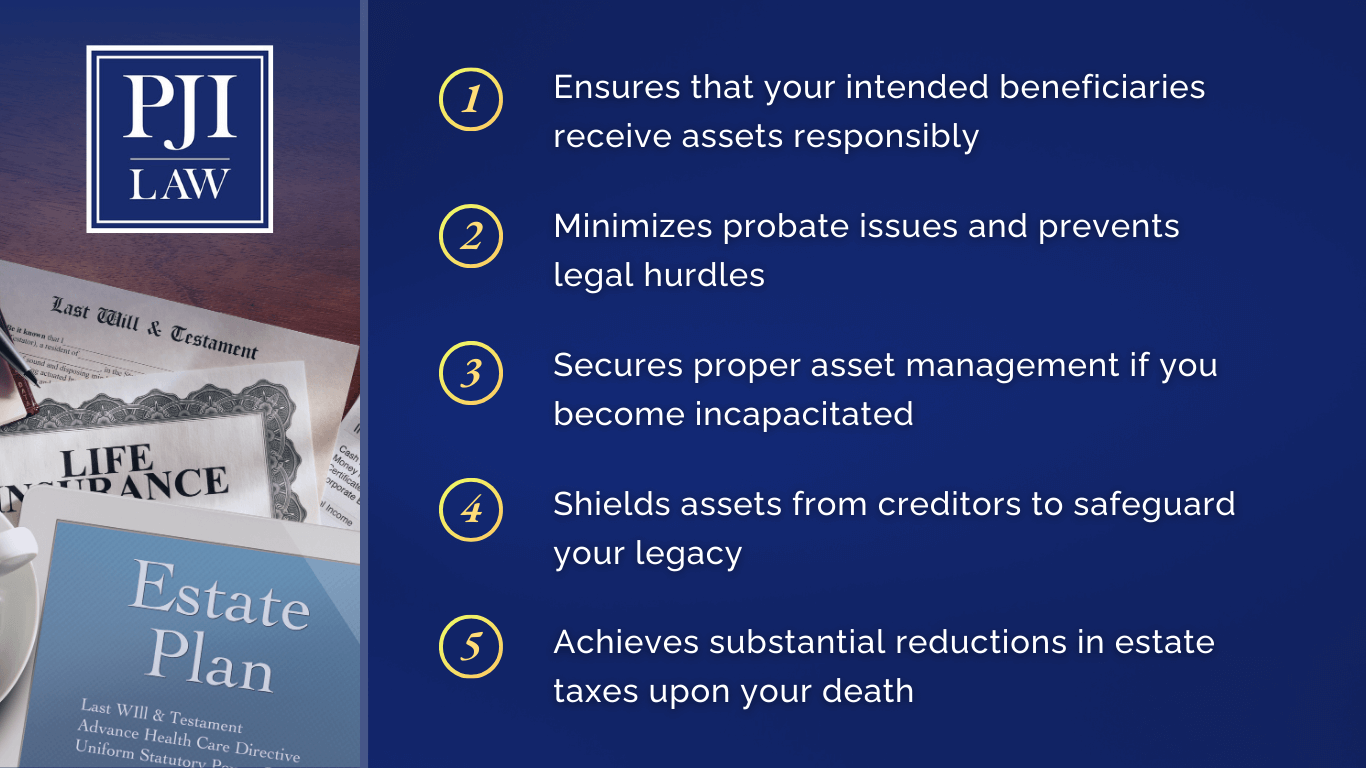
    As experienced Richmond estate planning attorneys can attest, a well-executed estate plan:

    richmond estate planning attorney

    Can I Create My Own Virginia Estate Plan?

    In today’s digital landscape, countless websites explain how individuals can make their own estate plans. However, these websites often lack data about Virginia or federal statutes and contain outdated information pertaining to estate planning laws.

    Furthermore, estate planning is a highly individualized process that considers the unique circumstances and goals of each person. At PJI Law, PLC, our estate planning lawyers provide knowledgeable advice tailored to you and your situation. Working with us, you can rest assured that we are up to date on estate law as regulated by the Commonwealth of Virginia, the federal government, and the Internal Revenue Service.

    richmond estate planning attorney

    What are the Four Foundational Estate Planning Documents?

    richmond estate planning attorney

    There are four foundational estate planning documents everyone in and around Richmond, Virginia should have, regardless of their financial circumstances.

    Wills

    Wills are an essential component of an estate plan. A legally valid will ensures the distribution of your property according to your wishes after you pass away. Wills enable couples and individuals with minor children to designate a guardian to secure their future should both parents tragically die before their children turn 18. Wills are also excellent vehicles for giving back to society through a contribution to your choice of charity.

    Unlike a trust or a power of attorney—legal instruments that address incapacitation—a will only becomes effective upon death.

    Virginia Requirements for Legally Valid Wills

    Virginia state law has specific mandates for wills, including:

    • Age: the testator (the person creating the will) must be 18
    • Written: wills must be documented in writing; Virginia does not recognize oral wills
    • Competence and Voluntary Creation: Wills must be made freely by testators with sound minds, without the undue influence of others
    • Witnesses: Wills must be witnessed by two individuals

    Trusts

    Although many Americans mistakenly believe trusts are for the wealthy, all income levels can benefit from this excellent estate planning tool. Once established, a trust helps you:

    • Minimize taxes
    • Avoid probate
    • Distribute assets as you desire

    With a trust, you can also provide for the continued care of disabled loved ones and beloved pets when your life ends.

    The Three Trust Components

    Grantor/Settlor – the grantor, also referred to as the settlor, is the person who creates the trust

    Trustee – the trustee is the person with conservatorship of the trust property and has a fiduciary responsibility to abide by the terms of the trust. Trustees know and uphold the wishes of grantors.

    Beneficiary – the person or persons designated by the grantor to receive the contents of the trust. Beneficiaries can include spouses, family members, minor children, other loved ones or organizations, to include charities of the grantor’s choosing.

    Various trust options are available in Richmond, Virginia

    Revocable Living Trusts

    One of the most significant benefits of a revocable living trust is that it helps avoid probate court, with smooth asset distribution to your beneficiaries. This flexible option allows you to maintain control over the contents of the trust while offering the ability to make changes as needed.

    Irrevocable Trusts

    As the name suggests, you cannot change an irrevocable trust once you establish it. In exchange for these stringent rules, you receive distinct advantages, including asset protection from creditors and a reduction of your tax burden. When you transfer assets into an irrevocable trust, they no longer count toward your estate’s value, potentially diminishing your estate tax liability. People often leverage irrevocable trusts for specific estate planning purposes, such as life insurance policies or charitable giving.

    Special Needs Trusts

    These trusts seek to provide for individuals with disabilities while still enabling them to qualify for government assistance.

    Qualified Terminable Interest Property Trusts (QTIP)

    These trusts care for a surviving spouse by providing income during their lifetime, with the remaining assets going to the settlor’s beneficiaries upon the surviving spouse’s death.

    Testamentary Trusts

    These trusts are established by wills and take effect after the settlor’s death. These legal instruments oversee asset distribution for beneficiaries. Because testamentary trusts are born out of wills, they do not avoid probate but instead are administered through the probate process.

    Charitable Trusts

    The settlor can enjoy tax benefits and benefit a specific charity or cause with charitable trusts.

    Pet Trusts

    With a pet trust, you can ensure that someone will care for your pets after you pass away.

    Spendthrift Trusts

    A spendthrift trust protects your beneficiaries from their own bad financial decisions by limiting their access to trust funds.

    Generation-Skipping Trusts

    A generation-skipping trust ensures asset transfer to the settlor’s grandchildren, bypassing their children to minimize inheritance complications and preserve long-term wealth.

    richmond estate planning attorney

    Powers of Attorney (POAs) in Richmond, VA

    Have you thought about who would manage your affairs if you became incapacitated? Powers of attorney enable individuals to designate someone they trust to assume these responsibilities, without petitioning the court. Powers of attorney offer security and spare your loved ones the ordeal of a drawn-out legal process.

    Furthermore, powers of attorney spare your loved ones the need to seek a conservatorship or a guardianship through the courts—which can create a hardship for family members and postpone much-needed assistance. A power of attorney secures your well-being and fulfills your intentions, even in unanticipated circumstances.

    Four Types of Powers of Attorney

    There are four types of powers of attorney in Virginia:

    Durable Power of Attorney

    Durable powers of attorney help you secure your future in the face of unexpected events such as sudden mental incapacitation or permanent disability by delegating authority to a trusted agent to manage your affairs and making decisions that reflect your wishes and interests.

    General Power of Attorney

    With a general power of attorney, you can appoint your agent to oversee various tasks, from matters of personal finance to more complicated decisions to run your affairs smoothly during your absence.

    Limited Power of Attorney

    As the name implies, a limited power of attorney confers specific authority to your agent for a defined purpose or period. For example, if you cannot attend a real estate closing, your agent can complete the transaction on your behalf.

    Springing Power of Attorney

    Prepare for the unexpected with a springing power of attorney, which only takes effect in specific situations like mental incapacitation or permanent disability. By establishing this legal document ahead of time, you can ensure that your personal and financial affairs will be managed efficiently when needed, providing you with peace of mind during challenging times.

    Advance Medical Directives  

    Ensure your wishes are honored in times of incapacity. While a power of attorney handles finances, an advance medical directive appoints someone to make medical decisions for you. Gain peace of mind knowing your choices will be respected, even when you can’t express them. Working with experienced Richmond estate planning lawyers, you can create a clear directive that cannot be misinterpreted. 

    Three Things You Can Achieve with Advance Medical Directives

    1. Designate a Trusted Healthcare Agent – choose someone who will uphold your wishes if you cannot express them yourself. Our Richmond, Virginia attorneys will guide you through the process of appointing an agent who will have the legal authority to make medical decisions for you.
    2. Outline Your Healthcare Instructions – control your medical care by explicitly stating your preferences. Our estate planning lawyers will help you create clear, legally binding instructions.
    3. Donate Your Organs or Tissues – save lives by donating your organs or tissues to those in need or to research institutions. 

    Do Advance Medical Directives Give Healthcare Agents Unlimited Authority?

    No. Your healthcare agent can only make decisions for you when needed, following your guidance on life support and other crucial matters. If there are no instructions for a specific circumstance, your agent will decide based on your values and preferences.

    How Do I Choose the Right Agent for My Advance Directive?

    richmond estate planning attorney

    Estate planning attorneys serving Richmond and the surrounding areas can provide knowledgeable and compassionate legal assistance as you navigate the process of selecting a trustworthy healthcare agent.

    richmond estate planning attorney

    Can Estate Planning Help Me Avoid the Probate Process in Virginia? 

    Many people seek to avoid probate, the legal process through which estate administration takes place for a deceased individual, according to the terms outlined in their will. Although probate offers critical oversight, the public probate process can demand a significant amount of time and money. Due to the complexities of probate law, the personal representative would benefit from hiring a probate attorney to provide legal assistance throughout the process. For grieving families, probate can create additional stress and hardship. 

    The good news? Experienced and knowledgeable estate planning lawyers in Richmond can help you minimize or even avoid probate, utilizing several strategies.

    Revocable Living Trusts

    Establishing a revocable living trust allows you to transfer ownership of your assets to the trust during your lifetime. Upon your death, the assets held in the trust pass directly to the named beneficiaries, bypassing probate. Additionally, a living trust can provide for the management of your assets if you become incapacitated.

    Joint Ownership with Right of Survivorship 

    Secure your assets by holding them jointly with a spouse or child in Virginia. Ensure seamless transfer of ownership to the surviving joint owner upon your passing. Common forms of joint ownership include joint tenancy with right of survivorship and tenancy by the entirety.

    Payable-on-Death (POD) and Transfer-on-Death (TOD) Designations

    Specific assets like bank accounts, retirement accounts, and securities, can include POD or TOD designations. Designating beneficiaries allows these assets to pass directly to them upon your death, avoiding probate.

    Beneficiary Designations 

    Update your beneficiary designations now to ensure asset distribution to the right people without the involvement of probate. Make sure your life insurance policies, pension plans, and annuities reflect your current wishes.

    Small Estate Affidavit

    In Virginia, you can facilitate easy asset distribution to beneficiaries with a small estate affidavit if your probate estate is valued below $50,000. Avoiding the formal probate process saves time and money.

    If I Own a Business in the Richmond Area, Do I Need to Engage in Business Planning?

    For business owners, business succession planning is a critical component of estate planning. You have worked hard for your success and business succession planning with the help of estate planning attorneys can ensure that your business continues to run smoothly after your death, safeguarding its legacy and protecting your employees and stakeholders. Your lawyer can guide you through this process, taking your unique situation, needs, and goals into account.

    Do I Need to Regularly Review My Estate Plan with a Lawyer?

    richmond estate planning attorney

    In our many years of practicing law, we understand the wisdom of engaging in a regular review of your estate plan, to ensure it’s current with your wishes and life circumstances. Change is the one thing we can count on in life, and events like divorces, second marriages, the birth of children or grandchildren, and other events demand estate planning revisions and updates. Our law firm, serving Richmond and its surrounding areas, stands ready to assist you throughout life’s inevitable changes. 

    PJI Law, PLC: An Experienced Estate Planning Law Firm Serving Richmond and Surrounding Areas with Personalized Attention

    Established in 2010, our firm, PJI Law, PLC provides personalized, high-quality legal assistance to clients seeking to engage in estate planning. Our attorneys care about you and your family and want to help you prepare for the future with a comprehensive plan that addresses your wishes, complies with Virginia law and federal law, and provides peace of mind. Our Richmond, VA law firm offers our clients individualized attention and premium service. To learn more about estate planning and how we can tailor a plan that provides for your family and other loved ones, minimizes taxes, and upholds your wishes, contact us at (804) 653-3450 or complete our online form to schedule a consultation in Richmond, VA.

    Copyright © 2024. PJI Law, PLC. All rights reserved.

    The information in this blog post (“post”) is provided for general informational purposes only and may not reflect the current law in your jurisdiction. No information in this post should be construed as legal advice from the individual author or the law firm, nor is it intended to be a substitute for legal counsel on any subject matter. No reader of this post should act or refrain from acting based on any information included in or accessible through this post without seeking the appropriate legal or other professional advice on the particular facts and circumstances at issue from a lawyer licensed in the recipient’s state, country, or other appropriate licensing jurisdiction.

    PJI Law, PLC
    4108 E Parham Rd, 
    Richmond, VA 23228
    (804) 653-3450
    https://pjibe.webteam.ai/

  • How To Get Out of Non-Compete Contracts in Virginia

    How To Get Out of Non-Compete Contracts in Virginia

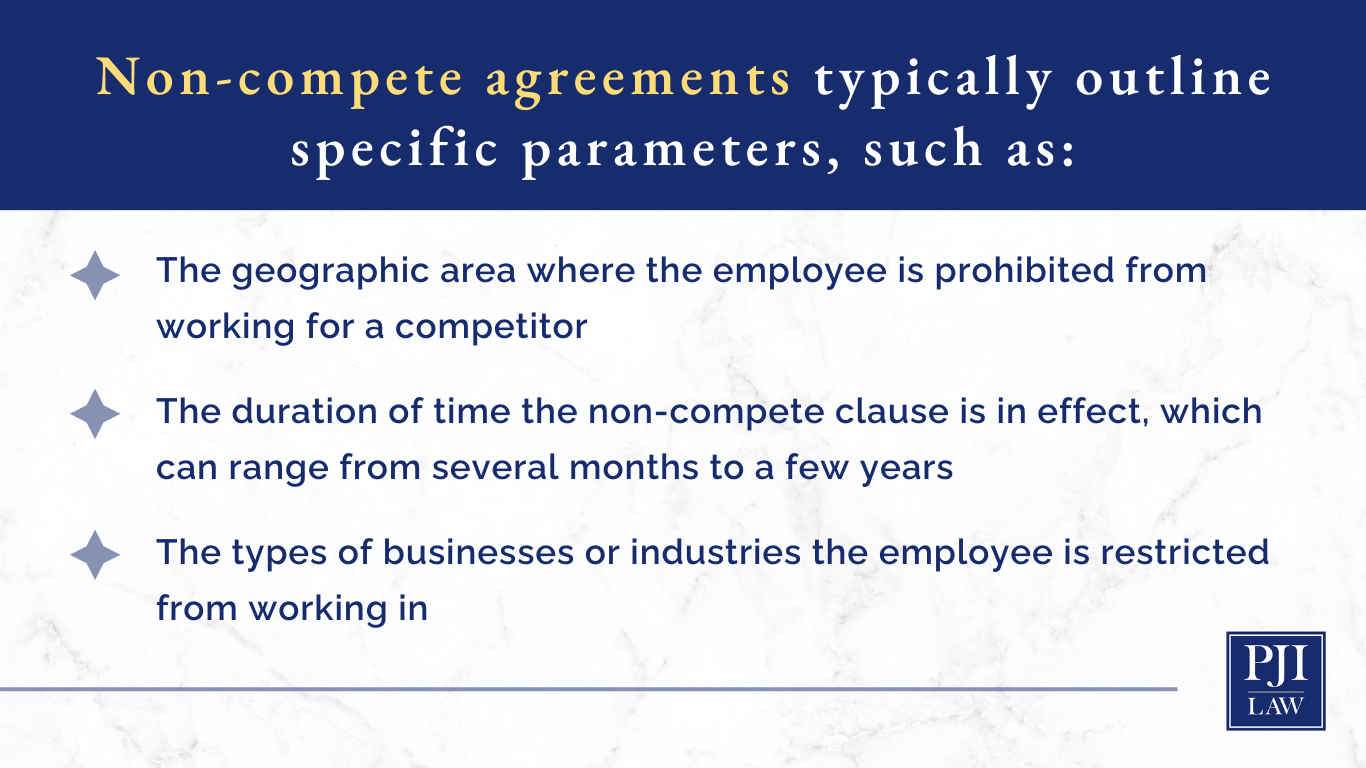
    Non-compete agreements are a common contractual clause that many employees in Virginia encounter during the hiring process. These legally binding contracts restrict an individual’s ability to work for a competitor or start a competing business for a specified period after leaving their current employer. While non-compete clauses are intended to protect a company’s sensitive information and business interests, they can also pose significant challenges for workers seeking new opportunities.

    If you’re interested in learning how to get out of non-compete contracts in Virginia, it’s crucial to understand the nuances of these agreements and the legal landscape surrounding them. In this comprehensive article, we’ll provide you with practical, step-by-step advice on how to effectively navigate the process of getting out of a non-compete contract, ensuring you can pursue your career goals free from unnecessary constraints.

    Whether you’re a skilled professional, a small business owner, or an entrepreneur, knowledge is power when it comes to potentially overcoming non-compete agreements. By the end of this article, you’ll be equipped with the information and strategies needed to assert your rights and potentially void or renegotiate the terms of your non-compete contract in Virginia.

    What Exactly Is a Non-Compete Contract?

    A non-compete contract, also known as a non-competition agreement, is a legally binding document that an employer may require an employee to sign as a condition of their employment. These contracts are designed to protect a company’s sensitive information, trade secrets, and overall business interests, by restricting the employee’s ability to work for a competitor or start a competing business for a specified period after leaving their current role.

    how to get out of non-compete contracts

    For example, if you were previously employed as a software engineer at a tech company in Virginia, your non-compete contract may have prohibited you from working for another tech company within a 50-mile radius of your former employer’s headquarters for 12 months after leaving the company. Alternatively, a non-compete agreement for a medical sales representative could restrict them from working for a competing pharmaceutical company within the state of Virginia for 18 months post-employment.

    While non-compete contracts are intended to protect a company’s competitive advantage, they can also significantly limit an individual’s career opportunities and freedom to pursue their professional goals. If you’re stuck searching for “how to get out of non-compete contracts,” this is where the experience of a skilled contract lawyer becomes invaluable.

    how to get out of non-compete contracts

    How Does the State of Virginia Treat Non-Compete Contracts?

    When it comes to non-compete contracts in Virginia, the legal landscape is nuanced and evolving. As a general rule, Virginia courts tend to disfavor these types of agreements because they can potentially restrain free commerce, as well as an individual’s ability to pursue their career aspirations. However, the state also recognizes the legitimate business interests that employers seek to protect through non-compete clauses.

    how to get out of non-compete contracts

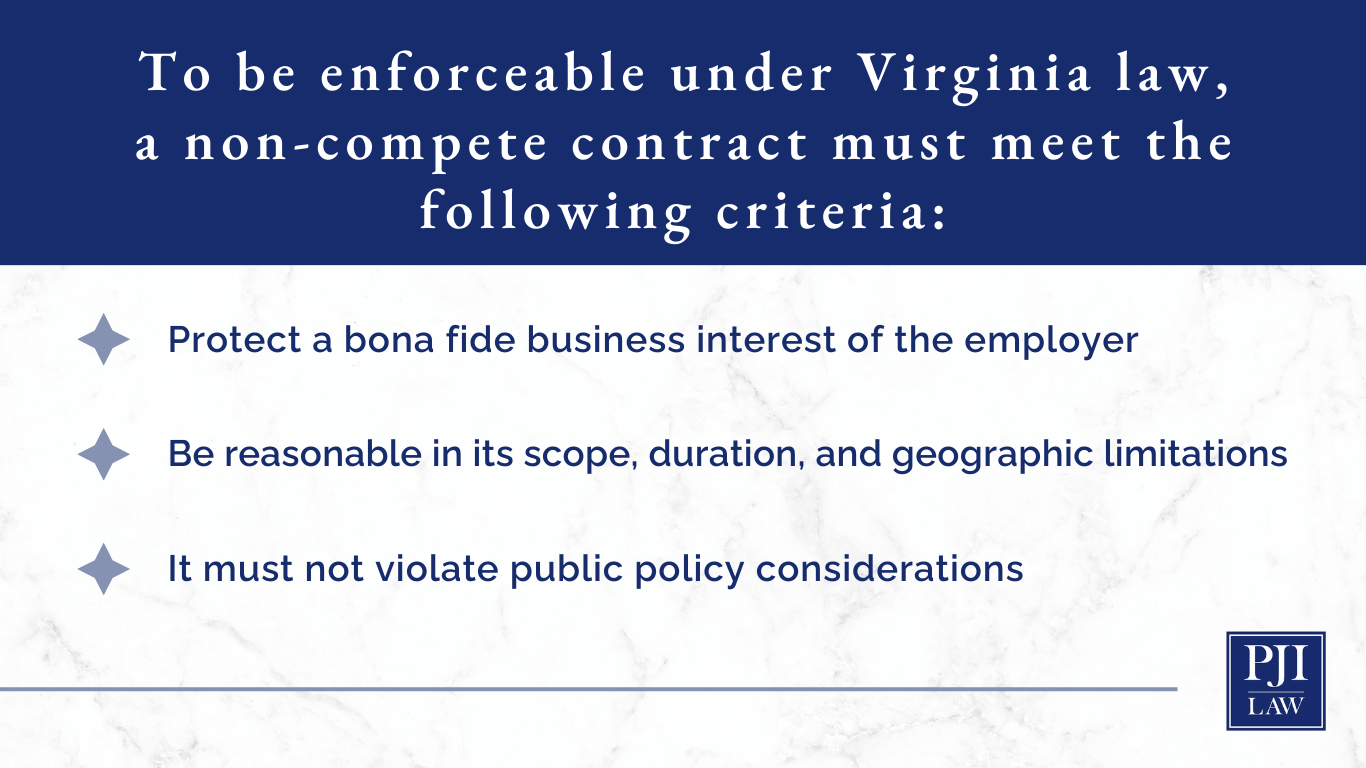
    Virginia courts have upheld non-compete agreements that safeguard an employer’s sensitive information, trade secrets, and existing customer relationships. The more narrowly the non-compete is tailored, the more likely it is to be deemed reasonable and enforceable.

    The state has also taken steps to limit the enforceability of non-compete contracts for certain low-wage employees. A recent state law prohibits employers from enforcing these agreements against workers who earn less than the average weekly wage in the Commonwealth.

    If you are wondering how to get out of non-compete contracts in Virginia, consulting experienced contract dispute lawyers is crucial. These legal professionals can help you understand your rights, explore viable options for getting out of the contract, and potentially negotiate a more favorable resolution that allows you to pursue new opportunities without restrictions.

    Make Sure to Keep a Copy of Your Non-Compete Contract

     contract lawyer

    One of the first and most important steps you can take when trying to get out of a non-compete contract in Virginia is to ensure you have a complete, accurate copy of the agreement you signed. This document will serve as the foundation for any legal action or negotiations you pursue in the future.

    Having the original non-compete contract in your possession will allow you and your legal counsel to thoroughly review the specific terms and conditions you are bound by. This includes the duration of the agreement, the geographic scope of the restrictions, the types of businesses or roles you are prohibited from working in, and any other pertinent details.

    Without a copy of the non-compete contract, you may find it significantly more challenging to build a strong case for why the agreement should be modified or deemed unenforceable. Your attorney for contract disputes will need to reference the original document when evaluating your options and developing the most effective legal strategy.

    So, before you even begin exploring how to get out of non-compete contracts in Virginia, make sure you have secured a complete copy of the agreement. This will empower you and your legal team to navigate the process with confidence and ensure your rights are protected throughout.

    Don’t Plan Your New Business Venture with Your Employer’s Resources

    When you’re bound by a non-compete contract in Virginia, resist the temptation to use your current employer’s time, equipment, or other resources to plan or develop your future business venture. This can be considered a breach of the non-compete agreement and may give your former employer grounds to take legal action against you.

    Instead, it’s important to keep your plans for a new business or employment completely separate from your current job. Consult a contract lawyer to ensure you understand the limitations outlined in your non-compete contract and avoid any actions that could be construed as violating the agreement.

    This may mean using your own time and resources, such as a home computer or your personal networking contacts, to lay the groundwork for your next steps. Maintaining a clear separation between your current employer and your future plans will strengthen your position if you need to negotiate or litigate the non-compete contract.

    Remember, even though you may be eager to move on and start a new chapter, acting rashly or improperly could jeopardize your ability to get out of the non-compete agreement altogether. To navigate this process carefully and protect your interests, it is important to work closely with an experienced contract lawyer.

     contract lawyer

    Do Not Advertise Your New Business Until You Gain Clarity on Your Non-Compete Contract

    When you’re attempting to get out of a non-compete contract in Virginia, refrain from advertising or promoting your new business venture until you have gained a clear understanding of the terms and limitations of your agreement. Premature public announcements or marketing efforts could be interpreted as a violation of the non-compete clause, potentially triggering legal action from your former employer.

    Instead, work closely with contract dispute lawyers who can carefully review the non-compete contract and advise you on the best path forward. They can help you determine whether the agreement is enforceable, identify any ambiguities or loopholes that could work in your favor, and develop a strategic plan for navigating the situation.

    Only when you have a solid legal strategy—and possibly even reached a negotiated settlement with your former employer—should you consider publicly announcing or promoting your new business. This measured approach will help you avoid any unnecessary legal battles or setbacks as you work to get out of the non-compete contract and pursue your entrepreneurial goals.

    Remember, patience and proper legal guidance are key when dealing with non-compete agreements in Virginia. By working with experienced contract dispute lawyers, you can protect your rights and increase your chances of successfully breaking free from the constraints of your non-compete contract.

    Remember: The Burden of Proving a Non-Compete Contract’s Validity Is Not on You

    When you’re faced with a non-compete contract in Virginia, the burden of proving the agreement’s validity is on your former employer, not you. This is a critical distinction that can work in your favor when working with an attorney for contract disputes to get out of the non-compete contract.

    Virginia courts consider several factors when evaluating the enforceability of a non-compete agreement, and the employer must demonstrate that the contract meets all the necessary criteria. This includes:

    • Reasonable time limitations: If the non-compete restricts you for multiple years or even up to a decade, the employer may have difficulty proving the time frame is reasonable.
    • Reasonable geographic scope: Overly broad geographic limitations, such as prohibiting you from working anywhere in the country, are likely to be deemed invalid.
    • Protection of legitimate business interests: The non-compete must be tailored to specifically protect the employer’s valid business interests, not just restrict your ability to work.
    • Clarity and specificity: If the non-compete agreement is ambiguous, vague, or overly broad, Virginia courts may refuse to enforce it.

    Your former employer must demonstrate the non-compete contract meets these legal standards. As the employee, you do not have to prove the agreement is invalid. Your attorney for contract disputes will work to identify the weaknesses in the employer’s case and leverage them to your advantage. By understanding this crucial dynamic, you can approach the process of getting out of a non-compete contract in Virginia with greater confidence and a stronger negotiating position.

    Have an Experienced Contract Lawyer Review Your Non-Compete Contract

    how to get out of non-compete contracts

    When you’re faced with a non-compete contract in Virginia, having an experienced contract lawyer thoroughly review the agreement is wise. An experienced attorney can provide invaluable guidance in navigating the complex world of non-compete contracts and developing an effective strategy to help you break free from their restrictions.

    A skilled contract lawyer will closely examine the specific terms and conditions of your non-compete agreement, looking for any ambiguities, overbroad provisions, or other weaknesses that could be leveraged to your advantage. They will also assess whether the contract meets the legal criteria for enforceability in Virginia, such as the reasonableness of the time and geographic limitations, as well as the legitimacy of the employer’s business interests.

    With the assistance of a contract dispute lawyer, you can gain a clear understanding of your rights and options. They can advise you on the feasibility of challenging the non-compete, negotiate with your former employer to reach a favorable resolution, or even prepare a strong legal case if necessary. Having legal counsel in your corner can make all the difference in this situation.

    The investment in a contract lawyer may seem daunting, but it is often a necessary step to protect your career prospects and ensure a positive outcome.

    Take the First Step Toward Breaking Free From Your Non-Compete Contract in Virginia

    Getting out of a non-compete contract in Virginia can be a complex, daunting, and lengthy process, but you don’t have to face this overwhelming challenge alone. At PJI Law, we provide essential support and guidance every step of the way. Our team of experienced contract dispute lawyers is well-versed in the nuances of contract law and is committed to protecting your interests throughout every step of the process.

    PJI Law understands the challenges you may encounter as you seek to get out of a non-compete contract in Virginia. We approach each case with a personalized strategy, handling your unique situation with the utmost attention and care. Call us at (703) 865-6100 or complete our online form to schedule your consultation.

    Copyright © 2024. PJI Law, PLC. All rights reserved.

    The information in this blog post (“post”) is provided for general informational purposes only and may not reflect the current law in your jurisdiction. No information in this post should be construed as legal advice from the individual author or the law firm, nor is it intended to be a substitute for legal counsel on any subject matter. No reader of this post should act or refrain from acting based on any information included in or accessible through this post without seeking the appropriate legal or other professional advice on the particular facts and circumstances at issue from a lawyer licensed in the recipient’s state, country, or other appropriate licensing jurisdiction.

    PJI Law, PLC
    3900 Jermantown Rd, 2nd Floor
    Fairfax, Virginia 22030
    (703) 865-6100
    https://pjibe.webteam.ai/

  • What Rights Does a VA Durable Power of Attorney Have?

    What Rights Does a VA Durable Power of Attorney Have?

    Imagine a situation where you’re suddenly unable to make decisions for yourself due to an unexpected illness or accident. Who would you trust to manage your financial affairs, make healthcare decisions, and ensure your wishes are carried out? That’s where a VA durable power of attorney (DPOA) comes in – a powerful legal tool that grants someone you trust the authority to act on your behalf, even if you become incapacitated.

    As a Virginia resident, understanding the rights and responsibilities of a DPOA is crucial to protecting your interests and ensuring your loved ones are prepared for any eventuality. Navigating the complexities of legal documents can be daunting, but this blog will help you understand the role of a DPOA in your life, giving you peace of mind and the confidence to plan for the future.

    If you have any questions about creating a DPOA, don’t hesitate to contact the PJI Law VA estate planning team at (703) 865-6100 for personalized service and attention.

    Understanding Powers of Attorney

    A power of attorney (POA) is a legal document that allows you to appoint someone else, known as an agent or attorney-in-fact, to make decisions on your behalf. As the person creating the POA, you are referred to as the principal. While a POA is a useful tool for granting authority to someone else, it’s important to consider what happens if you become incapacitated and unable to manage your affairs. This is where a DPOA comes into play.

    A DPOA allows your chosen agent to quickly step in and handle your matters without the need for expensive and time-consuming legal processes to establish guardianship or conservatorship.

    These legal proceedings can be financially and emotionally taxing, and they take away your power to choose who manages your affairs. By establishing a DPOA, you maintain control over who is entrusted to handle your affairs and ensure that your wishes are carried out even if you become incapacitated.

    When and Why You Might Need a DPOA

    Consider the unforeseen scenarios: a sudden illness or an accident that leaves you unable to communicate or manage your affairs. Without a DPOA, your loved ones would face the daunting task of seeking court intervention to make decisions for you. This process is not only time-consuming and costly but also stressful. A DPOA acts as a safeguard, granting your trusted agent the authority to manage your affairs seamlessly, without the need for court approval.

    Types of POAs

    General Power of Attorney

    This gives your agent the broad authority to handle almost all aspects of your life and decisions on your behalf. However, decisions about medical care typically fall under a separate document known as an Advance Medical Directive or Healthcare POA.

    Limited Power of Attorney

    Contrary to the general POA, a limited one restricts your agent’s authority to certain actions you’ve specifically outlined in the document.

    Springing Power of Attorney

    A springing POA is designed to become effective only under predetermined conditions, such as your incapacitation. This type can complicate matters since it often requires proof of your condition every time your agent needs to act, which could delay decision-making.

    Rights and Powers Granted by a VA Durable Power of Attorney

    A DPOA in Virginia can grant your agent various rights and powers, depending on the type and the specific provisions included in the document. Some of the main areas covered by a DPOA include:

    Financial Powers

    Your agent can handle various financial tasks on your behalf, such as managing banking transactions, investments, real estate matters, tax filings, insurance policies, and retirement benefits. This authority helps ensure that your financial affairs continue to be managed efficiently in case you’re unable to do so yourself.

    Legal Powers

    A DPOA can grant your agent the authority to sign legal documents on your behalf, represent you in legal matters, and handle claims and disputes. This ensures that your legal affairs can be managed without your direct involvement, necessary for your ongoing legal protection.

    Personal Powers

    Managing your personal affairs, including your property, living arrangements, and general welfare, can also be part of the agent’s responsibilities. This ensures that your personal needs and preferences are considered and acted upon, even if you’re unable to communicate them yourself.

    It’s important to note that the specific powers granted by a DPOA should be clearly outlined in the document itself. Virginia law requires clear and specific language to ensure that the DPOA is effective and that the agent’s powers are clearly defined.

    Limitations on the Rights of a VA Durable Power of Attorney

    While a DPOA grants significant powers to your agent, there are some limitations to keep in mind. Your agent has a fiduciary duty to act in your best interest and cannot make or change your will, transfer the DPOA to another person, or exceed the powers specified in the document. You can also limit your agent’s powers by explicitly stating the restrictions in the DPOA.

    When Does a Durable Power of Attorney Become Effective?

    A DPOA can be structured to take effect immediately upon signing or to become active upon the principal’s incapacitation. It’s critical that any DPOA, especially a springing DPOA that activates based on the principal’s incapacitation, includes a clear definition of what constitutes “incapacitation.”

    Under Virginia law, incapacitation is generally understood to mean the principal’s inability to make informed decisions due to physical or mental conditions. This condition should be specifically defined in the DPOA document, often requiring a formal assessment by one or more licensed healthcare professionals. For a springing DPOA, this definition ensures that there is a clear and actionable standard for determining when the agent’s authority begins, thereby eliminating ambiguity and potential delays in critical situations.

    When Does a Durable Power of Attorney End? Revoking or Modifying a VA Durable Power of Attorney

    As the principal, you have the right to revoke or modify your DPOA at any time, as long as you are mentally competent. Wondering how to revoke a durable power of attorney? Consulting a VA estate planning attorney to ensure legal compliance with the process is crucial, as is keeping your DPOA up to date to reflect your current wishes. Your DPOA is automatically revoked upon your death.

    Choosing an Agent for a VA Durable Power of Attorney

    When selecting an agent for your DPOA, choose someone you trust and who is capable of handling the responsibilities. Discuss your wishes and expectations with your chosen agent to ensure they understand their role. Consider naming a successor agent in case your primary agent is unable or unwilling to serve.

    As you can see, a VA durable power of attorney is a powerful tool that grants significant rights and powers to your chosen agent. By understanding the types of DPOAs available in Virginia and the rights they confer, you can make informed decisions about your future. Remember to choose your agent carefully, communicate your wishes clearly, and keep your DPOA up to date.

    Protect Your Future with a Durable Power of Attorney

    Now that you understand the importance of having a DPOA and the rights it grants to your chosen agent, it’s time to take action to protect your future and ensure your wishes are carried out, even if you become incapacitated.  If you’ve been searching online for “power of attorney lawyers near me” or a “POA attorney near me,” reach out to the experienced team at PJI Law instead.

    At PJI Law, our experienced Fairfax, VA estate planning attorneys are dedicated to helping clients like you navigate the complexities of creating a comprehensive DPOA tailored to your unique needs and circumstances. We understand that each client’s situation is different, and we take the time to listen to your concerns, answer your questions, and provide personalized guidance every step of the way.

    Our experienced team can help you create a legally sound document that grants your chosen agent the necessary powers to manage your affairs, while also incorporating safeguards to protect your interests. We’ll work with you to identify the right person to serve as your agent, ensure your DPOA is properly executed, and provide guidance on keeping your DPOA up to date as your life circumstances change.

    Don’t wait until it’s too late to protect your future and ensure your loved ones are prepared to act on your behalf. Call PJI Law today at (703) 865-6100 to schedule a consultation with one of our compassionate and knowledgeable estate planning attorneys. If you prefer, you can also request your consultation through our secure online form.

    Copyright © 2024. PJI Law, PLC. All rights reserved.

    The information in this blog post (“post”) is provided for general informational purposes only and may not reflect the current law in your jurisdiction. No information in this post should be construed as legal advice from the individual author or the law firm, nor is it intended to be a substitute for legal counsel on any subject matter. No reader of this post should act or refrain from acting based on any information included in or accessible through this post without seeking the appropriate legal or other professional advice on the particular facts and circumstances at issue from a lawyer licensed in the recipient’s state, country, or other appropriate licensing jurisdiction.

    PJI Law, PLC
    3900 Jermantown Rd, 2nd Floor
    Fairfax, Virginia 22030
    (703) 865-6100
    https://pjibe.webteam.ai/
  • How To Create an LLC in Virginia

    How To Create an LLC in Virginia

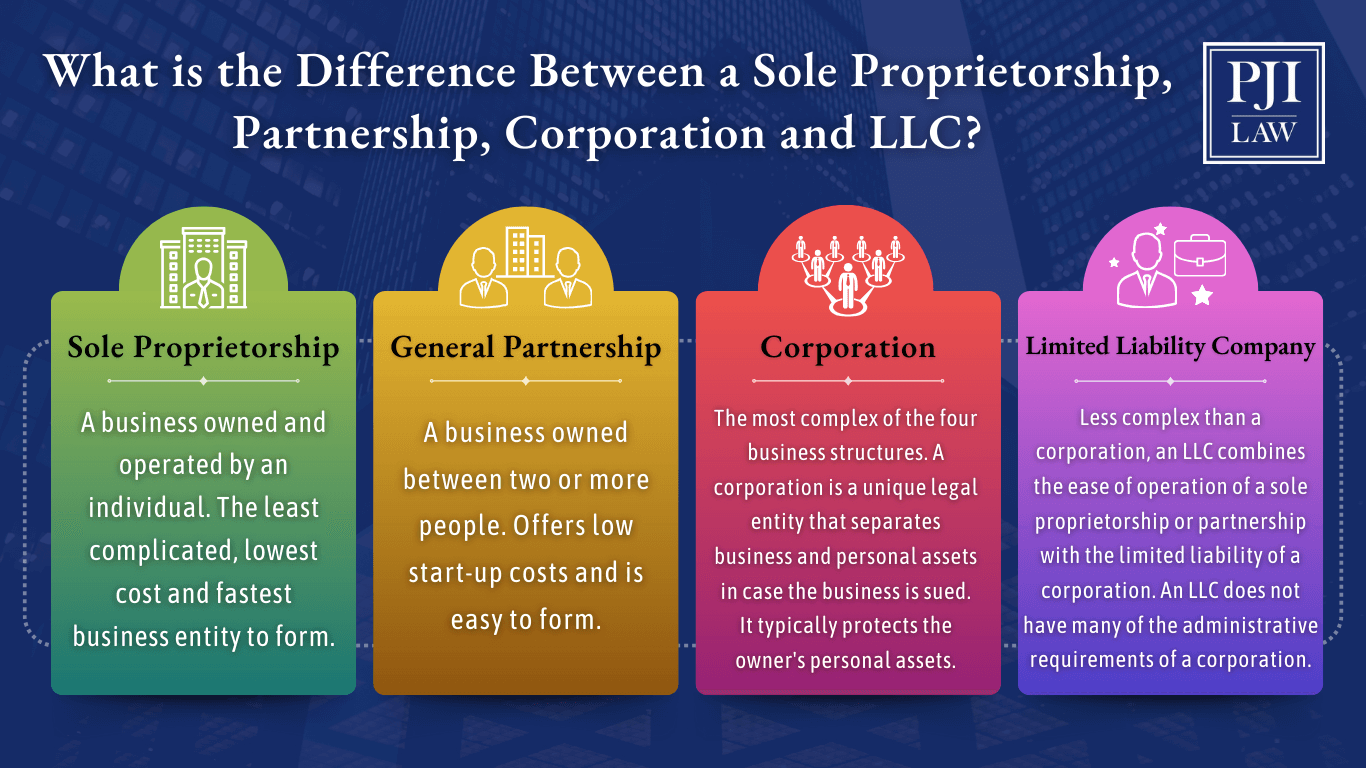
    Creating an LLC, or Limited Liability Company, is a smart way for Virginia business owners to legally structure their business operations. An LLC offers liability protection and tax benefits compared to a sole proprietorship. However, navigating the LLC formation process can seem complex if you don’t have experience with business law.

    Are you wondering how to create an LLC in Virginia? This blog, from an experienced business formation lawyer, explains the key steps required. However, it’s always advisable to consult a business formation lawyer when starting an LLC. They can guide you through the legal and regulatory requirements, correctly fill out all necessary forms, and ensure your LLC is properly established according to Virginia law thereby avoiding costly mistakes.

    Continue reading to learn more, then contact us at (703) 865-6100 for personalized service and attention.

    What Is an LLC?

    Before explaining the step-by-step instructions for creating an LLC in Virginia, it’s important to define an LLC and its crucial benefits for business owners.

    An LLC, or limited liability company, is a business structure option established by state-level statutes that allows individuals to own and operate a legally recognized company. When formed properly through the Virginia business registration process, an LLC is considered a separate legal entity, distinct from its owners.

    This separate entity status provides liability protections for any individuals who hold ownership stakes in the LLC. If the LLC is sued or unable to pay debts, the owners’ personal assets, such as a home, retirement accounts, or other private investments are protected. Personal debts and liabilities cannot pierce the LLC’s “corporate veil” to affect owners financially. In other words, an LLC’s formation creates legal separation and shields owners’ private assets.

    In addition, LLCs offer flexible tax treatments compared to other structure types. All profits and losses from LLC business operations pass through to the owners’ individual tax returns. This pass-through nature means LLC owners are not personally taxed at the corporate level as they are with a standard C-corporation. Depending on the numbers, the pass-through setup can result in lower overall tax burdens for LLC owners compared to filing taxes through a corporation.

    Business owners seek to create LLCs through Virginia’s registration process because of these liability protections and tax advantages.

    create an llc in virginia

    How Does an LLC Differ from Other Business Entities?

    While LLCs provide many benefits, they are not always the best choice compared to alternative business structures. When going through the Virginia business registration process, understanding how LLCs differ from other common entity types like sole proprietorships, partnerships, and corporations is wise.

    LLCs offer liability protections like corporations, but pass-through tax treatment like sole proprietorships and partnerships. Corporations must pay taxes at the corporate level before returning profits to shareholders. Unlike LLCs, sole proprietorships and general partnerships do not provide liability protections for their owners.

    Overall, LLCs strike a balance by providing liability shields and pass-through taxes for owners. For most small-to-medium-sized businesses, the limited liability protections of an LLC registered through the Virginia business registration process make it a sensible choice compared to being an unincorporated sole proprietorship or general partnership.

    unincorporated sole proprietorship or general partnership.

    How Much Does It Cost to Create an LLC?

    The total expenses involved in properly creating an LLC through the Virginia business registration process varies, depending on the services utilized. At a minimum, business owners can expect to pay state filing fees to the Virginia State Corporation Commission (SCC), currently $100. Hiring a Virginia business formation lawyer to adhere to the requirements and correctly handle the necessary paperwork involves additional fees, but offers invaluable peace of mind.

    How Long Does It Take to Set Up an LLC in Virginia?

    The amount of time it takes to establish an LLC through Virginia’s registration process largely depends on how quickly all necessary paperwork can be completed and filed with the SCC. As long as no errors are made on forms, the SCC seeks to process complete LLC registrations within about 2-4 weeks from receipt. Working with an experienced attorney to create an LLC in Virginia can significantly expedite the process.

    What Are the Pros and Cons of LLC?

    When considering an LLC in Virginia, it’s important to weigh the pros and cons of this business structure type:

    Pros:

    • Liability protection for owners and managers
    • Pass-through taxation so profits/losses impact personal return
    • Flexibility in how a company is managed
    • Separate legal entity status
    • Perpetual existence remains if the owner departs
    • Can help minimize the impact of probate if an owner dies

    Cons:

    • Additional record-keeping required compared to sole proprietorship
    • Annual reporting filings required by the state
    • Fees involved such as formation, franchise tax, registered agent costs
    • Requires regular company meetings and documentation
    • More complex and expensive to operate than a sole proprietorship

    Overall, LLCs offer solid benefits for business liability and tax situations. However, there is more red tape than a self-employment model. Understanding these factors is critical before creating an LLC in Virginia.

    virginia business registration

    8 Steps on How to Create an LLC in Virginia

    Now that we have explained the basics of LLCs, let’s delve into the specific 8-step process required by the Virginia SCC.

    1. 1. Select a Business Name

    The business name you choose will represent your LLC to customers and the public, so take time to brainstorm unique yet memorable options. The name must include the words “Limited Liability Company” or the abbreviation “LLC” to signify the entity type. It is important to search through already registered business names on the Virginia SCC website to confirm the availability of your proposed name. Avoid using any deceptive, inappropriate, or proprietary names that could infringe on trademarks. Additionally, business names solely consisting of numbers, punctuation marks, or generic descriptors like “Consulting LLC” may not be approved. Once you’ve landed on a distinctive name that follows SCC guidelines and passes a search for availability, you can move ahead with registering it officially as part of the LLC formation process.

    1. 2. Designate a Registered Agent

    Every LLC formed in Virginia must maintain an active registered agent to receive critical legal and tax documents on the company’s behalf and ensure your company’s compliance with state rules. A registered agent can be an individual or a business formation lawyer residing in Virginia. When forming your LLC, clearly list the name and physical address of your designated registered agent in the Articles of Organization.

    A business formation lawyer can help with the due diligence of finding a registered agent, confirming that they meet all requirements to lawfully serve in this role according to Virginia statutes. They will also assist in correctly inserting the registered agent information on your application before official filing. In most cases, business formation lawyers also provide registered agent services.

    1. 3. Apply for an EIN with the IRS

    After selecting your business name, you must obtain an Employer Identification Number (EIN) from the IRS. This serves as your company’s social security number and is required to officially register your LLC. To apply for an EIN, visit the IRS website and complete a short application form. You’ll receive your EIN immediately upon successfully submitting your application. Be sure to keep careful records of your company’s EIN for future identification purposes.

    1. 4. Create an Operating Agreement

    Developing an operating agreement is a key part of the Virginia business registration process. This internal document establishes how the LLC will be organized and operated. It should include:

    • Ownership percentages of each member
    • Member roles and responsibilities
    • Procedures for decision making
    • Distribution of profits and losses
    • Rules for admitting new members
    • Terms for addressing dispute resolution
    • Designate a successor if an owner dies so that the business can continue to generate income for the owner’s estate and beneficiaries or be liquidated and the assets distributed outside of probate.

    Creating a thorough operating agreement can help reduce potential problems down the road. An attorney familiar with Virginia LLC registration requirements can assist in drafting an agreement that properly addresses governance in compliance with state law. Having this document completed will simplify later steps in the registration process.

    1. 5. File Articles of Organization

    This document provides essential details about your LLC such as the company name, registered agent, mailing address, and member details. It is imperative that this form is completed accurately. Filing the Articles of Organization with the Virginia State Corporation Commission (SCC) officially establishes your LLC within the state.

    For a smooth filing, hire a business formation lawyer licensed in Virginia. They will ensure all requirements are addressed and will submit the Articles on your behalf electronically through the SCC website. Electronic filing provides the quickest turnaround time – usually 1-2 weeks for acceptance. Once accepted, the attorney can obtain a certificate of existence proving your LLC is in good standing for use as required. Their experience navigating the Virginia business registration process makes this step hassle-free.

    1. 6. Obtain an LLC Certificate of Organization

    Once the SCC accepts the Articles of Organization, they will mail you an LLC Certificate of Organization. This critical document certifies that your LLC is formed and in good standing under Virginia law. It will provide your LLC’s unique entity identification number issued by the state. Maintain the original certificate in your business records and be sure to periodically check your registration status and support requests with an updated certificate obtained through the SCC website or a business formation lawyer. This certificate proves you have properly completed all requirements to be recognized as an LLC in Virginia.

    1. 7. File for Necessary Licenses and Permits

    Just as an individual needs proper credentials to work in certain fields, a business may also be required to hold specific licenses or permits depending on its operations. Take the time to thoroughly research any regulatory requirements for your LLC’s industry. Some of the most common types of licenses and permits you may need to obtain include:

    • Business License — Contact the taxation/license department for your city or county to acquire the local business license required to lawfully operate a commercial venture within your locality. Fees and deadlines may apply.
    • Contractor’s License — If providing construction or trade services like plumbing, electrical work, or general contracting, you’ll need the appropriate Class A, B, or C license from the Virginia Board for Contractors. Complying with licensing ensures your work meets code standards and safety regulations.
    • Alcohol License — Selling any type of alcoholic beverage at a retail establishment necessitates an ABC license through the Virginia Alcoholic Beverage Control Authority after completing an application and approval process.

    Consulting an experienced business formation lawyer can help identify any other industry-specific credentials necessary, and guide you through properly satisfying each licensing application and requirement on time before launching business operations. Being properly licensed is key to avoiding penalties and protecting your new company.

    1. 8. Open Business Bank Accounts

    Now that your LLC is officially formed, it’s critical to open separate financial accounts for your business. Do not commingle business and personal funds, as this could jeopardize the LLC’s liability protections. If problems ever arise, keeping business assets compartmentalized in a business bank account distinct from your personal accounts ensures your personal finances and credit are not put at risk.

    When opening accounts, provide your business EIN, Certificate of Organization, and other relevant formation documents as proof of registration. Banks offer business checking and savings tailored to LLCs with features like merchant card services and online accounting. Maintaining proper financial separation substantiates to both the IRS and creditors that you are abiding by LLC regulations.

    Skip this vital step, and you risk confusing account transactions or having a court determine the LLC was not adequately formed – eliminating its liability protection for your personal assets.

    eliminating its liability protection for your personal assets.

    Get Started on Your Virginia LLC Today

    Forming an LLC in Virginia can be a complex and overwhelming process, but you don’t have to navigate it alone. Have you been searching online for an “LLC formation attorney near me?”

    At PJI Law, we provide essential support and guidance every step of the way. Our team of experienced business formation lawyers is well-versed in the nuances of LLC formation and is committed to advocating for your rights as a business owner.

    PJI Law understands the challenges you may encounter during the LLC formation process. We approach each case with a personalized strategy, handling your unique situation with the utmost attention and care. Call us at (703) 865-6100 or complete our online form to schedule your consultation.

    Copyright © 2024. PJI Law, PLC. All rights reserved.

    The information in this blog post (“post”) is provided for general informational purposes only and may not reflect the current law in your jurisdiction. No information in this post should be construed as legal advice from the individual author or the law firm, nor is it intended to be a substitute for legal counsel on any subject matter. No reader of this post should act or refrain from acting based on any information included in or accessible through this post without seeking the appropriate legal or other professional advice on the particular facts and circumstances at issue from a lawyer licensed in the recipient’s state, country, or other appropriate licensing jurisdiction.

    PJI Law, PLC
    3900 Jermantown Rd, 2nd Floor
    Fairfax, Virginia 22030
    (703) 865-6100
    https://pjibe.webteam.ai/

  • An Experienced Virginia Estate and Will Attorney Answers Common Questions About Wills

    An Experienced Virginia Estate and Will Attorney Answers Common Questions About Wills

    John, a vibrant 42-year-old with a promising career, always brushed aside the topic of wills. “I’m young and healthy,” he’d reason, “there’s plenty of time for that later.” Sadly, John’s life was tragically cut short in a car accident. The absence of a will threw his family into a whirlwind of confusion and emotional turmoil. 

    John wasn’t alone. Many people mistakenly believe they don’t need a will, often due to misconceptions about wealth or age. But as John’s story illustrates, the consequences of intestacy (dying without a will) can be significant, impacting even those with seemingly modest estates.

    In this blog, an experienced estate and will attorney dispels these myths by answering common questions about wills. Remember, a will isn’t just about wealth; it’s about ensuring your wishes are respected and your loved ones are protected during a difficult time after your passing.

    Continue reading to learn more, then contact us at (703) 865-6100 for personalized service and attention.

    What Is a Will?

    A will is a legal document that outlines your wishes for how your assets should be distributed after your death. It can also name a guardian for your minor children and an executor to handle the administration of your estate.

    Do I Need a Will?

    Every adult should have a will, regardless of age or the size of their estate. If you die without a will, your assets will be distributed according to the state’s “intestate succession” law, which may not reflect your wishes. Creating a will also minimizes conflict among your family members, and expedites the probate process.

    How Do I Create a Will?

    You can create a will by yourself, but it is recommended you consult with an attorney to ensure that your will is valid and enforceable. An attorney can also help you understand the legal implications of your decisions and draft a will that meets your specific needs. We invite you to read our blog, How to Create a Will in Virginia, for detailed information about creating a will.

    What Can I Include in My Will?

    Your will can include instructions for the distribution of your real estate, personal property, financial accounts, and other assets. You can also name a guardian for your minor children and an executor to handle the administration of your estate.

    Who Should I Name as Executor of My Will?

    The executor of your will is responsible for carrying out your wishes as outlined in the document and in accordance with the law. This person should be someone you trust to handle your affairs responsibly and efficiently.

    What If I Don’t Have Any Close Family Members?

    Even if you don’t have immediate family, creating a will is still highly recommended. Through your will, you can designate beneficiaries of your choosing, such as friends, charities, or even educational institutions. This ensures your assets are distributed according to your wishes and don’t default to the state through intestacy laws. 

    Can I Change My Will After I Create It?

    Yes. Your will is not a permanent document and can be modified throughout your life to reflect changes in your circumstances. This flexibility allows you to adapt your wishes as your family grows, relationships evolve, or your financial situation changes. It’s crucial to update your will after significant life events such as marriage, divorce, the birth or adoption of a child, or the death of a beneficiary.

    What Is the Difference Between a Will and a Living Trust?

    A will is a legal document that takes effect after your death. A living trust (also called a revocable trust or revocable living trust) is a legal arrangement that allows you to transfer ownership of your assets to a trustee who manages them for your benefit during your lifetime and then distributes them according to your wishes after your death.

    Is a Handwritten Will Valid in Virginia?

    In Virginia, while a handwritten will (holographic will) is technically legal, it’s strongly discouraged. Holographic wills can be easily challenged in court due to concerns about authenticity, proper execution, and potential ambiguities. This can lead to delays, additional costs, and even unintended distribution of your assets. To ensure your will is legally sound and enforceable, it’s highly recommended to consult with an experienced Virginia estate planning attorney who can draft a formal, witnessed will that adheres to state regulations.

    What Happens to My Debts If I Have a Will?

    Generally, any unpaid debts are covered by your estate – the assets owned at your death. Your executor will be responsible for paying your outstanding bills prior to distributing money to your named beneficiaries. If the value of your estate is insufficient to cover all of your enforceable debts, any remaining debt may become the responsibility of co-signers or be discharged by creditors. 

    Is a Will Expensive to Create If I Hire an Attorney?

    The cost of creating a will can vary depending on several factors, such as the complexity of your estate, your location, and the experience level of the attorney you choose. However, compared to the potential costs and complications associated with intestacy, creating a will is generally considered a cost-effective way to protect your loved ones and ensure your wishes are carried out.

    Empowering Your Future: An Estate Planning Checklist

    Here’s a helpful Estate Planning Checklist to guide you through the initial stages of planning your legacy:

    • Gather important documents: Birth certificates, marriage licenses, social security numbers, titles, insurance policies, etc. 
    • Inventory your assets: List all your possessions, including real estate, vehicles, bank accounts, investments, etc. 
    • Consider your beneficiaries: Decide who you want to inherit your assets and in what proportions. 
    • Choose an executor: Select a trusted individual to manage your estate after your passing. 
    • Schedule a consultation with an estate planning attorney: Discuss your specific needs and create a personalized plan. 
    • Review and update your will regularly: Revisit your will periodically to reflect changes in your life or circumstances.

    Don’t Leave Your Legacy to Chance

    Understanding the intricacies of wills in Virginia and estate planning can empower you to make informed decisions about your future and ensure your wishes are carried out with clarity and respect. While this blog has addressed common questions, navigating the legal nuances and creating a personalized plan often requires the guidance of experienced local attorneys for wills.

    If you’d like to learn more about creating a will tailored to your specific circumstances, the legal team at PJI Law is here to assist you. We understand the unique challenges and considerations our clients face when planning their estates. Our Fairfax, Virginia estate and will attorneys have extensive experience in crafting wills, trusts, advance medical directives, powers of attorney, and other essential estate planning documents, ensuring your legacy is protected with comprehensive strategies.

    Don’t leave your future and the well-being of your loved ones to chance. Call us today at (703) 865-6100 to schedule a consultation and receive personalized attention from our dedicated team. Alternatively, you can conveniently schedule your consultation online through our secure online form.

    By taking proactive steps today, you can gain peace of mind knowing your wishes are documented, your loved ones are protected, and your legacy is secured for generations to come.

    Copyright © 2024. PJI Law, PLC. All rights reserved.

    The information in this blog post (“post”) is provided for general informational purposes only and may not reflect the current law in your jurisdiction. No information in this post should be construed as legal advice from the individual author or the law firm, nor is it intended to be a substitute for legal counsel on any subject matter. No reader of this post should act or refrain from acting based on any information included in or accessible through this post without seeking the appropriate legal or other professional advice on the particular facts and circumstances at issue from a lawyer licensed in the recipient’s state, country, or other appropriate licensing jurisdiction.

    PJI Law, PLC
    3900 Jermantown Rd, 2nd Floor
    Fairfax, Virginia 22030
    (703) 865-6100
    https://pjibe.webteam.ai/
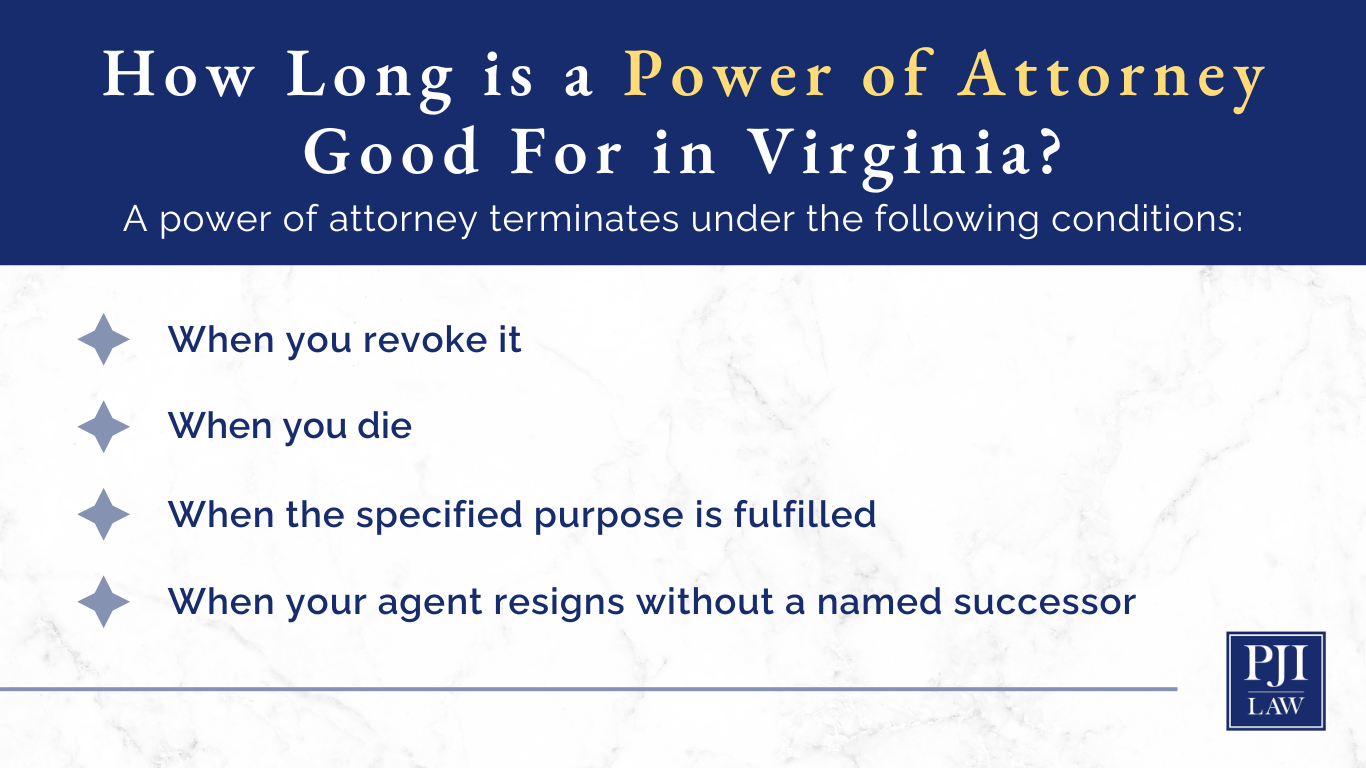
  • What Happens After a Judgment is Entered Against You in Virginia? Experienced Debt Collector Lawyers Answer

    What Happens After a Judgment is Entered Against You in Virginia? Experienced Debt Collector Lawyers Answer

    In today’s economic climate where the cost of living continues to outpace income growth, and many Virginians find themselves turning to credit cards to cover basic needs, the shadow of debt looms large. Job losses and reduced hours have made it increasingly difficult for individuals to keep up with their debt repayments, leading to a significant legal consequence: the entry of a judgment against them in Virginia. 

    Being the subject of a court judgment for debt in Virginia is a critical event with far-reaching implications. It officially signifies that you owe a debt and grants creditors the legal channels to pursue aggressive collection actions. These can include garnishing your wages, seizing funds from your bank accounts, and placing liens on your property. Such actions not only strain your current financial situation but also affect your ability to secure credit in the future.

    It’s essential to grasp the full impact of a court judgment and the legal processes that follow. Virginia’s laws offer creditors several methods to enforce debt collection, significantly impacting your financial health. In this blog, a debt relief attorney from PJI Law explains what happens after a judgment is entered against you, detailing the legal mechanisms at creditors’ disposal and suggesting strategies to navigate these challenges. But first, let’s go over what a judgment in Virginia means.

    Understanding Judgments in Virginia

    When a court in Virginia enters a judgment against you, it legally confirms that you owe a debt to another party. Here’s what you need to know:

    • Legal Status: A judgment is a court’s decision that results in a legal obligation for you to pay the debt.
    • Duration: Once a judgment has been entered, creditors are granted a 10-year period to pursue collection efforts. This period can be renewed twice, extending the potential collection timeline to a maximum of 30 years. Some creditors may initiate collection immediately following the judgment, whereas others might choose to wait until the appeal period concludes. Regardless of the timing, creditors have a variety of tools available for collecting the debt, such as garnishing wages or placing liens on property.
    • Interest: Post-judgment interest may accrue on the outstanding amount at the rate stated in the judgment until it is paid.
    • Statute of Limitations: In Virginia, creditors are given a three-year window to initiate legal action for debts arising from verbal agreements. This period extends to five years if the debt involves a written contract. Once the statute of limitations expires, creditors lose the legal right to sue for the debt. However, any payment made by the debtor can inadvertently reset this timeframe, effectively renewing the creditor’s ability to take legal action. Given the complexity of these rules, seek advice from debt collector lawyers to understand your options and the potential implications of your actions.

     potential implications of your actions

    Post-Judgment Proceedings

    Post-Judgment Proceedings

    After a judgment is entered against you in Virginia, certain post-judgment proceedings may commence, wherein creditors attempt to collect the debt you owe. Understanding these procedures can help you navigate the situation more effectively.

    Common Creditor Actions

    • Wage Garnishment: A portion of your wages can be withheld directly from your paycheck and sent to the creditor. However, Virginia law protects a portion of your income, and creditors cannot garnish more than 25% of your disposable earnings (after state and federal income taxes are withheld). 
    • Bank Levy: The creditor may obtain a court order to freeze funds in your bank accounts. 
    • Property Lien: A lien could be placed on your real estate or other property. This means the creditor has a claim to the proceeds if you sell the property. Be aware that some exemptions apply to liens, protecting portions of your home equity and other assets. 
    • Writ of Execution: Allows the sheriff to seize and sell non-exempt personal property like vehicles or investments to satisfy the judgment. Certain assets are exempt from execution, including essential personal belongings and a portion of your home equity. 
    • Debtor’s Interrogatories: You may be required to attend a court hearing and answer questions under oath about your finances. You have the right to legal representation during this process, and the scope of information you must disclose is limited by law.

    Protecting Yourself

    debt relief attorney

    • Virginia law provides exemptions that shield portions of your income and property from creditors. Familiarize yourself with these exemptions to understand what you can keep. 
    • Open communication with the creditor is crucial. You may be able to negotiate a payment plan or other arrangements such as entering into a settlement agreement to avoid further action.  
    • Seeking legal advice is highly recommended. A debt relief attorney can guide you through your options, represent you in court if necessary, and ensure your rights are protected.

    Wage Garnishment

    When a judgment is entered against you in Virginia for a debt, creditors can use a process called wage garnishment to collect the amount owed. This means a portion of your earnings will be withheld from your paycheck and sent directly to the creditor until your debt is paid off. 

    How Wage Garnishment Works

    • Notification: Before garnishment starts, you and your employer will be served a Garnishment Summons outlining the details, including the amount to be withheld. Your employer cannot fire you solely because of wage garnishment. 
    • Calculation: The amount garnished is based on your “disposable income,” which is your earnings after mandatory deductions like state and federal income taxes:
      • Maximum Limit: No more than 25% of your weekly disposable earnings can be garnished.
      • Alternative Calculation: Or, the amount by which your disposable earnings exceed 40 times the federal minimum hourly wage, whichever is less.

    Bank Account Levy

    debt relief attorney

    In addition to garnishing your wages, a creditor is entitled to initiate a garnishment action against your bank account. This involves submitting either a Writ of Execution or a Garnishment Suggestion Form, as dictated by the court’s procedures. 

    The creditor must then serve the summons to both you and the bank. This document outlines the garnishment procedure and instructs the bank on the withholding of the designated funds. Additionally, the summons specifies a return date for a court hearing, allowing you an opportunity to challenge the garnishment, particularly if the funds in question are legally exempt from such actions.

    In response to the summons, the bank temporarily restricts access to your account, maintaining this status until the designated return date. This pause provides you with a window to submit documentation asserting the exemption of certain funds from garnishment.

    Some of the exemptions include the following:

    • Social Security Benefits
    • Supplemental Security Income
    • Temporary Assistance for Needy Families
    • Unemployment Compensation
    • Veterans’ benefits

    Failure to present such a claim means the garnishment may proceed, potentially lasting 30, 60, 90, or 120 days, based on the court’s determination.

     based on the court's determination.

    Property Liens and Seizure

    debt relief attorney

    If a judgment is entered against you in Virginia, creditors may use various legal tools to collect the debt, including placing liens on your property or seizing your assets. Understanding how liens work and your rights regarding potential seizure is crucial for protecting your interests.

    • Exemptions: Virginia law protects portions of your property from liens and seizure, like your primary residence up to a certain equity value. 
    • Lien Enforcement: Creditors can enforce liens through various means, including foreclosure for real estate or public auctions for personal property. 

    Seeking legal advice is crucial to understand the specific enforcement process and your options.

    Facing Seizure

    As mentioned earlier, if your personal property is at risk of seizure, the creditor may obtain a Writ of Execution, allowing them to:

    • Inventory: Officials will create a list of your seizable assets.
    • Sale: Seized items are sold at public auction to satisfy the debt.

    Protecting Yourself

    Facing property liens and potential seizure can be overwhelming. Remember:

    • Seek Legal Advice: Consulting with debt collector lawyers is crucial to understanding your rights, exploring options like negotiating with creditors, and potentially challenging the lien or seizure process.
    • Act Promptly: Time is of the essence. Responding to legal notices promptly and taking proactive steps can make a significant difference in protecting your assets.

    significant difference in protecting your assets

    Appealing a Judgment

    If you have a judgment entered against you in Virginia and believe the decision was incorrect, you may have the option to appeal. It’s important to act quickly, as there are strict time limits.

    • Filing the Notice of Appeal: You have 10 days to notify the court of your intent to appeal and 30 days to complete all formal requirements (filing, fees, bond) to initiate the appeal process. If you miss this deadline, you may lose your right to appeal. 
    • Preparation of the Record: Your appeal will be based on the record of what happened in the trial court. Ensure all relevant documents, transcripts, and evidence are included.

    Briefs Submission

    • Appellant Brief: You, as the appellant, must submit a brief that outlines your arguments and why the judgment should be reversed.
    • Appellee Brief: The appellee will respond with their brief defending the trial court’s decision.
    • Oral Arguments: In some cases, you may have the opportunity to present oral arguments before the appellate court. 
    • Decision: The Court of Appeals of Virginia will either affirm the lower court’s decision, reverse it, or remand it for further proceedings.

    Be aware that appeals focus on legal errors and are not a re-trial of the facts. Consult with an attorney skilled in appellate law to assess the merits of an appeal and navigate the complex legal process.

    Setting Aside or Vacating a Judgment

    If you have a judgment entered against you in Virginia and believe it was issued due to errors, valid defenses, or other legal grounds, you might have options to set it aside or vacate it. However, navigating this process effectively requires careful consideration and, ideally, legal guidance.

    Seeking Legal Help

    Consulting with Virginia debt collector lawyers experienced in civil litigation is highly recommended. They can:

    • Assess your situation and advise on the most appropriate course of action.
    • Help you navigate the complexities of court procedures and deadlines.
    • Craft compelling legal arguments and represent you effectively in court.

    Setting aside a judgment doesn’t necessarily end the matter. The original claim might proceed even if the judgment is vacated. Consulting with an attorney can help you understand the full implications and potential outcomes.

    Bankruptcy

    Bankruptcy

    If the judgment cannot be challenged or the amount of debt is too large to manage, filing for bankruptcy could be a practical option. This could mean either selling off assets to cover the debt (under Chapter 7 bankruptcy) or setting up a plan to pay back the debt over time (under Chapter 13 bankruptcy), which might eliminate some debts and restructure others.

    While bankruptcy can offer a lifeline, it also carries significant repercussions for your credit and financial standing. A detailed discussion with a debt relief attorney will outline the process and whether it’s a fitting option for you.

    Long-Term Impacts on Credit and Borrowing

    After a judgment is entered against you in Virginia, your credit report is significantly affected. This can have long-term implications on your ability to borrow money and the terms of credit available to you. Here’s what you should be aware of:

    • Credit Score Decrease: Your credit score will likely drop considerably. Judgments are public records, and the credit bureaus will include them in your credit report.
    • Credit Reporting Period: A judgment can remain on your credit report for up to seven years from the date it was filed, potentially lowering your ability to secure loans or favorable interest rates.
    • Difficulty Getting Approved: When you apply for credit, creditors may view you as a high-risk borrower, making it more difficult to get approved for new credit accounts or loans.
    • Higher Interest Rates: If lenders do approve you for credit, you might be subjected to higher interest rates due to the increased risk of default they perceive, leading to more expensive borrowing costs.
    • Securing Housing: Landlords might also check your credit report. A judgment can make it more challenging to rent an apartment or house.
    • Employment Concerns: Some employers perform credit checks before hiring. A poor credit report could impact your job prospects in fields that regard financial responsibility as critical.

    To mitigate these long-term effects, consider working with a debt relief attorney to explore your options, such as satisfying the judgment, setting up payment plans, or challenging the judgment if grounds exist. Acting proactively can help to repair your credit over time.

    Facing the Fallout After a Judgment in Virginia? PJI Law Can Help

    debt relief attorney

    The path forward after having a judgment entered against you in Virginia can seem overwhelming, filled with legal hurdles and financial stress. However, you don’t have to face it alone. PJI Law is your local resource for tailored legal assistance, providing the support you need to tackle the challenges of a debt judgment head-on.

    At PJI Law, we pride ourselves on delivering compassionate, comprehensive legal services designed to safeguard your financial future and uphold your rights. Whether you’re appealing a judgment, seeking clarification on your legal standing, or exploring avenues for debt relief such as entering into a settlement agreement, our attorneys are dedicated to achieving the best outcome for you.

    Don’t let the burden of a debt judgment disrupt your life. If you’ve been searching online for “judgment attorneys near me,” reach out to PJI Law today instead. Contact us for personalized attention at (703) 865-6100 or fill out our online form to schedule your consultation in Fairfax, Virginia. Discover how we can help you move beyond this obstacle towards financial recovery and peace of mind.

    Copyright © 2024. PJI Law, PLC. All rights reserved.

    The information in this blog post (“post”) is provided for general informational purposes only and may not reflect the current law in your jurisdiction. No information in this post should be construed as legal advice from the individual author or the law firm, nor is it intended to be a substitute for legal counsel on any subject matter. No reader of this post should act or refrain from acting based on any information included in or accessible through this post without seeking the appropriate legal or other professional advice on the particular facts and circumstances at issue from a lawyer licensed in the recipient’s state, country, or other appropriate licensing jurisdiction.

    PJI Law, PLC
    3900 Jermantown Rd, 2nd Floor
    Fairfax, Virginia 22030
    (703) 865-6100
    https://pjibe.webteam.ai/

  • What Are the Benefits of a Trust in Virginia?

    What Are the Benefits of a Trust in Virginia?

    James is a devoted husband, caring father, and doting grandfather, who spent his entire life working hard to provide for his loved ones. He had always believed that his family would be protected and secure, assuming that his assets would naturally pass on to his heirs without complications or the need for estate planning. However, a series of unforeseen events left James’s estate entangled in legal complexities, causing distress and uncertainty for his loved ones.

    James’s story serves as a cautionary tale, highlighting the vital importance of estate planning. Estate planning goes beyond mere paperwork and checking boxes. It is a proactive strategy to protect your legacy and ensure a smooth transfer of your assets, such as property and money, to your beneficiaries. One vital element of an estate plan is a trust. 

    What are the benefits of a trust in Virginia?

    In this blog, a knowledgeable and experienced Virginia estate planning attorney explains the critical role of a trust in your estate plan. Discover how implementing a trust can help you safeguard your assets, streamline the distribution of your wealth, minimize tax burdens, and ensure a smooth transition for future generations.

    Continue reading to learn more, then contact us at (703) 865-6100 for personalized service and attention.

    What Is the Main Purpose of a Trust?

    The main purpose of a trust is to protect and preserve your assets while allowing for efficient distribution according to your wishes. Contrary to a persistent misconception, a trust is not just for the wealthy, but for people of all income levels.

    As an experienced trust lawyer knows, this comprehensive legal tool offers the following benefits:

    1. Probate Avoidance: Probate, the court-supervised process of distributing assets after someone passes away, can be lengthy and costly. Establishing a trust in a proper manner helps you bypass probate because assets held in the trust can be distributed directly to beneficiaries without court intervention, saving time and reducing administrative expenses.
    2. Privacy: Unlike a will, which becomes a matter of public record during probate, a trust provides privacy. The terms and conditions of a trust remain confidential, safeguarding sensitive family and financial information from public scrutiny.
    3. Control and Flexibility: With a trust, you can maintain control over the management and distribution of your assets, even after your passing. You can appoint a trustee to carry out your wishes and ensure that your beneficiaries receive their intended inheritance according to your instructions.
    4. Asset Protection: A trust allows you to transfer ownership of your assets into the trust, which creates a separate legal entity that holds your assets. Depending on the type of trust, this transfer keeps them safe from potential creditors or legal disputes.
    5. Tax Benefits: Certain types of trusts, such as irrevocable trusts, can offer tax advantages. Irrevocable trust assets may be excluded from the taxable estate, potentially reducing estate taxes. Consulting an experienced trust lawyer estate can help you determine the best trust structure for your specific tax planning needs.

    Understanding the Difference Between Revocable Trusts and Irrevocable Trusts

    A knowledgeable and experienced estate planning lawyer will listen to your legal needs to determine whether a revocable trust or an irrevocable trust upholds your best interests. As the name suggests, you can modify or terminate a revocable trust at any time; however, you cannot make any changes to an irrevocable trust once it’s established.

    While a revocable trust offers more flexibility, it does not protect your assets from taxes or creditors. Although these assets are in the trust, they remain part of your estate. By contrast, creditors cannot seize assets held in an irrevocable trust, which also enables you to reduce your tax burden. Experienced Northern Virginia trust lawyers can discuss your unique goals and circumstances, offer insights, and guide you through the process of setting up the right kinds of trusts for you.

    Types of Trusts in Virginia

    Are you considering creating trusts in Virginia? The state offers a myriad of options, including:

    Revocable Living Trusts

    With a revocable living trust, you maintain control over your assets, ensure their proper management if you become incapacitated, and effortlessly transfer them to your loved ones upon your death. As the trust’s creator, you can serve as the trustee and the beneficiary, with the ability to revise or revoke the terms at any time. However, a revocable trust does not protect you from taxes or creditors.

    Irrevocable Trusts

    As noted above, you cannot change an irrevocable trust once established. This type of trust becomes permanent once you transfer assets into it and designate a beneficiary. In return, an irrevocable trust protects your beneficiaries from probate and estate taxes. With an irrevocable trust, you can also meet Medicaid eligibility requirements. Before setting up an irrevocable trust, discuss its management with your estate planning lawyer.

    Testamentary Trusts

    Incorporated seamlessly into wills, testamentary trusts protect the financial interests of your beneficiaries, particularly minor children. By holding assets until certain criteria are met, such as reaching a designated age or accomplishing important milestones like college graduation, this trust structure prevents heirs from wasting their inheritance.

    With the guidance of a trusted trustee, appointed to oversee and effectively manage assets, you can rest assured that your beneficiaries will benefit from their inheritance most responsibly and advantageously.

    Charitable Trusts

    If you’re passionate about philanthropy, consider charitable trusts. By placing assets in these trusts, you can directly support a charitable organization—either fully or for a specific timeframe.

    But the benefits of charitable trusts extend far beyond helping others. They also offer considerable tax advantages, making them an attractive choice for individuals with substantial estates who want to optimize their tax situation and make a meaningful contribution.

    A charitable remainder trust (CRT) allows you to achieve personal and philanthropic objectives. You simply transfer assets into the trust, providing a steady income to yourself or other beneficiaries for a designated period – or even for their entire lifetime. Once that period ends, the remaining assets are then distributed to your chosen charitable organization.

    With a charitable lead trust (CLT), a portion of the trust income is first given to a charity for a specified duration. After that period is over, the remaining assets are returned to you or your heirs.

    Both trust structures offer flexibility and customization to align with your personal estate planning goals, ensuring a win-win for your loved ones and the causes you care about.

    Special Needs Trusts

    These trusts provide for individuals with special needs without disqualifying them from government assistance. You can establish a special needs trust to pay for medical and dental costs, housing, and other basic needs.

    Qualified Terminable Interest Property Trusts (QTIP)

    These trusts provide income for a surviving spouse and ensure that the remaining assets go to the settlor’s selected beneficiaries after the spouse passes away.

    Pet Trusts

    Care for your beloved pets after your death by creating pet trusts in which you designate a trustworthy individual or individuals to assume responsibility for them upon your passing.

    Spendthrift Trusts

    These trusts protect your beneficiaries from creditors and their potentially misguided financial decisions by limiting access to trust funds.

    Generation-Skipping Trusts

    These trusts transfer assets to the settlor’s grandchildren and bypass their children to reduce any inheritance complications and preserve long-term wealth.

    PJI Law, PLC: Knowledgeable and Experienced Trust Lawyers in Northern Virginia

    Have you been entering “trust lawyers near me” in your search bar to find a local estate planning attorney with extensive knowledge of Virginia estate law and proven experience? One you’ll feel comfortable telling your desires for your property, money, and other assets? Look no further than PJI Law, where each client receives our complete dedication, personal attention, and courteous, white-glove service. To provide the best experience possible, our skilled team responds quickly to each client and employs cutting-edge technology.

    If you’d like to learn more about establishing a trust, the legal team at PJI Law is here to answer any questions you may have. Our Fairfax, Virginia trust lawyers have helped clients create trusts and wills, advance medical directives, powers of attorney, and much more as part of a comprehensive estate plan. Call us at (703) 865-6100 or complete our online form to schedule your consultation.

    Copyright © 2024. PJI Law, PLC. All rights reserved.

    The information in this blog post (“post”) is provided for general informational purposes only and may not reflect the current law in your jurisdiction. No information in this post should be construed as legal advice from the individual author or the law firm, nor is it intended to be a substitute for legal counsel on any subject matter. No reader of this post should act or refrain from acting based on any information included in or accessible through this post without seeking the appropriate legal or other professional advice on the particular facts and circumstances at issue from a lawyer licensed in the recipient’s state, country, or other appropriate licensing jurisdiction.

    PJI Law, PLC
    3900 Jermantown Rd, 2nd Floor
    Fairfax, Virginia 22030
    (703) 865-6100
    https://pjibe.webteam.ai/