Tag: Probate

  • Understanding Probate Fees in Virginia

    Understanding Probate Fees in Virginia

    Taking on the responsibility of administering someone’s estate after their passing can feel overwhelming, especially when unfamiliar with the process. Probate in Virginia involves managing the deceased’s affairs, including paying debts and distributing assets to heirs or beneficiaries. 

    Along the way, you’ll encounter fees like court filing costs, executor compensation, and administrative expenses. While these costs are part of the process, knowing what to expect can help you better understand the financial aspects of probate fees in Virginia.

    What Is Probate in Virginia?

    Probate is the legal process of proving a deceased person’s will, or if there is no will, settling the estate according to Virginia law. During probate, the court ensures the deceased’s debts are paid and their assets are distributed to heirs or beneficiaries.

    In Virginia, probate occurs in the circuit court of the county or city where the deceased lived. While some estates qualify for simplified procedures, others require formal probate. Each step involves costs, which are important to anticipate.

    Filing Fees and Initial Costs

    The first expense you’ll encounter is the probate filing fee. In Virginia, fees are calculated at the time of the probate appointment and based on the value of the estate being probated.

    Additional fees may include charges for copies of documents, certificates of qualification, and other court-related services. 

    Fiduciary Compensation and Attorney Fees

    The executor or administrator of an estate is entitled to reasonable compensation for their work. In Virginia, fudiciary fees are often calculated as a percentage of the estate’s value, following a standard schedule:

    • 5% of the first $400,000
    • 4% of the next $300,000
    • 3% of the next $300,000
    • 2% of assets over $1 million

    For example, an estate valued at $600,000 would result in an executor fee of approximately $28,000. This calculation is based on guidelines provided by the Fairfax Commissioner of Accounts.

    If you choose to hire a probate lawyer, legal fees are another expense to consider. Attorneys typically charge by the hour or offer flat-rate services depending on the complexity of the estate. While this is an additional expense, their services can simplify the process, resolving the matter more efficiently and therefore may not increase the overall cost of probate.

    Appraisal and Valuation Costs

    If the estate includes real estate, valuable collections, or other unique assets, professional appraisals may be required. Appraisal costs can vary depending on the type and complexity of the assets being evaluated. 

    For instance, real estate appraisals typically depend on the property size and market conditions, while specialized items like art or jewelry may require expertise in niche markets. Although these expenses are often deductible from the estate, they can impact the overall distribution to beneficiaries.

    Taxes and Debts

    During probate, the executor is responsible for settling the deceased’s debts and taxes. Common obligations include:

    • Personal Income Taxes: Filing the final tax return for the deceased.
    • Estate Taxes: While Virginia does not impose a state estate tax, federal estate taxes may apply to larger estates exceeding the federal exemption limit.

    Additionally, the executor may need to cover property taxes, mortgage payments, and other recurring expenses from the estate until probate is complete.

    Miscellaneous Costs to Expect

    While some costs are predictable, others depend on the specific circumstances of the estate. Examples include:

    • Bond Premiums: Executors may be required to purchase a probate bond, which acts as insurance to protect the estate’s beneficiaries. The cost of the bond depends on the estate’s size.
    • Publication Fees: If required to notify creditors or unknown heirs, you may need to publish a notice in a local newspaper. This typically costs $50–$150.
    • Storage or Maintenance: Keeping assets like real estate or vehicles in good condition during probate can incur additional costs.

    How Probate Fees Impact Beneficiaries

    Probate fees reduce the total value of the estate, which directly affects the inheritance beneficiaries receive. For instance, an estate valued at $500,000 with 5% total fees will leave $25,000 less for heirs. These fees can compound when additional services, disputes, or delays occur during probate.

    Reducing Probate Fees and Avoiding Probate

    While some fees are unavoidable, you can take proactive steps to reduce costs or bypass probate entirely:

    • Establish a Revocable Living Trust: Assets placed in a trust pass outside of probate, eliminating associated fees.
    • Joint Ownership and Beneficiary Designations: Naming joint owners or beneficiaries for accounts, property, and retirement plans can bypass probate.
    • Simplified Procedures: Estates valued under $50,000 in Virginia may qualify for streamlined probate, reducing court involvement and costs.

    When to Seek Professional Advice

    Probate can become more complicated if the estate involves disputes, significant assets, or unclear instructions. While this blog provides an overview, consider reaching out to a Virginia probate attorney for tailored guidance.

    Probate fees in Virginia vary depending on the size and complexity of the estate, but they include filing fees, fiduciary compensation, appraisal costs, and other expenses. By understanding these costs, you can better prepare for the probate process and make thoughtful decisions.

    Whether you’re planning ahead or managing a loved one’s estate, being informed can save time, money, and stress during an already challenging time.

    PJI Law – Your Trusted Partner for Virginia Probate

    Probate can be a complicated process, requiring attention to legal, financial, and administrative details. At PJI Law, we provide comprehensive guidance to executors and administrators. From explaining probate fees and court filing requirements to preparing documents and resolving disputes, we’re here to simplify your responsibilities.

    Our probate lawyers also assist with identifying estate assets, addressing creditor claims, and ensuring proper distribution to heirs or beneficiaries. Whether the estate is straightforward or complex, we’ll tailor our approach to your unique situation.

    If your online search for a “probate attorney near me” or “Virginia probate attorney” led you here, you’re in the right place. Call us today at (703) 865-6100 or use our confidential online form to schedule a consultation. PJI Law is here to help you handle probate with confidence and clarity.

    At PJI Law, you’ll receive personalized service and attention!

    Copyright © 2025. PJI Law, PLC. All rights reserved.

    The information in this blog post (“post”) is provided for general informational purposes only and may not reflect the current law in your jurisdiction. No information in this post should be construed as legal advice from the individual author or the law firm, nor is it intended to be a substitute for legal counsel on any subject matter. No reader of this post should act or refrain from acting based on any information included in or accessible through this post without seeking the appropriate legal or other professional advice on the particular facts and circumstances at issue from a lawyer licensed in the recipient’s state, country, or other appropriate licensing jurisdiction.

    PJI Law, PLC
    3900 Jermantown Rd, 2nd Floor
    Fairfax, Virginia 22030
    (703) 865-6100
    https://pjibe.webteam.ai/

  • What Does Marshalling of Assets Mean in a Virginia Probate?

    What Does Marshalling of Assets Mean in a Virginia Probate?

    The day you’ve been dreading has finally arrived. Your father has passed away, and now you must step into the role of executor – a responsibility you both discussed and prepared for, but one that feels overwhelming in the face of your grief. As you begin the process of settling your father’s estate, you realize there’s a crucial task ahead of you: marshalling of assets. You find yourself wondering what exactly this means and why it’s so important.

    If you’re in this challenging position, or if you’re trying to understand the probate process in Virginia, it’s important to grasp the concept of marshalling assets. As an executor, this will be one of your key responsibilities. The process is crucial for managing your father’s estate efficiently and fairly.

    In this blog, a probate lawyer from PJI Law, PLC breaks down what marshalling of assets means in Virginia probate. You’ll learn why it’s essential for you as the executor and how it impacts the overall probate process. Whether you’re currently navigating this complex journey or preparing for future responsibilities, understanding this concept will help you handle your parent’s legacy with care and attention.

    What is Marshalling of Assets?

    To understand marshalling of assets, it’s first important to grasp the basics of probate in Virginia. Probate is the legal process through which a deceased person’s estate is settled. As the executor, you’re responsible for validating the will (if there is one), paying debts and taxes, and distributing assets to beneficiaries.

    Marshalling of assets is one of the most critical duties you’ll perform as an executor. It involves identifying, locating, and securing all the assets that belonged to the deceased at the time of their death. By creating a comprehensive inventory, you ensure that all assets are accounted for before making any distributions.

    Why Marshalling Assets is Important

    You might wonder why marshalling assets is so crucial. This process serves several vital purposes in probate administration:

    • Provides a clear and comprehensive picture of the estate’s value: By identifying and appraising all assets, you gain a full understanding of the estate’s worth. This is essential for accurate reporting, tax assessments, and making informed decisions about the estate’s administration. 
    • Helps prevent assets from being lost, misplaced, or stolen: Securing assets early in the probate process ensures that they remain protected. This step minimizes the risk of loss or theft and ensures that all assets are available for distribution to the rightful beneficiaries. 
    • Ensures all creditors are paid fairly: Marshalling assets allows you to determine the estate’s total liabilities. By knowing the full extent of the estate’s assets, you can ensure that creditors are paid in accordance with Virginia law, preventing disputes and legal challenges. 
    • Ensures that assets are properly accounted for and distributed according to the terms of the will or, if no will exists, according to Virginia’s intestacy laws:  Proper marshalling guarantees that all assets are accounted for, enabling accurate and fair distribution to beneficiaries as outlined in the will or as dictated by state law if there is no will.

    Steps to Marshalling Assets in Virginia Probate

    As an executor in Virginia, you’ll typically follow these steps to marshal assets:

    1. Identify All Assets

    Start by identifying all assets owned by the deceased, including:

    • Real estate properties 
    • Bank accounts 
    • Investment accounts 
    • Personal property (vehicles, jewelry, art, etc.) 
    • Business interests 
    • Life insurance policies 
    • Retirement accounts

    2. Locate and Secure the Assets

    Once you’ve identified the assets, your next step is to locate and secure them. This might involve:

    • Changing locks on properties 
    • Collecting valuable items for safekeeping 
    • Notifying banks and financial institutions of the death

    3. Appraise the Assets

    Many assets will require a professional appraisal to determine their fair market value. This is crucial for tax purposes and ensures that assets are distributed equitably.

    4. Create an Inventory

    Virginia law requires you as the executor to file an inventory of the estate with the Commissioner of Accounts within four months of your qualification as executor. This inventory should list all assets and their fair market values.

    Challenges in Marshalling Assets

    While the process might seem straightforward, you may encounter some challenges:

    • Hidden Assets: The deceased might have assets that are not immediately apparent 
    • Digital Assets: In today’s digital age, you’ll need to consider online accounts, cryptocurrencies, and other digital properties 
    • Out-of-State Assets: If the deceased owned property in other states, you might need to navigate multiple probate processes

    The Role of Legal Assistance

    Given the complexities involved in marshalling assets, many executors in Virginia choose to work with professionals. Virginia probate attorneys experienced in probate law can guide you through the process, ensuring compliance with state laws and deadlines. Financial advisors and appraisers can also assist in valuing complex assets accurately.

    Consequences of Improper Asset Marshalling

    As an executor, you have a fiduciary duty to the estate and its beneficiaries. Failing to properly marshal assets can lead to serious consequences, including:

    • Personal liability for missing or undervalued assets 
    • Legal action from beneficiaries or creditors 
    • Delays in the probate process 
    • Potential removal as executor by the court

    Marshalling of assets is a fundamental aspect of the Virginia probate process. By understanding its importance and following the proper procedures, you can ensure a smooth administration of the estate. While the task may seem challenging, remember that resources and professional help are available to guide you through each step.

    As you manage this process, keep in mind that thorough documentation and transparency are key. By diligently marshalling assets, you fulfill your legal obligations and protect the interests of all parties involved, all while honoring the wishes of the deceased.

    Need Guidance on Marshalling Assets in Virginia Probate?

    Marshalling assets is a crucial step in the probate process, and as an executor, you want to ensure you’re handling this responsibility correctly. The process can be complex, but you don’t have to navigate it alone. At PJI Law, we’re here to support you through every stage of probate administration.

    Our experienced probate attorneys understand the intricacies of Virginia probate law and can guide you through the asset marshalling process with confidence. We’ll work closely with you to identify, locate, and secure all assets of the estate, ensuring nothing is overlooked and all legal requirements are met.

    Whether you’re just starting the probate process or you’ve encountered challenges along the way, we’re here to help. Our team can provide the knowledge and support you need to fulfill your duties as an executor and honor your loved one’s legacy.

    Take the first step towards a smooth and efficient probate process. If you’ve been searching online for “probate attorneys near me,” contact PJI Law instead to schedule a consultation with our knowledgeable Virginia probate attorneys. Call us at (703) 865-6100 or reach out through our confidential online form.

    At PJI Law, you’ll receive personalized service and attention!

    Copyright © 2024. PJI Law, PLC. All rights reserved.

    The information in this blog post (“post”) is provided for general informational purposes only and may not reflect the current law in your jurisdiction. No information in this post should be construed as legal advice from the individual author or the law firm, nor is it intended to be a substitute for legal counsel on any subject matter. No reader of this post should act or refrain from acting based on any information included in or accessible through this post without seeking the appropriate legal or other professional advice on the particular facts and circumstances at issue from a lawyer licensed in the recipient’s state, country, or other appropriate licensing jurisdiction.

    PJI Law, PLC
    3900 Jermantown Rd, 2nd Floor
    Fairfax, Virginia 22030
    (703) 865-6100
    https://pjibe.webteam.ai/

  • What You Need to Know About Probate in Virginia

    What You Need to Know About Probate in Virginia

    In the living room of her Richmond, Virginia home, Sarah faces a daunting task after the passing of her beloved aunt. When she’d agreed to be the person named to handle probate administration in her aunt’s will (known as the executor or personal representative), Sarah had no idea what these responsibilities would entail.

    Now overwhelmed with grief and uncertainty, she struggles to navigate probate in Virginia — the intricate legal process involved in distributing her aunt’s estate assets, paying estate taxes, and fulfilling her obligation to pay debts owed by the decedent’s estate. This lack of clarity has left her feeling lost and anxious during a time of mourning, emphasizing the importance of understanding probate for personal representatives and loved ones of a deceased person.

    At PJI Law, we recognize that many individuals like Sarah may find themselves in similar situations, uncertain about what steps to take in the probate process. This blog sheds light on the often misunderstood aspects of probate in Virginia, answers common questions, and demystifies the complexities of probate.

    Continue reading to learn more about the probate process, then contact us at (804) 653-3450 for personalized service and attention. Whether you have been named a personal representative in a deceased person’s will or want to establish a valid will as part of a comprehensive estate plan, let us handle all of your legal needs, drawing upon our extensive knowledge and experience.

     probate in virginia

    What Is Probate?

    Probate is the legal process of administering a decedent’s (the legal term for the person who has died) estate, including their property and assets after their death. It is also a matter of public record. If a decedent dies with a valid will, the will dictates the distribution of the decedent’s assets. However, if an individual dies without a valid will (intestate), Virginia law determines the distribution of the decedent’s assets — which may or may not align with their wishes.

    Does Every Death Have to Go Through Probate?

    Probate isn’t always required. Whether or not a decedent’s estate is subject to probate depends on the deceased person’s assets. Among all the decedent’s assets, some can bypass probate and be directly distributed to the beneficiaries. Non-probate assets could include the following:

    • Retirement accounts
    • Payable-on-death or transfer-on-death accounts
    • Joint tenancy assets
    • Property in a living trust
    • Life insurance proceeds
    • Pension benefits payable to a beneficiary
    • Assets that have proper beneficiary designations

    Probate is especially beneficial if the decedent owned property solely in their name because probating the will formally transfers the title of the property to the recipients or heirs according to the will. Typically, probate is required whenever a decedent dies and leaves behind property titled exclusively in their name. However, if an estate is small enough, the probate process may be abbreviated allowing the survivors to go through a streamlined administration process instead.

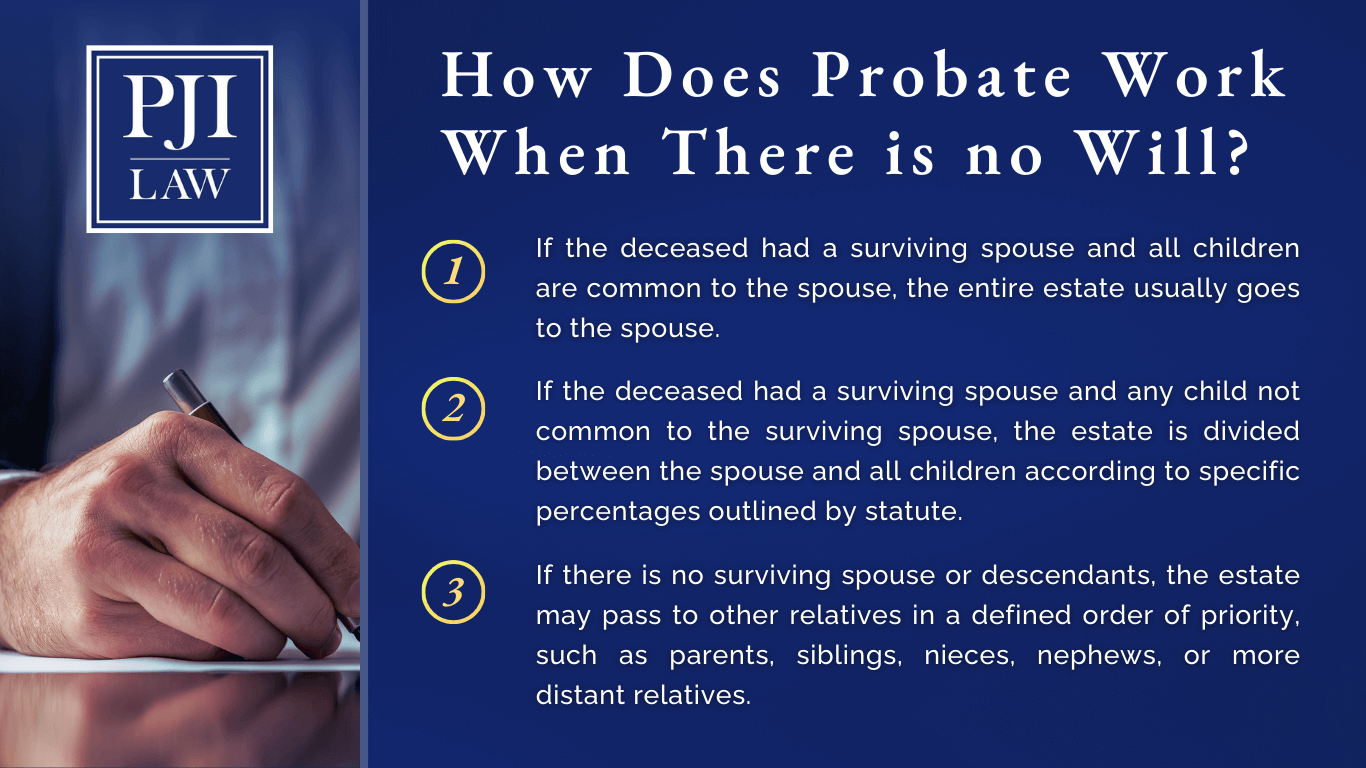
    How Does Probate Work When There is No Will?

    When an individual passes away in Virginia without a will, the estate is subject to the laws of intestacy. In such cases, the probate process follows a predetermined set of rules to distribute the deceased person’s assets among their heirs.

     probate in virginia

    According to Virginia statute 64.2-200, the distribution of assets in intestate succession typically follows this hierarchy:

    1. If the deceased had a surviving spouse and all children are common to the spouse, the entire estate usually goes to the spouse.
    2. If the deceased had a surviving spouse and any child not common to the surviving spouse, the estate is divided between the spouse and all children according to specific percentages outlined in the statute.
    3. If there is no surviving spouse or descendants, the estate may pass to other relatives in a defined order of priority, such as parents, siblings, nieces, nephews, or more distant relatives.

    The probate court oversees the process of identifying heirs, establishing the validity of claims, and distributing the assets accordingly. While every Virginia resident should understand state laws governing intestate succession to ensure a smooth transition of assets in the absence of a will, the best course of action is to establish a legally valid last will and testament with the help of an experienced attorney. In it, parents of minor children can name guardians to care for them in the event of both parents passing, in addition to making a beneficiary designation for their assets.

    Initiating the Probate Process and Qualifying as the Personal Representative If Not Named in the Will

    If the decedent’s will does not specify a personal representative, an individual can initiate the probate process by taking the decedent’s last will and testament and a certified death certificate to the clerk of the court and requesting to qualify as an administrator of their estate. They must go to the circuit court in the city or county where the decedent owned property or passed away.

    To qualify as a personal representative, an individual must:

    • Be over 18 years old
    • Acquire a bond or surety, although that may sometimes be waived
    • Persuade the court that they are competent and capable of serving as the personal representative

    People who live outside of Virginia may still be eligible, but a Virginia resident must accompany them to the Clerk’s Office or agree to serve as the Resident Agent of the estate.

    virginia probate laws

    The Role of the Personal Representative in Virginia Probate

    In the Virginia probate process, a personal representative administers the estate of a deceased individual. As noted above, the personal representative is appointed either through the decedent’s will, or by the court if there is no will or if the will does not designate an executor.

    Duties and responsibilities of a personal representative in the Virginia probate process include:

      1. 1. Initiating the Virginia Probate Process

    The personal representative initiates the probate process by filing the necessary documents with the circuit court clerk, including the will (if there is one), a petition for probate, and a form listing all heirs or beneficiaries with a claim to estate assets.

      1. 2. Inventorying Assets

    The personal representative identifies, locates, and takes control of the decedent’s assets, which may include bank accounts, real estate, vehicles, investments, and personal belongings.

      1. 3. Paying Debts and Expenses

    The personal representative must identify and pay debts and expenses owed by the decedent, including funeral expenses, outstanding bills, the final individual tax return, and other taxes owed by the estate. Probate fees and taxes are paid from estate assets.

      1. 4. Distributing Assets

    After valid debts have been settled, the personal representative distributes the remaining assets of the estate to the beneficiaries according to the terms of the will or Virginia’s intestacy laws.

      1. 5. Accounting and Reporting

    The personal representative must keep accurate records of all estate transactions, including income, bank statements, expenses, and distributions. They may be required to file periodic accountings with the court.

      1. 6. Seeking Legal Representation

    The personal representative may seek legal counsel to navigate complex legal issues, interpret the will, handle disputes among beneficiaries, and ensure compliance with Virginia probate laws.

      1. 7. Closing the Decedent’s Estate

    Once all debts are paid, assets distributed, and legal requirements met, the court will approve the final settlement of the estate and discharge the personal representative of their duties.

    An executor or personal representative can receive reasonable compensation for fulfilling their duties diligently and in accordance with Virginia probate laws.

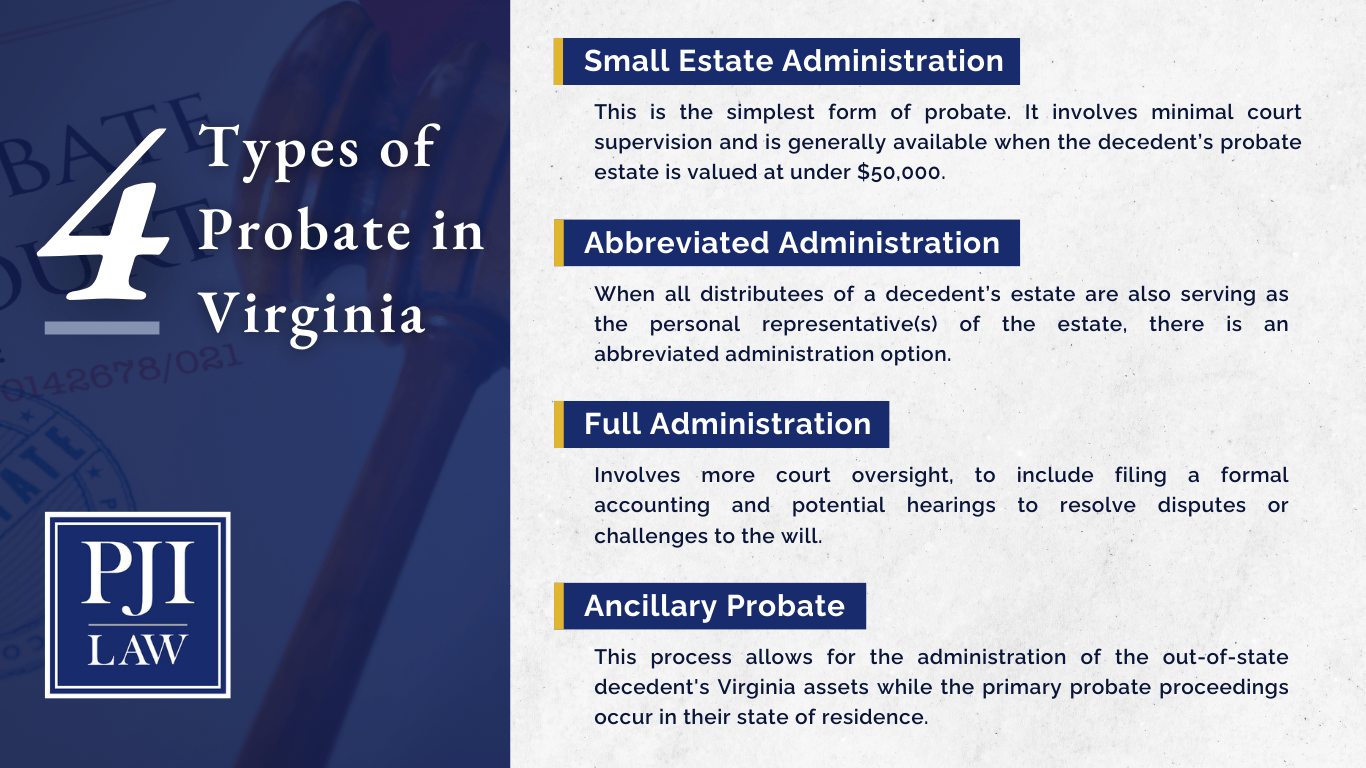
    The 4 Types of Virginia Probate

    virginia probate laws

    In Virginia, there are primarily three types of probate proceedings that may be utilized based on the circumstances surrounding the estate:

    1. Small Estate Administration: This is the simplest form of probate. It involves minimal court supervision and is generally available when the decedent’s probate estate is valued at under $75,000.  
    2. Abbreviated Administration: In situations where the value of the decedent’s estate exceeds $75,000but all distributees of a decedent’s estate are also serving as the personal representative(s) of the estate, there is an abbreviated administration option. Once the court approves the filed inventory and confirms all valid debts have been settled, the personal representative can complete the administration of the estate without extensive judicial involvement or the need to file a formal accounting.
    3. Full Administration: In matters where not all residual beneficiaries under a decedent’s will are also serving as the personal representative(s), there are disputes among the beneficiaries, or challenges to the validity of the will, a full administration is needed. This process may involve hearings to resolve disputes and a formal accounting must be filed and approved by the court before the personal representative is discharged of their duties.
    4. Ancillary Probate: When a non-Virginia resident passes away owning property located in Virginia, ancillary probate may be required. This process allows for the administration of the out-of-state decedent’s Virginia assets while the primary probate proceedings occur in their state of residence.

    Understanding the nuances of these probate procedures in Virginia is crucial for personal representatives and beneficiaries to navigate the legal requirements effectively and ensure the efficient distribution of the deceased person’s assets.

    How Long Does the Probate Process Take?

    Probate can be time-consuming, taking as few as six months or lasting for multiple years. After a decedent’s death, state law generally prevents the closure or distribution of their estate before the end of the creditor period. Unlike most states, Virginia does not impose a deadline for creditors to make a claim. However, the executor can impose a deadline by initiating a Debts and Demands Hearing.

    Various other elements can affect the length of probate, including:

    • The existence of a testamentary trust
    • Familial disagreements
    • Individuals contesting the will
    • The degree of estate planning the decedent completed before they died

    The number of assets and the size and value of any real estate upon the decedent’s death can also impact the length of probate administration.

    Can a Deceased Person’s Loved Ones Receive Their Real Property Without a Will?

    Virginia law allows a deceased person to transfer their real estate property to named beneficiaries through the Virginia transfer on death deed (TOD deed). A TOD deed, also known as a “beneficiary deed,” enables an individual to designate a beneficiary to inherit their real estate property upon their death. It’s a simple and straightforward document that can save grieving families time, money, and stress during an emotionally charged time.

    One of the most significant advantages of a TOD deed is that it allows a decedent’s real property to pass directly to their beneficiaries without initiating a formal probate process.

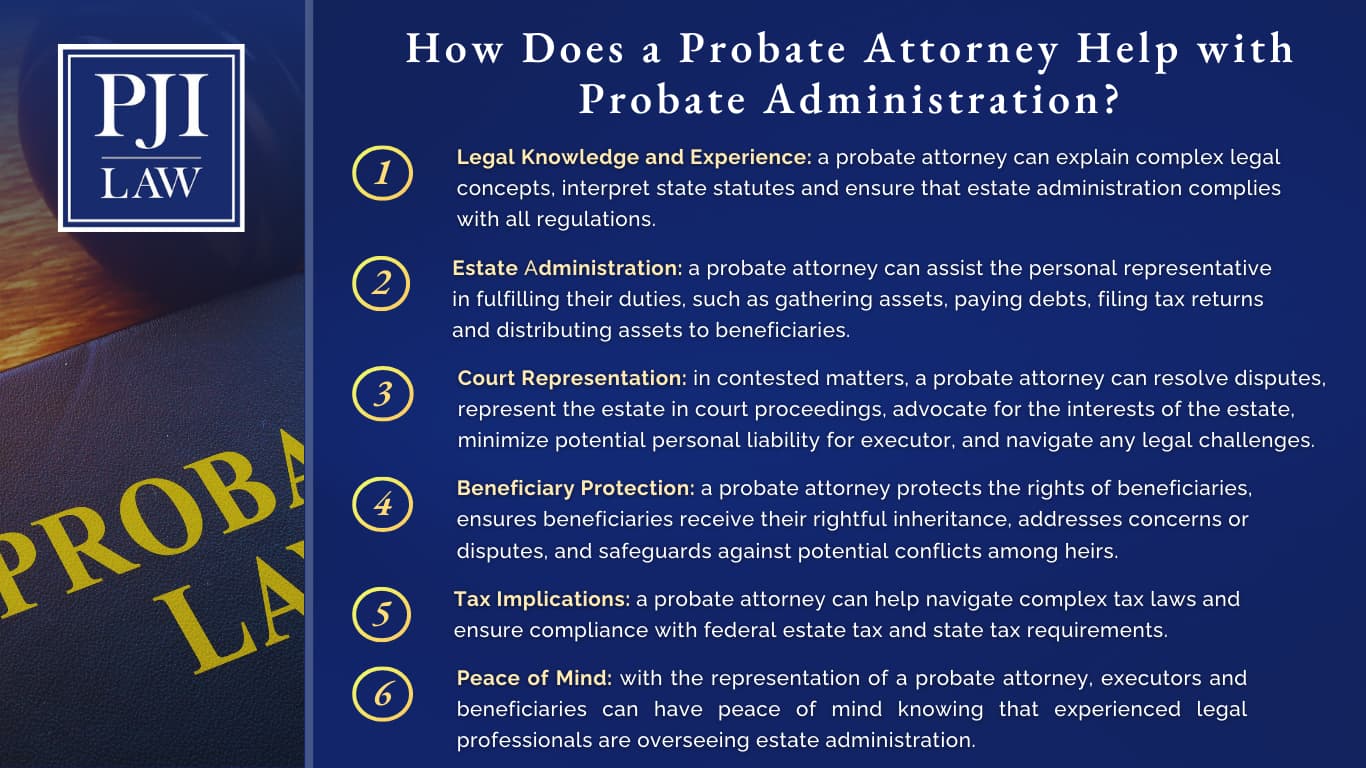
    How Does a Probate Attorney Help with Probate Administration?

    virginia probate laws

    A Virginia probate attorney can guide personal representatives and beneficiaries through the probate process in multiple ways.

    1. Legal Knowledge and Experience: A probate attorney has extensive knowledge of the laws and procedures governing probate in Virginia. They can explain complex legal concepts, interpret state statutes, and ensure that the estate administration complies with all regulations.
    2. Estate Administration: A probate attorney can assist the personal representative in fulfilling their duties, such as gathering assets, paying debts, filing tax returns, and distributing assets to beneficiaries. They help streamline the administrative tasks and ensure everything is handled correctly.
    3. Court Representation: In contested matters, a probate attorney can resolve disputes, represent the estate in court proceedings, advocate for the interests of the estate, minimize potential personal liability for the executor, and navigate any legal challenges that may arise during the probate process.
    4. Beneficiary Protection: A probate attorney protects the rights of beneficiaries, ensures that beneficiaries receive their rightful inheritance, addresses any concerns or disputes that may arise, and safeguards against potential conflicts among heirs.
    5. Tax Implications: Probate attorneys can provide guidance on estate tax issues, including claiming estate tax portability for surviving spouses and maximizing the benefit for beneficiaries. They can help navigate complex tax laws and ensure compliance with federal estate tax and state tax requirements.
    6. Peace of Mind: By hiring a probate attorney to handle the legal aspects of the probate process, executors and beneficiaries can have peace of mind knowing that experienced professionals are overseeing the estate administration and addressing any legal complexities that may arise.

    Overall, a Virginia probate attorney’s knowledge and experience ensure a smooth and efficient probate process, facilitating the proper distribution of assets and the resolution of any legal matters that may arise.

    Let PJI Law’s Probate Lawyers in Richmond, VA Guide You Through Probate Administration with Personal Attention to Detail

    Are you dealing with a probate matter in and around Richmond, Virginia? Have you been searching online for a “probate attorney near me?” Established in 2010, PJI Law takes pride in offering superior probate services our clients can trust. Our attorneys and legal team have extensive experience with probate cases, providing each client with our total commitment, personal attention, and courteous, white-glove service.

    Let us put you at ease as we handle your case with care and precision and ensure legal compliance. We can also help you prepare for the future by establishing a legally valid will as part of a comprehensive estate plan that fulfills your wishes, complies with Virginia law and federal law, and offers peace of mind for you and your loved ones.

    To learn more about probate administration and estate planning and how we can tailor a plan for you, contact us at (804) 653-3450 or complete our online form to schedule a consultation.

    Copyright © 2024. PJI Law, PLC. All rights reserved.

    The information in this blog post (“post”) is provided for general informational purposes only and may not reflect the current law in your jurisdiction. No information in this post should be construed as legal advice from the individual author or the law firm, nor is it intended to be a substitute for legal counsel on any subject matter. No reader of this post should act or refrain from acting based on any information included in or accessible through this post without seeking the appropriate legal or other professional advice on the particular facts and circumstances at issue from a lawyer licensed in the recipient’s state, country, or other appropriate licensing jurisdiction.

    PJI Law, PLC
    4108 E Parham Rd, 
    Richmond, VA 23228
    (804) 653-3450
    https://pjibe.webteam.ai/

  • Understanding Inheritance Laws in Virginia

    Understanding Inheritance Laws in Virginia

    Passing away without a will can lead to significant unintended consequences. In Virginia, the absence of a will means that the distribution of your estate is governed strictly by the state’s intestacy laws, not by your personal wishes. This situation can potentially create expensive and lengthy disputes among family members over your assets and the appointment of an estate administrator by the court. More concerning is the possibility that those who end up inheriting your estate may not be the individuals you would have chosen.

    While trusts and advance directives are also an essential part of a comprehensive estate plan, a will remains an indispensable component. It provides a clear and legally binding directive for the distribution of your assets to beneficiaries of your choosing, ensuring your wishes are carried out after you pass.

    For those without a will, it’s critical to understand the implications of dying intestate. In this blog, we’ll share what you need to know about inheritance laws in Virginia and what the absence of a will in your estate plan means for the management and allocation of your estate.

    If you have questions about including a will as part of your estate plan, contact us at (703) 865-6100 to schedule your consultation with a member of our Virginia estate planning attorney team. At PJI Law, you’ll receive personalized service and attention.

    Glossary of Terms

    Before delving into the specifics of Virginia’s intestate succession laws, it’s important to be familiar with some key terms we’ll be using throughout the blog.

    Term Definition
    Administrator A person appointed by the court to manage the estate of someone who died intestate
    Beneficiary A person named in a will to receive a part of the deceased’s estate
    Decedent The legal term for a person who has passed away. Often used interchangeably with “deceased,” which is a more general term with the same meaning
    Escheat The process by which a deceased person’s estate is turned over to the state if no heirs can be found
    Estate All property, assets, and debts left by an individual at death
    Executor A person appointed in a will to administer the deceased’s estate. They’re responsible for ensuring the will’s instructions are carried out
    Heir A person legally entitled to receive a share of the deceased’s estate under intestate succession laws
    Intestate Succession The condition of dying without a valid will. In such cases, Virginia’s intestate succession laws determine the distribution of the estate
    Per Stirpes Per stirpes ensures that each branch of the family tree receives an equal share of the inheritance, regardless of whether any beneficiaries have died before the testator
    Probate The legal process through which a deceased person’s will is validated and their estate is administered
    Probate Tax A tax levied on the estate as it goes through the probate process
    Testate The condition of dying with a valid will. The will dictates how the estate should be distributed
    Testator A person who has made a will
    Will A legal document in which a person specifies how their estate should be managed and distributed after death

    The Critical Importance of Having a Will

    The presence or absence of a will (testate vs. intestate) significantly impacts estate distribution. A will offers control and clarity, while dying without one leaves the distribution of assets up to the state’s intestacy laws. These laws determine who inherits, but may not reflect the decedent’s personal wishes, emphasizing the importance of proactive estate planning.

    Probate in Virginia varies depending on whether the decedent had a will. When a person passes away without a will, known as dying intestate, their estate is subject to the state’s intestate succession laws. These laws dictate the distribution of assets and property among a hierarchy of relatives and entities.

    Having Trusts Doesn’t Mean You Don’t Need a Will

    Even if you have trusts set up with beneficiaries, having a will is still important for several reasons:

    • Distributing Assets Not Held in Trust: A will can be used to distribute any assets that are not held in your trusts. This could include assets such as real estate, personal belongings, and bank accounts.
    • Appointing Guardians for Minor Children: If you have minor children, a will can be used to appoint guardians for them in the event of your death. This will ensure that your children have someone to care for them and make important decisions on their behalf.
    • Naming an Executor: A will can be used to name an executor, who is responsible for managing your estate after your death. This includes tasks such as paying your debts, distributing your assets, and carrying out your wishes as expressed in your will.
    • Providing Clarity and Certainty: A will provides clarity and certainty regarding your wishes for the distribution of your assets. This can help to avoid disputes among your heirs and ensure that your wishes are carried out as intended.
    • Addressing Unexpected Circumstances: A will can be used to address unforeseen circumstances, such as the death of a beneficiary or a change in your family situation.
    • Completing Your Estate Plan: A will is an essential part of a comprehensive estate plan. It works together with your trusts to ensure that your assets are distributed according to your wishes and that your loved ones are cared for as you would want them to be.

    Even if you have trusts set up, a will is still an essential document that can help to protect your assets, ensure your wishes are carried out, and provide peace of mind for your loved ones. So what happens if you die without a will? Let’s take a look at the probate process next.

    Probate in Virginia: With or Without a Will

    For those who pass away with a will, or testate estates, the probate process is generally more straightforward. A valid will guides the court in distributing the estate according to the decedent’s wishes. However, not all testate estates are handled identically. The nature of the estate determines the probate court’s approach.

    Estates that exclude real estate and comprise personal property valued at $50,000 or less are classified as “small estates” under Virginia’s inheritance laws. Such estates can bypass the probate process altogether if 60 days have passed since the individual’s death. Conversely, larger estates must go through formal probate administration.

    Understanding the difference between real and personal property is crucial in this context. Real property includes land and structures attached to it, like houses. Personal property, on the other hand, covers items like cars, furniture, electronics, jewelry, financial investments, and cash. Certain assets, such as insurance policies and Individual Retirement Accounts (IRAs), are not subject to probate and are treated separately. We’ll discuss this in more detail in a later section.

    In the absence of a will, the court appoints an administrator to oversee the estate, prioritizing relatives of the decedent based on a specific order. This administrator is responsible for managing the estate’s debts and distributing the remaining assets as per the intestacy laws.

    In all scenarios, an estate must first clear the deceased’s debts, including taxes, final expenses, credit bills, and other liabilities, before distribution to heirs. This responsibility falls on the executor (named in the will) or administrator (appointed by the court if there is no will).

    Probate cases in Virginia, whether intestate or testate, are handled by the circuit courts in the county where the deceased resided, ensuring proper legal oversight and administration of the estates.

    Overview of Intestate Succession in Virginia


    Intestate succession laws in Virginia provide a hierarchy of beneficiaries, which is strictly followed in the absence of a will. These laws are designed to distribute assets to the closest relatives first, but the specifics can vary based on the deceased’s family situation.

    Inheritance Rights of Spouses

    Virginia’s inheritance laws grant significant rights to spouses in cases of intestate succession, aligning with the norms of many other states. In situations where the decedent leaves behind only a spouse and no children, the entirety of the estate is inherited by the surviving spouse. This provision also applies if all the decedent’s children are shared with the surviving spouse.

    However, if there are surviving children from a previous relationship, the dynamics change. In such cases, the surviving spouse is entitled to only one-third of the estate, while the remaining two-thirds are distributed evenly among the children, following the principle of per stirpes distribution.

    Inheritance Rights for Children

    In Virginia, the inheritance rights for children vary based on the presence of a surviving spouse. If there is no surviving spouse, the entire estate naturally passes to the children. However, when a spouse survives, the distribution of the estate to children depends on their relationship with the surviving spouse. If there are only children shared with the surviving spouse they may not inherit, but if there are children from another relationship then the decedent’s children could receive up to two-thirds of the estate.

    Virginia law does not differentiate between biological and adopted children regarding inheritance rights. Both are equally entitled to inherit from an intestate (without a will) estate. Grandchildren, however, do not have inherent rights to inheritance in the absence of a will, unless their parent (the decedent’s child) has passed away before the decedent.

    A child conceived before but born after the death of a parent inherits as if they were born during the parent’s lifetime. This also holds true for children born via artificial insemination using the genetic material of the deceased.

    If a decedent wishes to bequeath property to a stepchild or foster child, they must explicitly include them in their will.

    Unmarried Individuals Without Children

    For those who pass away without a will and leave no surviving children or spouse, Virginia’s intestate succession laws establish the order in which relatives inherit the deceased’s property. This process, known as intestate succession, aims to identify and locate any potential heirs within the deceased’s extended family, ensuring that the estate remains within the family lineage.
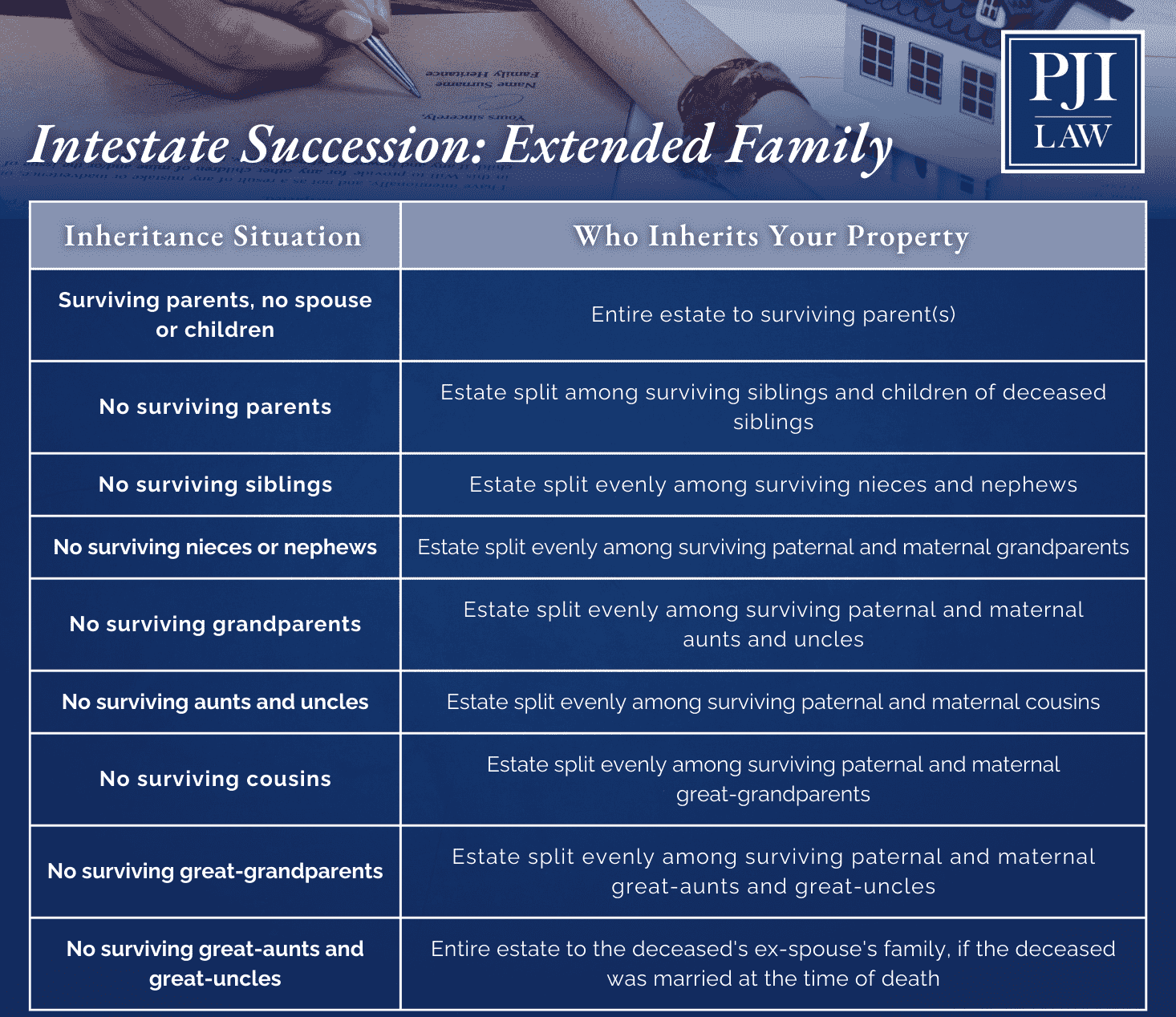
    Extended Family

    No Surviving Heirs

    In rare cases where no family can be located, the estate escheats to the Commonwealth of Virginia. Additionally, creditors may have a role in estate administration if they seek to serve as administrators, particularly in cases where the estate owes significant debts.

    Non-Probate Assets in Virginia

    As mentioned in an earlier section, non-probate assets in Virginia are assets that can bypass the probate process, passing directly to your beneficiaries without going through the often time-consuming and costly probate proceedings.

    Types of Non-Probate Assets


    Non-probate assets can include a variety of asset types, such as:

    • Real property owned by the decedent
    • Life insurance proceeds
    • Investment accounts
    • Jointly titled real estate assets
    • Retirement accounts
    • Trust assets
    • Payable on death or transfer assets

    These assets can pass directly to your beneficiaries without going through the probate process, providing a more efficient method for transferring assets and minimizing the burden on your loved ones during a difficult time. Working with a skilled attorney ensures that your non-probate assets are properly managed and distributed according to your wishes.

    Designating Beneficiaries

    Designating beneficiaries for non-probate assets is crucial for ensuring a smooth transfer of assets and can help avoid potential disputes among heirs. Non-probate assets, such as life insurance policies, retirement accounts, and bank accounts, typically require a designated beneficiary form to be filled out and submitted to the relevant financial institution.

    It’s essential to keep these forms up to date to ensure that the assets are transferred to the designated beneficiary. Taking the time to designate beneficiaries for your non-probate assets allows you to create a comprehensive estate plan that maximizes the value of your assets and provides financial security for your loved ones.

    Avoiding Unintended Outcomes

    As you can see, dying intestate can lead to outcomes that might not align with your wishes. To ensure your assets are distributed according to your personal preferences, creating a will is vital. This provides clarity and direction for the distribution of your assets and can prevent potential disputes among family members. For further reading, we invite you to read our blog, “How to Create a Will in Virginia.”

    For added control and flexibility, consider establishing a trust in conjunction with your will if you have not already done so. A trust can provide numerous benefits, such as asset protection, distribution to beneficiaries, and privacy. You can read more about trusts in our blog here.
    Understanding Virginia’s intestate succession laws is crucial for estate planning and for those handling the estate of a deceased without a will. These laws dictate who inherits in various family scenarios, emphasizing the importance of having a will to ensure your assets are distributed according to your wishes. For tailored legal advice, especially when dealing with complex family situations or significant assets, consulting with a Virginia estate planning attorney is advisable.

    Secure Your Legacy and Honor Your Wishes with PJI Law

    Navigating the complexities of estate planning and intestate laws in Virginia can be daunting, but with PJI Law by your side, you can craft an estate plan that precisely reflects your wishes and secures your legacy.

    At PJI Law, we understand that each estate plan is as unique as the individual it represents. Our dedicated team of legal professionals combines in-depth knowledge of Virginia estate law with a personalized approach to ensure your estate plan is tailored to your specific needs and circumstances.

    Whether you’re starting from scratch or need to update an existing plan, our commitment is to provide you with an estate plan that not only adheres to legal standards but also provides peace of mind for you and your loved ones.

    Don’t leave your legacy to chance. If you’ve been searching online for a “estate planning attorney near me,” contact PJI Law instead. You can reach us by calling (703) 865-6100 or filling out our online form to schedule your consultation in Fairfax, Virginia. Let us help you create an enduring and effective estate plan that honors your wishes and protects your loved ones from Virginia’s inheritance laws.

    Copyright © 2023. PJI Law, PLC. All rights reserved.

    The information in this blog post (“post”) is provided for general informational purposes only and may not reflect the current law in your jurisdiction. No information in this post should be construed as legal advice from the individual author or the law firm, nor is it intended to be a substitute for legal counsel on any subject matter. No reader of this post should act or refrain from acting based on any information included in or accessible through this post without seeking the appropriate legal or other professional advice on the particular facts and circumstances at issue from a lawyer licensed in the recipient’s state, country, or other appropriate licensing jurisdiction.

    PJI Law, PLC
    3900 Jermantown Rd, 2nd Floor
    Fairfax, Virginia 22030
    (703) 865-6100
    https://pjibe.webteam.ai/

  • Trusted Estate Planning Attorneys in Virginia Explain the Risks of Gifting Your Home to Your Children

    Trusted Estate Planning Attorneys in Virginia Explain the Risks of Gifting Your Home to Your Children

    John and Lori had always dreamed of leaving their family a legacy. As they aged, they decided that gifting their home to their children would be the perfect way to achieve this goal. They were excited about the prospect of giving their children the gift of homeownership and avoiding probate.

    However, they had no idea of the risks that came with gifting their home. When considering estate planning, many parents explore the option of gifting their homes to their children. While this may seem like a simple and effective solution to transfer assets and avoid probate, there are several risks and drawbacks.

    At PJI Law, PLC, our trusted estate planning attorneys in Virginia, are here to answer any questions you may have about the estate planning process. Continue reading as we share the risks of gifting your home to your children and why it may not be the best option for your estate plan.

    Contact us at (703) 865-6100 for personalized service and attention.

    What is Gifting a Home?

    In Virginia, gifting a home involves transferring ownership of the property from the current owner (the parent) to their child or children as a gift. This transfer can be made during the parent’s lifetime or after their death. 

    Gifting a home can be done through a quitclaim deed or other legal instrument. It can have potential benefits such as avoiding probate, reducing estate taxes, or protecting the property from creditors.

    Understanding the Risks of Gifting Your Home to Your Children

    While gifting a home may seem like a simple solution, it can have significant risks and drawbacks. Some of the risks to consider before making this decision are below:

    Loss of Control

    Once you gift your home to your children, you relinquish control over the property. This means your children can make decisions about the property without your input or permission. If you need to sell the property or access its equity in the future, you will need your children’s cooperation.

    Example: After gifting their home to their children, an elderly couple needed to access the equity in their home to pay for medical expenses. However, their children refused to sell the property, leaving the couple without the needed resources.

    Tax Implications

    Gifting your home can have significant tax implications, including gift and capital gains taxes. If you gift your home to your children while still alive, you may be subject to gift taxes if the home’s value exceeds the annual gift tax exclusion. 

    Additionally, if your children sell the property in the future, they may be subject to capital gains taxes on the appreciated value of the property.

    Example: A woman gifted her home to her children while still alive, not realizing that the home’s value exceeded the annual gift tax exclusion. As a result, she was subject to gift taxes on the excess value, reducing the overall value of the gift.

    Medicaid Eligibility

    Gifting your home can also impact your eligibility for Medicaid. If you or your spouse require long-term care and seek Medicaid assistance, transferring your home may disqualify you from receiving benefits. 

    This is because Medicaid has a five-year “look-back” period, which means that any assets transferred within five years of applying for benefits are subject to a penalty.

    Example: An elderly man gifted his home to his daughter, not realizing that the home’s value would impact his eligibility for Medicaid. When he needed to enter a nursing home, he was denied benefits because the value of the gifted home was considered a countable asset.

    Creditors and Lawsuits

    Once you gift your home to your children, it becomes an asset subject to their creditors and potential lawsuits. The gifted home may be at risk if your children experience financial difficulties, divorce, or legal issues.

    Example: A couple gifted their home to their children, but one of their children experienced financial difficulties and was sued by creditors. As a result, the gifted home was at risk of being seized to satisfy the outstanding debts.

    Family Conflicts

    Even if you have a trusting relationship with your adult child, life is unpredictable, and gifting your home to them can lead to unforeseen consequences. If you continue to live in the family home after transferring the title, you legally become your child’s tenant, which can lead to disagreements over property maintenance or a future sale. 

    Additionally, changes in family dynamics may cause you to regret your decision to transfer the property to your child’s name. 

    Example: A couple gifted their son their home but continued living there. Disagreements over property maintenance arose, causing tension. When their health declined, they realized they were vulnerable and regretted not fully considering the potential consequences. 

    Alternative Estate Planning Strategies

    There are several alternatives to gifting a home that can achieve similar goals without the associated risks. Some options to consider include:

    Trusts

    A trust is a legal arrangement where you transfer ownership of your assets to a trustee who manages them for the benefit of the beneficiaries. By creating a trust, you can transfer ownership of your home to the trust and name your children as beneficiaries. 

    This allows you to maintain control over your home while providing for your children’s future. Your local trust attorneys can advise you on which type of trust is best for you.

    Life Estate

    A life estate is a form of joint ownership that allows you to continue living in the home until your death, at which point it is transferred to the other owner. Life estates can be used to avoid probate and give a home to children without relinquishing the right to occupy it. 

    In addition, they can play a significant role in Medicaid planning. However, this can create complications if you want to sell or lease the home at some point in the future.

    Transfer-on-Death Deed

    A transfer-on-death deed is a legal document that transfers ownership of the home to your children upon your death. This allows you to maintain control over the home during your lifetime while still ensuring that your children receive it after your death.

    Sell the Home

    Finally, selling your home and using the proceeds to fund your retirement or estate plan can be an effective way to transfer assets and minimize potential risks and tax implications.

    How a Virginia Estate Planning Attorney Can Assist You in Avoiding Probate Without Retitling Your Home 

    Putting your family home and other assets in a trust is the simplest way to keep them out of probate. You can keep full control of your assets and use or sell them as you normally would by establishing a revocable living trust. After your death, a successor trustee will manage the trust and distribute assets to beneficiaries. 

    Another option is to place your home in an irrevocable trust to protect it from creditors and Medicaid claims. An irrevocable trust, on the other hand, is a less flexible solution that restricts your use of the property. You can read more about trusts in a blog we wrote here.

    Your local trust attorneys in Virginia can provide dependable legal counsel and establish a trust to meet your estate planning needs.

    Frequently Asked Questions

    Q: Are there any specific tax implications if the parents gift their home to multiple children?

    A: Yes, there can be. Each child may be subject to gift tax on their portion of the home’s value. Additionally, if the home is sold, each child may be responsible for paying capital gains taxes on their portion of the increase in value since the transfer.

    Q: How does gifting a home to children affect the parents’ mortgage or other liens on the property?

    A: Gifting a home does not automatically remove any liens on the property, and it may even trigger the need to pay the entire mortgage balance. The parents will still be responsible for paying any outstanding debts or liens on the property after the transfer.

    Q: Are there any specific legal requirements that need to be met when gifting a home to children?

    A: Yes, there are. The transfer of ownership must be properly executed, recorded, and comply with state and federal law to be valid.

    Q: Can parents revoke the transfer of their home to their children if circumstances change?

    A: It depends on the specific circumstances and the terms of the transfer. In some cases, it may be possible to revoke the transfer, but in other cases, it may not be possible.

    Q: What happens to the gifted home if the child passes away before the parents?

    A: The property will become part of the child’s estate. The distribution of the property will then depend on whether the child had a valid will at the time of their death. If there were no will, the property would be distributed according to Virginia’s intestacy laws.

    Q: Can gifting a home to children affect their own estate planning goals and strategies?

    A: Yes, it can. Receiving a gifted home can affect the children’s overall estate plan and may require adjustments to their own goals and strategies. 

    Secure Your Family’s Future by Consulting with Trusted Estate Planning Attorneys Before Gifting Your Home to Your Children

    If you’re considering gifting your home to your children, you need to carefully consider all potential risks and consequences before making any decisions. Consulting with trusted estate planning attorneys from PJI Law, PLC, can help you determine the best strategy for your individual circumstances to ensure your wishes are carried out in the most effective and efficient manner possible. 

    Don’t let the fear of probate or estate taxes drive you to make hasty decisions that could cause family conflicts or financial instability. Take control of your estate planning today and secure your family’s future for years to come.

    If you need assistance getting started or have questions about any part of the process, please don’t hesitate to call us to speak with a member of our Virginia estate planning attorney team. At PJI Law, PLC, each client receives our complete dedication, personal attention, and courteous, white-glove service. 

    Call our office at (703) 865-6100, or complete our online form to schedule your consultation with our Fairfax, Virginia, estate planning legal team. We provide a full range of estate planning services to protect your family and your legacy by ensuring the seamless transfer of your assets. 

    Copyright © 2023. PJI Law, PLC. All rights reserved.

    The information in this blog post (“post”) is provided for general informational purposes only and may not reflect the current law in your jurisdiction. No information in this post should be construed as legal advice from the individual author or the law firm, nor is it intended to be a substitute for legal counsel on any subject matter. No reader of this post should act or refrain from acting based on any information included in or accessible through this post without seeking the appropriate legal or other professional advice on the particular facts and circumstances at issue from a lawyer licensed in the recipient’s state, country, or other appropriate licensing jurisdiction.

    PJI Law, PLC
    3900 Jermantown Rd, 2nd Floor
    Fairfax, Virginia 22030
    (703) 865-6100
    https://pjibe.webteam.ai/

  • How Does the Probate Process Work in Virginia?

    How Does the Probate Process Work in Virginia?

    Probate is the legal process of distributing a person’s property and assets after their death. The law refers to the person who died as the decedent during the legal process. If a decedent dies with a valid will, the decedent’s assets will be distributed according to the terms of their will. Virginia’s probate laws would govern the distribution of the decedent’s assets if the decedent died without a valid will. Probate isn’t always required after someone passes away; it depends on the decedent’s assets. 

    We know that navigating the death of a loved one is already a complicated experience. At PJI Law, PLC, our experienced Northern Virginia probate attorneys can help you distribute assets and handle the legal complexities on your behalf. 

    Qualifying as an Executor

    A person can initiate the probate process by bringing the last will and testament of the decedent to the Clerk of the Court and asking to qualify as an executor of their estate unless the decedent already named an executor or personal representative in their will. If you seek to begin the probate process, you must go to the Circuit Court in the city or county where the decedent passed away or owned property.

    To qualify as an executor, a person must be over 18 years old and acquire a bond or surety, although that may sometimes be waived. You must also convince the court that you’re competent and capable of serving as the executor. Individuals who live outside of Virginia may still be eligible, but a Virginia resident must accompany them to the Clerk’s Office.

    What to Expect During Probate

    After a qualified executor has initiated the probate process, the Circuit Court Clerk or Deputy Clerk will validate the will. Then, the executor can perform an inventory and create a list of the decedent’s assets. The executor will present the list to the Commissioner of Accounts once the inventory is completed. The executor must also file an income and expense accounting with the Commissioner of Accounts.

    The executor is also responsible for paying all bills and tax returns left by the decedent and settling all financial matters that were left unresolved, including debts and claims made against the estate. The executor might also need to deal with individuals who might contest the will. PJI Law can assist in resolving those matters in probate court. A trusted lawyer from the team can assist with, and manage, this entire process.

    When Is Probate Necessary?

    Some assets do not need to go through probate in Virginia and may be directly disbursed to the beneficiaries. Non-probate assets could include retirement accounts, payable-on-death or transfer-on-death accounts, joint tenancy assets, property in a living trust, and life insurance payouts.

    Probate is especially beneficial if the decedent owned property solely in their name — probating the will formally transfers the title of the property to the recipients or heirs according to the will. Typically, probate is essential whenever a decedent dies and leaves behind property titled exclusively in their name. However, if an estate is small enough, probate may not be required, and the survivors can go through a streamlined process instead.

    How Long Does the Probate Process Last?

    Probate can be a time-consuming process. It can take as few as six months or go on for multiple years. Typically, after a person dies, state law prevents the closure or distribution of an estate before the end of the creditor period. 

    A variety of elements can affect the length of probate. These include the existence of a testamentary trust, familial disagreements, individuals contesting the will, and the degree of estate planning the decedent completed before they died. The number of assets and the size and value of any real estate upon the decedent’s death can also impact the length of estate administration.

    Navigating the Probate Process

    Death often results in various emotions and reactions from the decedent’s loved ones. In many cases, serving as the executor or personal representative can help individuals through the grieving process. 

    Probate can also lead to surprises in the wake of an individual’s death. When managing the decedent’s affairs, their executor may encounter information that they are not expecting about that person. At PJI Law, PLC, our clients always come first. Our team of professional probate lawyers have experience guiding individuals through every step of the legal process. We know that grief can be complicated, so we strive to take as much stress and frustration out of the process.

    PJI Law, PLC:  Northern Virginia Probate Attorneys You Can Rely On

    At PJI Law, PLC, we pride ourselves on offering superior services that our clients can trust. Each PJI Law client gets our total commitment, personal attention, and courteous, prompt service. Our skilled team responds quickly to each client, and we use the latest innovative technology to provide the best experience possible. 

    If you are looking for a Northern Virginia “probate attorney near me,” our team of probate attorneys located in Fairfax, Virginia, will provide personal attention to every detail and aspect of your case. Our practice areas include probate, estate planning, and estate litigation. To schedule a consultation, call our team at PJI Law, PLC today at (703) 865-6100. You can also fill out our online form here.

    Copyright © 2022. PJI Law, PLC. All rights reserved.

    The information in this blog post (“post”) is provided for general informational purposes only and may not reflect the current law in your jurisdiction. No information in this post should be construed as legal advice from the individual author or the law firm, nor is it intended to be a substitute for legal counsel on any subject matter. No reader of this post should act or refrain from acting based on any information included in or accessible through this post without seeking the appropriate legal or other professional advice on the particular facts and circumstances at issue from a lawyer licensed in the recipient’s state, country or other appropriate licensing jurisdiction.

    PJI Law, PLC
    3900 Jermantown Rd, 2nd Floor
    Fairfax, Virginia 22030
    (703) 865-6100
    https://pjibe.webteam.ai/

  • What Happens if I Die or Get Incapacitated Tomorrow, with No Plan in Place?

    What Happens if I Die or Get Incapacitated Tomorrow, with No Plan in Place?

    What’s the most popular estate planning option? Will-based planning? Trust-based planning? Unfortunately, it’s neither. Number one on the list in Virginia is: doing nothing. The more technical term for this lack of planning is called “dying intestate.”

    “Dying intestate” simply means that you have decided to depart this world without doing any estate planning whatsoever. While your family will be horrified at this prospect, your unintended beneficiaries, the government and the probate court will all be delighted.

    By dying intestate, you will have allowed the government to draft your estate plan for you. As a result, they can tax your estate and impose other costs at the maximum amount allowable by law. In addition, your assets will go to people according state law’s priorities, not your own. For example, most married couples want their share of the estate to be used by the surviving spouse before the children inherit. However, if you have a blended family situation and provided no direction ahead of time, when you die, the court will only give one-third of your estate to your surviving spouse and two-thirds to your children from a previous marriage.

    This problem is exacerbated before you die if you have no incapacity planning documents in place. If (and more likely, when) something happens to you that renders you unable to handle your own affairs, without you having a proper legal plan in place, you will have to go through a legal proceeding where a court appoints a guardian to handle your personal affairs and a conservator to handle your finances. The procedure is oftentimes referred to as “living probate.”

    Living probate can be a living nightmare for you and your family for several reasons. First, it can be a humiliating process. You are declared incompetent in a public proceeding. Next, the court is in charge. It will decide which people will manage your affairs; it’s neither you nor your family’s choice.

    Because of this court proceeding, there is lag time in the management of your affairs due to paperwork and delays. Of course, these hassles can add a lot of stress and expense to what is already a very stressful situation for your family.

    Finally, living probate can be very expensive. Typically, there are court fees, attorneys’ fees, expert witness fees and accounting fees. Additionally, once your conservator has been appointed by the court, this person has to give an annual accounting to the court on how your financial affairs have been managed. This is true even if the court appointed your spouse or one of your children as your conservator.

    Doing nothing hurts you, but hurts your family even more. Most of our clients tells us that the reason they’re doing proper planning is to protect their family. If that sounds like what you wish to do, we at PJI Law are here to help. Call us at (703) 865-6100 or email us at family@pjilaw.com.