
Tag: Lemon Law

  • What to Do if Your Car Is a Lemon in Virginia

    What to Do if Your Car Is a Lemon in Virginia

    With interest rates at record highs, financing a new car has become a significant financial commitment, one that requires careful planning and consideration. You’ve diligently saved for a substantial down payment to ease the burden of high monthly payments. You meticulously select a car that seems perfect, expecting it to be a reliable companion on Virginia’s roads for years to come. However, just when you think you’ve made a wise investment, your car starts showing signs of serious defects breaking down several times on the side of the road. It’s a situation that’s both disheartening and distressing.

    Fortunately, in Virginia you’re not left without recourse. The state’s lemon law is designed to protect consumers who find themselves saddled with a defective vehicle. In this blog, an attorney for lemon law from our team shares what to do if your car is a lemon and your big investment has turned sour.  Continue reading to learn more.

    Understanding Virginia’s Lemon Law

    The Virginia Motor Vehicle Warranty Enforcement Act, or lemon law, provides a remedy for consumers who purchase or lease new vehicles with significant defects. For purposes of this blog, we’ll refer to this as the Virginia Lemon Law or lemon law. To benefit from the lemon law, you must meet certain criteria and understand what constitutes a lemon vehicle.

    Eligibility Criteria

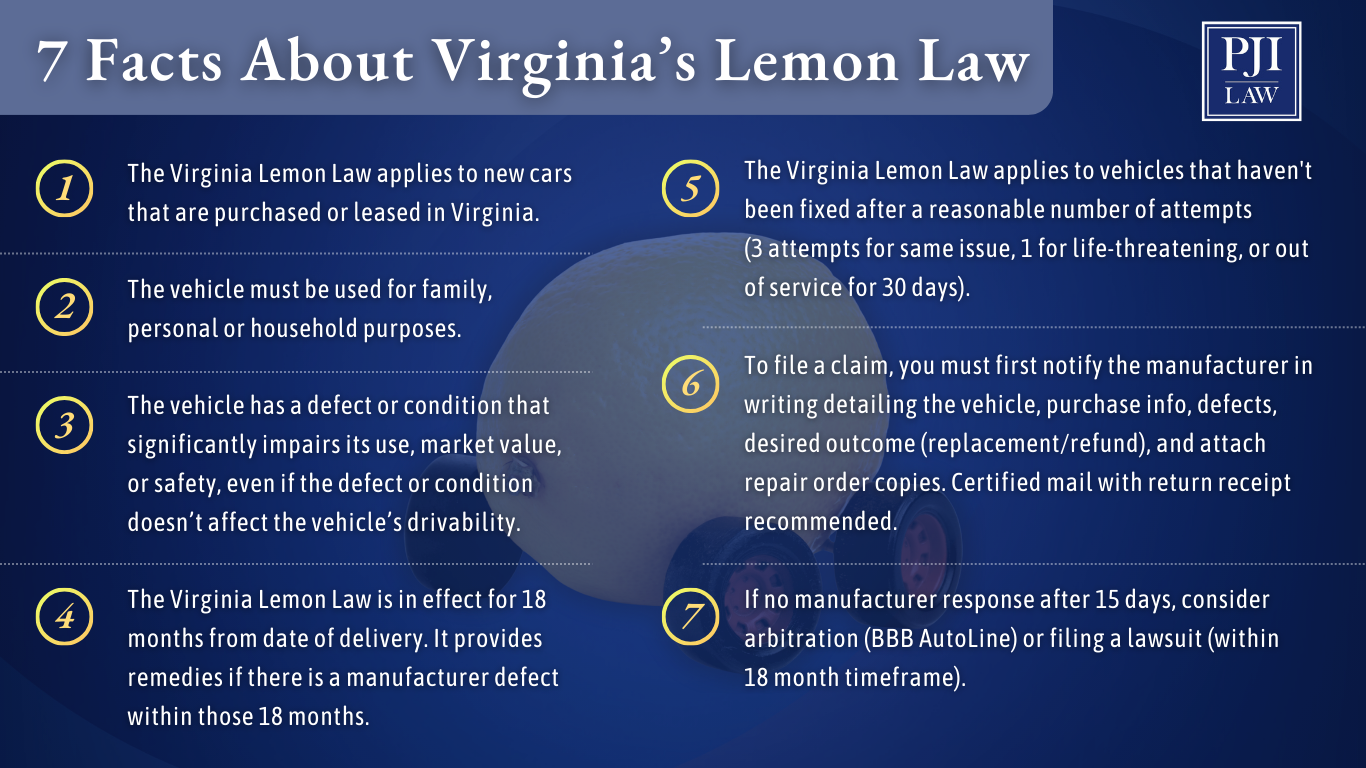
    • Purchase or Lease: You must have purchased or leased a new vehicle in Virginia.
    • Timeframe: The defect must occur within 18 months of the vehicle’s delivery date.
    • Usage: The vehicle must be intended for personal, family, or household use.
    • Attempts to Repair: The manufacturer or its agents must have had a reasonable number of attempts to repair the vehicle.
      • Quantifying Attempts: A “reasonable number of attempts” is defined as either three attempts for the same defect, one attempt if the defect is life-threatening, or if the vehicle is out of service for a cumulative total of 30 days for any number of issues.

    Note: If you have a used car, it might be protected under the lemon law if the previous owner had purchased it as a new car within the previous 18 months.

    Definition of a Lemon Vehicle

    A “lemon vehicle” is identified by its failure to conform to the manufacturer’s express warranties, which significantly affects the use, value, or safety of the vehicle. According to the Virginia Lemon Law:

    • Conformity to Warranties: The vehicle must exhibit a defect or condition that substantially impairs its use, value, or safety.
    • Manufacturer’s Obligation: The manufacturer must be unable to fix the vehicle’s defect within a reasonable number of attempts.
    • Substantial Impairment: The vehicle has a defect or condition that significantly impairs its use, market value, or safety, even if the defect or condition doesn’t affect the vehicle’s drivability.

    Initial Steps to Take

    If you suspect your car is a lemon as defined by Virginia law, swift and methodical action is crucial due to the 18-month timeframe. For example, you must gather comprehensive repair records and notify the manufacturer as prescribed by state law if your vehicle defect(s) have not been repaired.

    Maintenance and Record-Keeping Tips
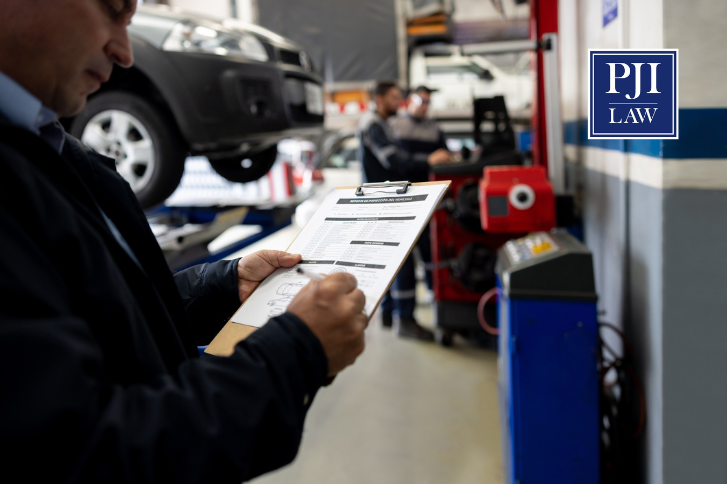

    Maintaining a vehicle and keeping thorough records are essential steps in managing a lemon law case. Well-documented maintenance can provide evidence that car issues are due to manufacturing defects rather than owner negligence.

    Documentation Best Practices

    Organized Records: It is crucial to keep all maintenance receipts, work orders, and inspection reports in an organized manner. They should include:

    • Date of service
    • Description of the service provided
    • Mileage at the time of service
    • Detailed notes on any car issues reported or observed

    Digital Backups: In addition to physical copies, vehicle owners should create digital backups of all records. Cloud storage services or dedicated folders on a computer can serve as secure backup options.

    Timely Filing: After each service, promptly file the documents in the designated location. This ensures that no crucial information is lost and that everything is readily accessible for lemon law proceedings. This documentation will be vital for substantiating a lemon law claim.

    Notifying the Manufacturer

    Initiating your lemon law claim requires notifying the vehicle manufacturer in writing. This detailed letter serves as a crucial first step in asserting your legal rights and seeking remedies for persistent vehicle defects.

    Essential Information to Include:

    • Vehicle Identification: Clearly state your vehicle’s year, make, model, and Vehicle Identification Number (VIN) for easy reference.
    • Purchase Details: Specify the name and address of the dealership where you purchased the vehicle, along with the exact delivery date.
    • Defect Documentation: List each recurring vehicle problem in detail, including the dates you attempted repairs at the dealership and the nature of any outstanding issues.
    • Desired Outcome: Indicate your preferred resolution, whether it’s vehicle replacement or a full refund.
    • Supporting Documents: Enclose copies (not originals) of all purchase-related paperwork and repair orders to substantiate your claims.

    Formatting and Submission:

    • Sign and date your letter for legal validity
    • Make a copy for your records

    Consider sending the letter via certified mail with a return receipt requested. This provides documented proof of delivery and protects your legal interests. Keep both the certified mail receipt and the green return receipt as evidence. It’s essential to adhere to these initial steps to set a strong foundation for your lemon law claim.

    Filing a Lemon Law Claim

    If the manufacturer does not contact you to schedule a final repair within 15 days from receipt of the written notice or is not forthcoming with a refund or replacement, you will need to take any further action within the 18-month timeframe. This can mean arbitration or filing a lawsuit against the manufacturer. Arbitration is an avenue if you wish to resolve your disputes without going to court. However, you can still file a lawsuit if you’re unhappy with the decision of arbitration.

    Initiating Arbitration

    Before engaging in a civil lawsuit, there is often the option of informal dispute resolution. The Better Business Bureau’s (BBB) AutoLine program represents a resource for facilitating settlements between consumers and automobile manufacturers. This program acts as a bridge of communication, offering mediation services provided the manufacturer participates in the AutoLine network.

    Before initiating arbitration, verify manufacturer participation through the BBB website. Upon registering your complaint, the BBB will initiate contact with the manufacturer. Subsequently, you may be contacted directly by the manufacturer representative seeking a mutually agreeable resolution. Alternatively, you can request BBB representative intervention to advocate on your behalf.

    If the dispute remains unresolved at this stage, or if you decide to skip the dispute process (as many do), consulting with lawyers who deal with lemon law is typically the next prudent step. Remember, you only have 18 months from the date your vehicle was delivered to file a lemon law lawsuit. This time frame provides a crucial window to seek legal remedies for persistent vehicle defects.

    Extended Deadline if Using Manufacturer’s Dispute Resolution

    If you attempt to resolve lemon law issues through the manufacturer’s informal dispute resolution process (e.g., arbitration), you receive additional time to file a lawsuit. In such cases, the filing deadline expands to 12 months after the manufacturer’s final action in the dispute resolution process.

    Importantly, you still retain the original 18-month deadline as a fallback. You can choose whichever deadline provides the most time to file your lawsuit, depending on the timing of the manufacturer’s final action.

    While BBB AutoLine presents a worthwhile avenue for dispute resolution, manufacturer-provided arbitration generally warrants caution. These programs often prioritize compromises over the full legal remedies you may be entitled to.

    Consider BBB AutoLine a strategic stepping stone towards a favorable outcome. Remember, swift action is crucial, and the BBB can bridge the gap towards securing a satisfactory resolution within the legal timeframe.

    Pursuing Legal Action

    If your case cannot be resolved through arbitration or with the manufacturer, you can file a civil lawsuit. A lawsuit can lead to either a replacement vehicle, a buyback, or monetary compensation for your losses.

    Replacement or Repurchase of the Vehicle

    Under the Virginia Lemon Law, if a vehicle is classified as a lemon, you may be entitled to a replacement vehicle or a repurchase. The law stipulates that the manufacturer should replace the vehicle with an identical or comparable new vehicle. If you choose repurchase, the manufacturer must refund:

    • The full contract price
    • All licensing fees
    • Registration fees
    • Taxes

    Choosing Vehicle Replacement:

    If you opt for a replacement and the manufacturer agrees, you are entitled to a comparable vehicle acceptable to you. This ensures a satisfactory resolution that upholds your investment and expectations.

    You will receive a replacement valued at the original contract price, minus a fair usage deduction. This deduction is calculated based on the mileage accumulated before reporting the first issue. Should the manufacturer disagree with replacement, you retain the right to return your vehicle for a full refund, further protecting your consumer rights.

    You can continue driving your current vehicle until you receive either the replacement or your refund, ensuring uninterrupted transportation throughout the process.

    Opting for Refund:

    Selecting a refund allows you to return your vehicle and receive a complete financial reimbursement. The manufacturer cannot object to this preference. Similar to the replacement scenario, the refund amount will be the original contract price minus a mileage-based usage deduction. Once again, you maintain driving privileges until the refund is finalized, minimizing inconvenience and disruption.

    Additionally, any charges for financing, towing, and rental car expenses during the repair periods may also be recovered. Remember, documentation of all expenses is crucial for reimbursement claims, and you must provide receipts or proof of payment.
    Why You Need an Attorney When Facing a Lemon Car

    Navigating the complexities of Virginia Lemon Law while contending with a defective vehicle can be a frustrating and overwhelming ordeal. While notifying the manufacturer and outlining your desired remedies may seem straightforward, seeking the guidance of an experienced attorney for lemon law offers crucial advantages:

    Skill and Experience

    Lemon law attorneys possess in-depth knowledge of your state’s specific regulations, ensuring every step of your claim adheres to legal requirements. They understand the intricacies of paperwork, deadlines, and communication strategies to maximize your chances of a successful outcome.

    Leveling the Playing Field

    Manufacturers often have dedicated legal teams focused on minimizing their liability in lemon law cases. An attorney acts as your advocate, protecting your rights and ensuring your voice is heard with equal force.

    Building a Strong Case

    Attorneys can skillfully gather evidence, document every detail of your vehicle’s issues, and construct a compelling case on your behalf. This includes obtaining repair records, negotiating with dealerships, and, if necessary, preparing for litigation.

    Emotional Support and Guidance

    Dealing with a “lemon” car can be emotionally draining. Your attorney will provide support throughout the process, answer your questions, and alleviate anxieties, allowing you to focus on your daily life while they handle the legal complexities.

    Negotiating the Best Outcome

    Attorneys are skilled negotiators who can secure the best possible resolution for your case, whether it’s a favorable replacement vehicle, a full refund, or additional compensation. Their experience often means they can obtain more favorable settlements than individuals facing manufacturers alone.

    Peace of Mind

    Knowing your rights are protected by a competent legal professional allows you to navigate this stressful situation with peace of mind. You can be confident that your claim is being handled effectively and professionally, maximizing your chances of a successful outcome.

    While you have the right to navigate a lemon law claim on your own, partnering with an experienced attorney significantly increases your chances of securing a favorable outcome and achieving justice for your defective vehicle.

    Don’t Let a Lemon Car Leave You Feeling Sour

    Dealing with a lemon car in Virginia can be a complex and stressful ordeal, but you don’t have to handle it alone. PJI Law is here to provide essential support and guidance in navigating Virginia’s lemon law. Our team of local lemon law lawyers is well-versed in the nuances of these laws and is committed to advocating for your rights as a consumer.

    At PJI Law, we understand the challenges you face with a lemon vehicle. We approach each case with a personalized strategy, ensuring that your situation is handled with attention and care. Our goal is to help you move forward from this frustrating experience with a positive outcome, protecting your consumer rights every step of the way.

    If you’re struggling with a lemon car, let PJI Law be your ally. Contact us by calling (703) 865-6100 or fill out our online form to schedule your consultation in Fairfax, Virginia. Together, we can tackle your lemon law issues with confidence and clarity, helping you turn a challenging situation into a resolved matter.

    Copyright © 2024. PJI Law, PLC. All rights reserved.

    The information in this blog post (“post”) is provided for general informational purposes only and may not reflect the current law in your jurisdiction. No information in this post should be construed as legal advice from the individual author or the law firm, nor is it intended to be a substitute for legal counsel on any subject matter. No reader of this post should act or refrain from acting based on any information included in or accessible through this post without seeking the appropriate legal or other professional advice on the particular facts and circumstances at issue from a lawyer licensed in the recipient’s state, country, or other appropriate licensing jurisdiction.

    PJI Law, PLC
    3900 Jermantown Rd, 2nd Floor
    Fairfax, Virginia 22030
    (703) 865-6100
    https://pjibe.webteam.ai/
  • Why Should You Hire a Virginia Lemon Law Attorney for Your Lemon Law Claim?

    Why Should You Hire a Virginia Lemon Law Attorney for Your Lemon Law Claim?

    If you’ve recently purchased a new car in Virginia and it proves to be a “lemon,” your first thought might not be to hire an attorney. After all, the Virginia lemon law is there to protect consumers against defective cars that fail to meet expectations—surely filing a Virginia lemon law claim is as easy as simply filing some paperwork? 

    Even though Virginia’s lemon law was created to help protect consumers from such situations, successfully pursuing a lemon law claim can often be tricky – which is why it helps to have the assistance of an experienced Virginia lemon law attorney. 

    In this blog, we’ll discuss the value of hiring an attorney familiar with lemon law claims and how they can help you prevail in your claim to get the vehicle manufacturer to refund your money or replace your vehicle.

    If you think your new car is a lemon, time is of the essence when it comes to filing a Virginia lemon law claim. At PJI Law, PLC, our team is here to help you get out of a lemon and back in the driver’s seat. Contact us at (703) 865-6100 for personalized service and attention.

    Lemons and Defective Vehicles

    To better understand lemon law claims, let’s first explore the concept of “lemons” and defective vehicles.

    The term “lemon” in the context of the lemon law is believed to have originated from early 20th-century American slang, where it was used to describe a product or item found to be defective or subpar. The term likely comes from the sour taste of a lemon, which is often associated with something undesirable or unpleasant.

    The phrase was initially used informally to describe faulty cars or other consumer products. Over time, the term “lemon” became more widely recognized and eventually entered the legal realm. 

    In the 1970s and 1980s, many states in the United States began adopting consumer protection laws specifically aimed at addressing the issue of defective vehicles. These laws became known as “lemon laws” and were designed to protect consumers who purchased or leased new vehicles with significant defects.

    What is the Virginia Lemon Law?

    The Virginia lemon law, also known as the Virginia Motor Vehicle Warranty Enforcement Act, protects consumers who have purchased or leased new vehicles with significant defects. If your vehicle is determined to be a lemon, you’re entitled to a refund or a replacement vehicle.

    Which vehicles are covered?

    Passenger cars, pickup trucks, panel trucks, motorcycles, mopeds, and self-propelled motorized chassis of motor homes are covered under the Virginia lemon law. 

    Any defects must have been present at the time of purchase or developed soon after. The term “lemon” is used to describe these defective motor vehicles.

    What about used vehicles?

    The lemon law primarily aims to protect new vehicle buyers, but used vehicles may be covered if the previous owner purchased it new within the 18-month timeframe. If a used vehicle meets the lemon law criteria, it can qualify for the same protections as a new vehicle. 

    While successful lemon law claims have been made for used vehicles in Virginia, the process can be more challenging. If you believe your used motor vehicle meets the criteria, it’s crucial to consult a lemon law attorney.

    Eligibility criteria

    You must file a claim under the Virginia lemon law within 18 months following the date you first received your vehicle. Your vehicle may be classified as a lemon if it meets the following criteria:

    • The vehicle underwent repairs for the same defect at least three times without fixing the issue,
    • One or more attempts was made to fix a serious safety problem, or
    • The vehicle was out of service for at least 30 days.

    Benefits of Hiring a Virginia Lemon Law Attorney

    Engaging an attorney to assist with your lemon law claim can significantly increase your chances of success. Here are the main reasons to consider seeking legal help:

    Increased compensation with legal representation

    Claimants who work with an attorney often receive higher compensation compared to those who handle the case on their own.

    Experience in lemon law litigation

    A skilled lemon law attorney is well-versed in the nuances of the law, enabling them to anticipate challenges and devise strategies to secure the best possible outcome for your case.

    Comprehensive legal guidance and support

    An attorney can provide valuable insights into the legal process, inform you of your rights, guide you on the most effective course of action, and support you throughout your dispute with the vehicle manufacturer.

    Faster resolution and better outcome 

    Retaining an attorney can expedite the resolution of your lemon law claim. Vehicle manufacturers are more likely to respond promptly when they know a claimant has legal representation. 

    Hiring an attorney for your lemon law claim can also lead to better outcomes, a smoother process, and faster resolution, without incurring additional costs.

    Arbitration and Legal Proceedings

    In Virginia, a significant number of lemon law claims result in arbitration. Manufacturers often encourage vehicle owners to undergo arbitration independently rather than seek more effective legal remedies with an attorney’s assistance. 

    However, you have the right to accept or decline arbitration. If you decide to proceed with arbitration, it is advisable to have a lawyer represent your interests. Your attorney can help you:

    • Prepare for the arbitration hearing
    • Gather necessary evidence
    • Present a persuasive argument on your behalf

    If you choose not to engage in arbitration, your Virginia lemon law attorney can attempt to settle the matter directly with the manufacturer or take the case to court. You may be entitled to receive the vehicle’s value and additional expenses, such as attorney’s fees. 

    Hiring a Virginia lemon law attorney can be a game-changer when dealing with a lemon vehicle. Their experience, negotiation skills, and familiarity with Virginia lemon law can help ensure a successful outcome in your lemon law claim. 

    Frequently Asked Questions

    Q: How long does a lemon law claim typically take?

    A: The duration of a lemon law claim can vary depending on the case’s complexity and the manufacturer’s willingness to settle. It can take anywhere from a few months to over a year.

    Q: Can I handle a lemon law claim on my own?

    A: While handling a lemon law claim on your own is possible, it is generally not recommended. The process can be complex, and having an experienced attorney can significantly increase your chances of success.

    Q: What if my vehicle doesn’t meet the specific criteria for a lemon under Virginia law?

    A: Even if your vehicle doesn’t meet the strict criteria for a lemon under Virginia law, you may still have options for pursuing a claim under federal law or other consumer protection laws. Consult with a lemon law attorney to discuss your specific situation.

    Q: Can I file a lemon law claim for a used vehicle?

    A: Virginia lemon law primarily covers new vehicles. However, if your used vehicle is still under the manufacturer’s warranty and meets the criteria for a lemon, you may be eligible for a claim. Additionally, other consumer protection laws may apply to your situation. It’s best to consult with a lemon law attorney to determine your options.

    Get the Help You Need for Your Lemon Law Claim with PJI Law, PLC

    Don’t let a lemon vehicle cause you unnecessary stress if you need to file a lemon law claim. Reach out to the experienced team at PJI Law for the guidance and support you need to navigate the complex lemon law process. 

    Our dedicated lemon law lawyers will work diligently to help you obtain the compensation or replacement vehicle you’re entitled to. Contact PJI Law today to schedule a consultation and take the first step toward resolving your lemon law claim so you can get back in the driver’s seat. 

    At PJI Law, PLC, each client receives our complete dedication, personal attention, and courteous, white-glove service. 

    Ready to take the next step and get started on your claim? Call our office at (703) 865-6100, or complete our online form to schedule your consultation with our Fairfax, Virginia, lemon law legal team today. 

    Copyright © 2023. PJI Law, PLC. All rights reserved.

    The information in this blog post (“post”) is provided for general informational purposes only and may not reflect the current law in your jurisdiction. No information in this post should be construed as legal advice from the individual author or the law firm, nor is it intended to be a substitute for legal counsel on any subject matter. No reader of this post should act or refrain from acting based on any information included in or accessible through this post without seeking the appropriate legal or other professional advice on the particular facts and circumstances at issue from a lawyer licensed in the recipient’s state, country, or other appropriate licensing jurisdiction.

    PJI Law, PLC
    3900 Jermantown Rd, 2nd Floor
    Fairfax, Virginia 22030
    (703) 865-6100
    https://pjibe.webteam.ai/

  • Dealing with an Unsafe Vehicle in Northern Virginia? Understand the Commonwealth of Virginia’s Lemon Laws.

    Dealing with an Unsafe Vehicle in Northern Virginia? Understand the Commonwealth of Virginia’s Lemon Laws.

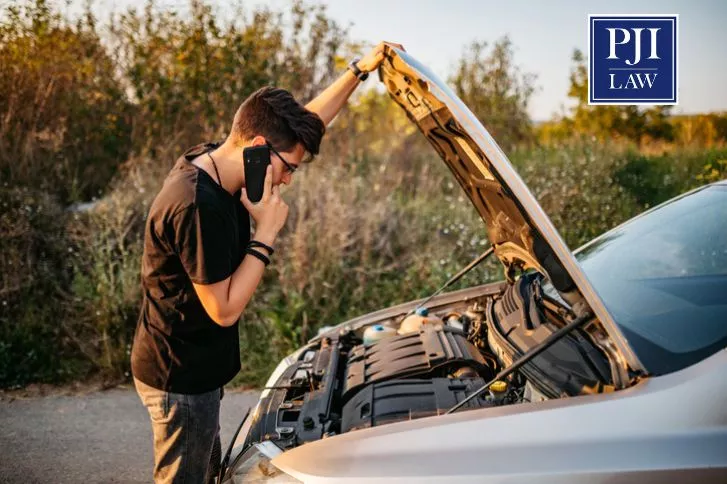
    Most people are excited when they purchase a new car and enthusiastic about driving and enjoying the novel experience on the road. However, sometimes things go wrong. Shortly after driving the car off the lot, the problems start. The vehicle routinely breaks down, and mechanics can’t seem to fix the issues.

    Have you recently purchased a new car only to be almost immediately disappointed? Does the vehicle continuously break down with issues the mechanic can’t fix? Have you ever wondered if you might have a lemon on your hands? If this describes your experience, you are not out of options. The Commonwealth of Virginia has a lemon law on the books to protect consumers just like you.

    What is Virginia’s Lemon Law?

    The Virginia Motor Vehicle Warranty Enforcement Act, or lemon law, protects consumers who have purchased cars that have serious or recurring problems. If your vehicle meets the conditions for the lemon law in Virginia, the car’s manufacturer owes you a full refund or a new replacement vehicle.

    However, manufacturers aren’t always cooperative and refuse to hand over money or provide you with a replacement vehicle. If this happens to you, reach out to an experienced lemon law lawyer in northern Virginia to help you with a claim. Following the purchase of a new vehicle, the Virginia lemon law protects you for the next 18 months. You may have a claim if:

    • The car underwent repairs for the same defect at least three times without the issue being fixed, or
    • one or more attempts were made to fix a serious safety problem, or
    • the vehicle was out of service for a total of 30 days or more.

    What to Do If You Think You Have a Lemon

    If you think your vehicle is a lemon, there are specific steps you should take to make sure you are protected. First, make sure that you take your car to the dealership for repairs. Going to a local mechanic or trying to make the repairs yourself could be more convenient in the short term, but it could hurt your claim under the lemon law.

    Second, keep detailed records of all repairs and make sure you get and keep any receipts. The receipts will demonstrate that they meet the eligibility requirements for the lemon law. They will also help your attorney establish a timeline and prove that you deserve a full refund or a new replacement vehicle.

    What to Do if the Dealership Can’t Fix your Car

    If you meet the qualifications of the lemon law in Virginia, and the dealer hasn’t fixed the problems with your car, you must notify the manufacturer, ideally via mail in writing.

    In your letter of notice to the dealership, you should be sure to include the following information:

    • Year, make, model, and VIN for your vehicle
    • The dates you took your car for repairs and the problems
    • A copy of each repair order
    • Request a buyback under the Virginia Lemon Law

    Used Cars and the Lemon Law

    Although the lemon law is primarily designed to protect those who purchase new vehicles, there is a chance your used car might also be covered under the lemon law if the last owner bought it as a new car within the 18-month timeframe.

    If your used car meets the criteria for protection under the lemon law, it will likely qualify for the same protection as if you purchased it brand new. Many owners of used cars have made successful lemon law claims in Virginia.

    Although many people have made successful lemon law claims for a used car, doing so is more challenging than with a brand new car. If you think your used vehicle meets the lemon law criteria in Virginia, be sure to contact a lemon law attorney.

    Contact PJI Law Today

    If you think that you have a valid claim under Virginia’s lemon law, you don’t have to continue driving a frustrating and unsafe vehicle. One of our attorneys can help you with every step of your lemon law claim. Don’t let the manufacturer and dealership get away with selling you a defective car. We can help you get your money back or a new replacement vehicle.

    If you have already filed a lemon law claim, but the manufacturer is playing hardball, we can help here too. Unfortunately, manufacturers often wait until an experienced attorney gets involved before they decide to pay up. To request a consultation, call us at (703) 865-6100 or fill out our online form.

    Copyright © 2021. PJI Law, PLC. All rights reserved.

    The information in this blog post (“post”) is provided for general informational purposes only and may not reflect the current law in your jurisdiction. No information in this post should be construed as legal advice from the individual author or the law firm, nor is it intended to be a substitute for legal counsel on any subject matter. No reader of this post should act or refrain from acting based on any information included in or accessible through this post without seeking the appropriate legal or other professional advice on the particular facts and circumstances at issue from a lawyer licensed in the recipient’s state, country or other appropriate licensing jurisdiction.

    PJI Law, PLC
    3900 Jermantown Rd, 2nd Floor
    Fairfax, Virginia 22030
    (703) 865-6100
    https://pjibe.webteam.ai/

  • Is Your Car One of the 1,000,000+ Being Recalled?

    On April 27, 2016 Ford Motor Co. announced a recall of 202,000 vehicles for transmission issues. The transmission recall covers the wildly popular 2011 and 2012 F-150 and the 2012 Expedition, Mustang and Lincoln Navigator. Ford is also recalling more than 81,000 Explorer SUVs to fix a rear suspension problem. Both of these problems are significant and could impact vehicles especially in the Northern Virginia region where we deal with some of the nation’s most severe traffic and rack up significant miles.

    Car4Only a few days prior, on April 22, Fiat Chrysler announced a recall of 812,000 vehicles because owners were having difficulty understanding the shifter. The recall covers the manufacturer’s popular 2014-2015 Jeep Grand Cherokee, and the 2012-2014 Dodge Charge and Chrysler 300 models. So far the company has stated that as many as 41 injuries might be related to this recall.  If you have one of the affected models you should contact your local dealer.

    New vehicles oftentimes require significant warranty work during the initial 18 months after purchase. However, we at PJI Law find that many of these vehicles are defective and need to either be replaced or repurchased by the manufacturer under the Virginia Motor Vehicle Warranty Enforcement Act, also known as the Virginia “lemon law”, which provides purchasers of new vehicles solutions to avoid becoming victim of a “lemon”. If you have purchased a new vehicle with problems that your dealership has been unable to repair, you might be driving a lemon as well. To discuss your options, call us at (703) 865-6100 or email us at info@pjilaw.com.